
Social Welfare Policy for the Elderly of Local Government Organization in the Upper Southern Region
Article Sidebar
Main Article Content
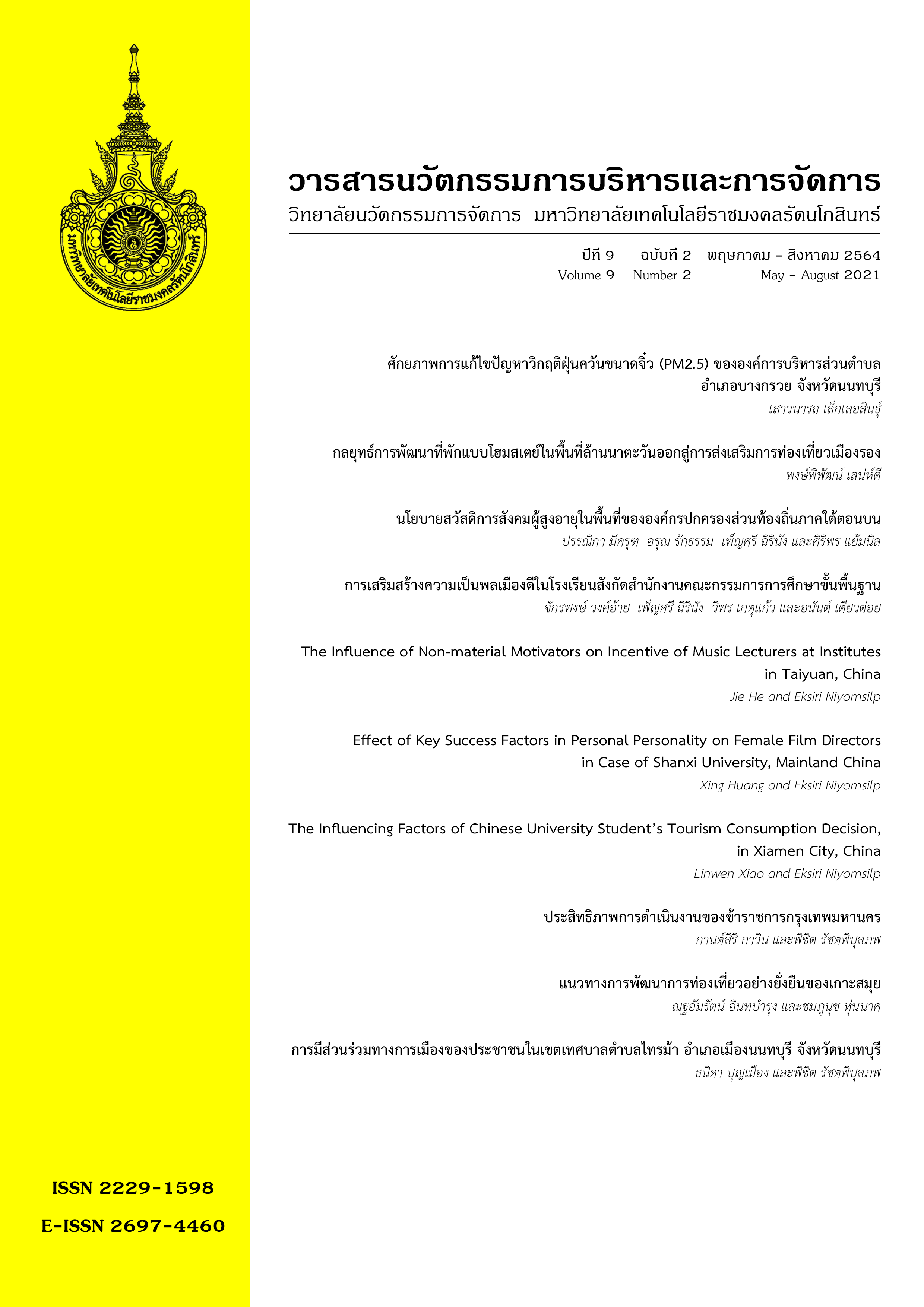
Abstract
This research aims to 1) Study the implementation of social welfare management for the elderly in the area of the local administrative organization in the upper southern region.2) Analyze the success factors and obstacles of the local government in the upper southern region. In the provision of social welfare for the elderly and 3) To propose guidelines for the provision of social welfare for the elderly in the area of the local administrative organization in the upper southern region. The research method was qualitative research. Data were collected by observation method. In-depth interviews and group chat 24 key contributors, including local politicians. Workers involving the elderly and the elderly and analyze the essence. The research results were found that (1) Upper Southern Local Government Operate the social welfare for the elderly, health and medical care, income, housing. Recreation Social security, family, caregivers and protection and in the construction of services and networks to support (2) Success factors in providing social welfare for the elderly consisted of 8 factors. Such as establishing a database of the elderly in the local administrative organization area Availability and income from local taxation. The establishment of the Elderly Welfare Committee Providing personnel responsible for the elderly Coordination between nearby local government organizations Government policies and public sector support in social welfare Pushing the policy of local administrators to concrete action and the need for the development of social welfare service models of community leaders and local people; and (3) guidelines for elderly social welfare. In the upper southern local government organization area consists of 7 approaches
Article Details
ข้อความและบทความในวารสารนวัตกรรมการบริหารและการจัดการ เป็นแนวคิดของผู้เขียน ไม่ใช่ความคิดเห็นและความรับผิดชอบของคณะผู้จัดทำ บรรณาธิการ กองบรรณาธิการ วิทยาลัยนวัตกรรมการจัดการ และมหาวิทยาลัยเทคโนโลยีราชมงคลรัตนโกสินทร์
ข้อความ ข้อมูล เนื้อหา รูปภาพ ฯลฯ ที่ได้รับการีพิมพ์ในวารสารนวัตกรรมการบริหารและการจัดการ ถือเป็นลิขสิทธิ์ของวารสารนวัตกรรมการบริหารและการจัดการ หากบุคคลใดหรือหน่วยงานใดต้องการนำทั้งหมดหรือส่วนหนึ่งส่วนใดไปเผยแพร่ต่อหรือกระทำการใดๆ จะต้องได้รับอนุญาติเป็นลายลักษณ์อักษรจากวารสารนวัตกรรมการบริหารและการจัดการก่อนเท่านั้น
