
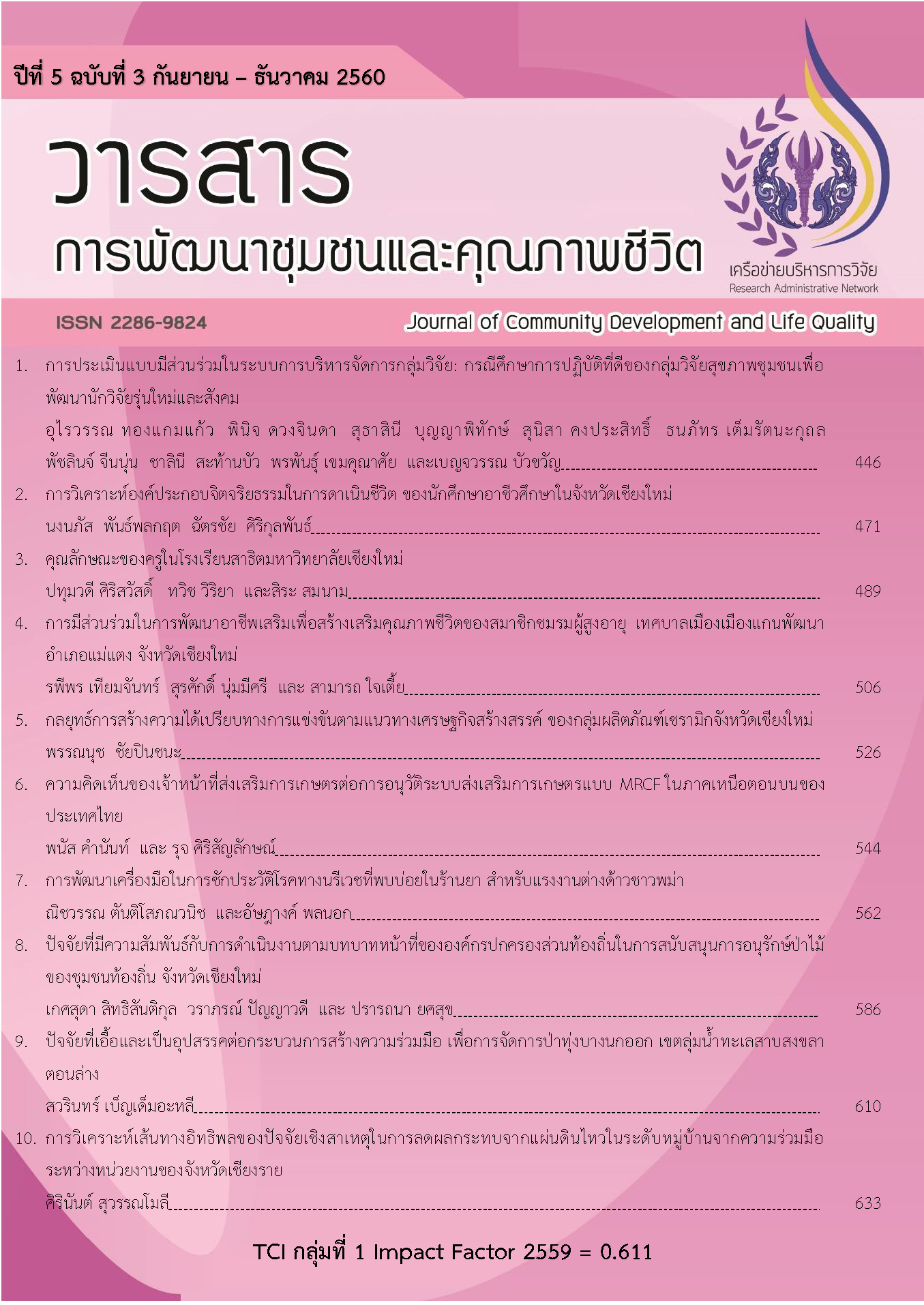
ปัจจัยที่เอื้อและเป็นอุปสรรคต่อกระบวนการสร้างความร่วมมือ เพื่อการจัดการป่าทุ่งบางนกออก เขตลุ่มน้ำทะเลสาบสงขลาตอนล่าง
บทคัดย่อ
บทความนี้ต้องการสะท้อนปัจจัยที่เอื้อและเป็นอุปสรรคต่อกระบวนการสร้างความร่วมมือระหว่างผู้มีส่วนได้ส่วนเสียในการหารูปแบบการจัดการป่าร่วมกันในพื้นที่ป่าเสม็ดทุ่งบางนกออก ซึ่งเป็นกระบวนการที่ใช้แนวทางการศึกษาของแบบจำลองเหมือนเพื่อนคู่คิด โดยมีผู้มีส่วนได้ส่วนเสียทั้งจากชุมชน รัฐ และหน่วยงานภายนอก เช่น หน่วยงานของกรมป่าไม้ (ด้านไฟป่า การจัดการป่าชุมชน) องค์กรปกครองส่วนท้องถิ่น โรงเรียน และมหาวิทยาลัย เป็นผู้ให้ข้อมูลและผู้เข้าร่วมกระบวนการประมาณ 200 คน มีการทำงาน 3 กระบวนการหลัก คือ 1) การศึกษาชุมชน ป่าเสม็ด และความสัมพันธ์ระหว่างชุมชนและป่า โดยใช้ทั้งวิธีการวิจัยเชิงคุณภาพ เชิงปริมาณ และการสำรวจ 2) การปฏิบัติการร่วมคิดและตัดสินใจ เพื่อหารูปแบบการจัดการที่ทุกฝ่ายยอมรับ โดยใช้เครื่องมือเกมบทบาทสมมติ 2 รอบ และการประชุมปฏิบัติการ 3 ครั้ง และ 3) การปฏิบัติการนำข้อเสนอไปปฏิบัติอย่างเป็นรูปธรรมและยกระดับสู่นโยบายท้องถิ่นซึ่งใช้การปฏิบัติการ 8 ครั้ง และนำข้อมูลจากกระบวนการต่าง ๆ มาวิเคราะห์ปัจจัยที่เอื้อและเป็นอุปสรรคต่อกระบวนการ ผลการศึกษาพบว่าปัจจัยที่เอื้อต่อกระบวนการมีหลากหลาย กล่าวคือ ด้านบุคคล กระบวนการและเครื่องมือ และกลยุทธ์การทำงานต่าง ๆ เช่น เกมบทบาทสมมติ ซึ่งเป็นเครื่องมือที่เอื้อต่อการแลกเปลี่ยนเรียนรู้ระหว่างผู้มีส่วนได้ส่วนเสีย การทำงานแบบ win-win การเปลี่ยนข้อเสนอสู่การปฏิบัติจริงอย่างเป็นรูปธรรมที่เอื้อต่อการสร้างความไว้วางใจระหว่างผู้วิจัยกับผู้มีส่วนได้ส่วนเสียและชาวบ้าน นอกจากนี้ความไว้วางใจซึ่งกันและกันระหว่างผู้มีส่วนได้ส่วนเสียเป็นปัจจัยอีกประการที่สำคัญอย่างยิ่งต่อการกระบวนการ ส่วนปัจจัยที่เป็นอุปสรรคมีทั้งที่เกี่ยวข้องกับปัจเจกบุคคล เครื่องมือและนโยบายหรือกฎหมายที่เกี่ยวข้องกับป่าไม้
เอกสารอ้างอิง
มูลนิธิสืบนาคะเสถียร. 2559. รายงานสถานการณ์ป่าไม้ไทย 2558-2559. มูลนิธิสืบนาคะเสถียร, นนทบุรี. 13 หน้า.
สวรินทร์ เบ็ญเด็มอะหลี. (2560). ปัญหาโครงสร้างอำนาจ นโยบายและกฎหมายที่เป็นอุปสรรคต่อการจัดการป่าของประเทศไทย: กรณีศึกษาป่าทุ่งบางนกออก เขตลุ่มน้ำทะเลสาบสงขลาตอนล่าง. วารสารการพัฒนาชุมชนและคุณภาพชีวิต 5(2): 387-402.
สวรินทร์ เบ็ญเด็มอะหลี. 2557ก. เครือข่ายความร่วมมือในการจัดการไฟป่าร่วมกันในพื้นที่ป่าทุ่งบางนกออก เขตลุ่มน้ำทะเลสาบสงขลาตอนล่าง. วารสารการจัดการสิ่งแวดล้อม 10(2): 1-20.
สวรินทร์ เบ็ญเด็มอะหลี. 2557ข. การประเมินสภาพป่าและศักยภาพในการเก็บกักคาร์บอนของต้นเสม็ดขาวในป่าชุมชนเขตพื้นที่ป่าทุ่งบางนกออกแห่งลุ่มน้ำทะเลสาบสงขลาตอนล่าง. วารสารวนศาสตร์ 33(2): 88-101.
สวรินทร์ เบ็ญเด็มอะหลี เยาวนิจ กิตติธรกุล สมยศ ทุ่งหว้า และอุทัย ปริญญาสุทธินันท์. 2557. การจัดการความขัดแย้งที่เกี่ยวข้องกับการใช้ทรัพยากรธรรมชาติของชุมชนควนโส. วารสารวิชาการมนุษยศาสตร์และสังคมศาสตร์ มหาวิทยาลัยทักษิณ 8(2): 1-16.
สำนักงานคณะกรรมการพัฒนาเศรษฐกิจและสังคมแห่งชาติ. 2556. สัจธรรมแห่งแนวพระราชดำริสู่การพัฒนาอย่างยั่งยืน. สำนักงานคณะกรรมการพัฒนาเศรษฐกิจและสังคมแห่งชาติ, กรุงเทพฯ. 312 หน้า.
สำนักบริหารพื้นที่อนุรักษ์ที่ 6 (สงขลา) และมหาวิทยาลัยสงขลานครินทร์. 2558. การศึกษาความเหมาะสม ผลกระทบสิ่งแวดล้อมโครงการสำรวจและออกแบบโครงสร้างเพื่อรักษาระดับน้ำที่เหมาะสมในการป้องกันไฟไหม้และรักษาความอุดมสมบูรณ์ของระบบนิเวศและความหลากหลายทางชีวิตภาพของป่าพรุควนเคร็ง จังหวัดนครศรีธรรมรา). รายงานวิจัยฉบับสมบูรณ์. มหาวิทยาลัยสงขลานครินทร์, สงขลา. 453 หน้า.
องค์การบริหารส่วนตำบลควนโส. 2558. แผนพัฒนาสามปี (2558 - 2560) ขององค์การบริหารส่วนตำบล ควนโส สงขลา. องค์การบริหารส่วนตำบลควนโส, สงขลา. (แฟ้มข้อมูล).
Dumrongrojwatthana, P, Le Page, C., Gajaseni, N., Trébuil, G. 2011. Co-constructing an agent-based model to mediate land use conflict between herders and foresters in northern Thailand. Journal of Land Use Science 6(2-3): 101-120.
Food and Agriculture Organization of the United Nations [FAO]. 2016. State of the World’s Forest. (Online). Available: http://www. fao.org/3/a-i5588e .pdf (December 16, 2016).
Hahn, T., P. Olsson, C. Folke and K. Johansson. 2006. Trust-building, knowledge generation and organizational innovations: The role of a bridging organization for adaptive ecomanagement of a wetland landscape around Kristianstad, Sweden. Human Ecology: An Interdisciplinary Journal 34: 537 - 592.
Janssen, M. A., F. Bousquet and E. Ostrom. 2011. A multimethod approach to study the governance of social-ecological systems. Natures Sciences Sociétés 19: 382-394.
Kim, W. 2009. Effects of a trust mechanism on complex adaptive supply networks: an agent-based social simulation study. Journal of Artificial Societies and Social Simulation. 12(3): 4-23.
Mohammed, A.J., M. Inoue and G. Shivakoti. 2017. Moving forward in collaborative forest Management: Role of external actors for sustainable Forest socio-ecological systems. Forest Policy and Economics. 74: 13-19.
Silalahi, M and D. Erwin. 2015. Collaborative conflict management on ecosystem restoration concession: lessons learnt from Harapan Rainforest Jambi-South Sumatra-Indonesia. Forest Research 4(1): 134-142.
ดาวน์โหลด
เผยแพร่แล้ว
รูปแบบการอ้างอิง
ฉบับ
ประเภทบทความ
สัญญาอนุญาต
กองบรรณาธิการขอสงวนสิทธิ์ในการตรวจและแก้ไขบทความที่เสนอเพื่อตีพิมพ์ในวารสารการพัฒนาชุมชนและคุณภาพชีวิต
บทความหรือข้อความคิดเห็นใด ๆ ที่ปรากฏในวารสารการพัฒนาชุมชนและคุณภาพชีวิต เป็นวรรณกรรมของผู้เขียนโดยเฉพาะคณะผู้จัดทำไม่จำเป็นต้องเห็นด้วย และไม่ใช่ความรับผิดชอบของมหาวิทยาลัยและคณะผู้จัดทำ / บรรณาธิการ


