ปัจจัยที่ส่งผลต่อการเข้าร่วมกิจกรรมของนักศึกษาของคณะครุศาสตร์ของ มหาวิทยาลัยราชภัฎนครสวรรค์
Article Sidebar
Main Article Content
บทคัดย่อ
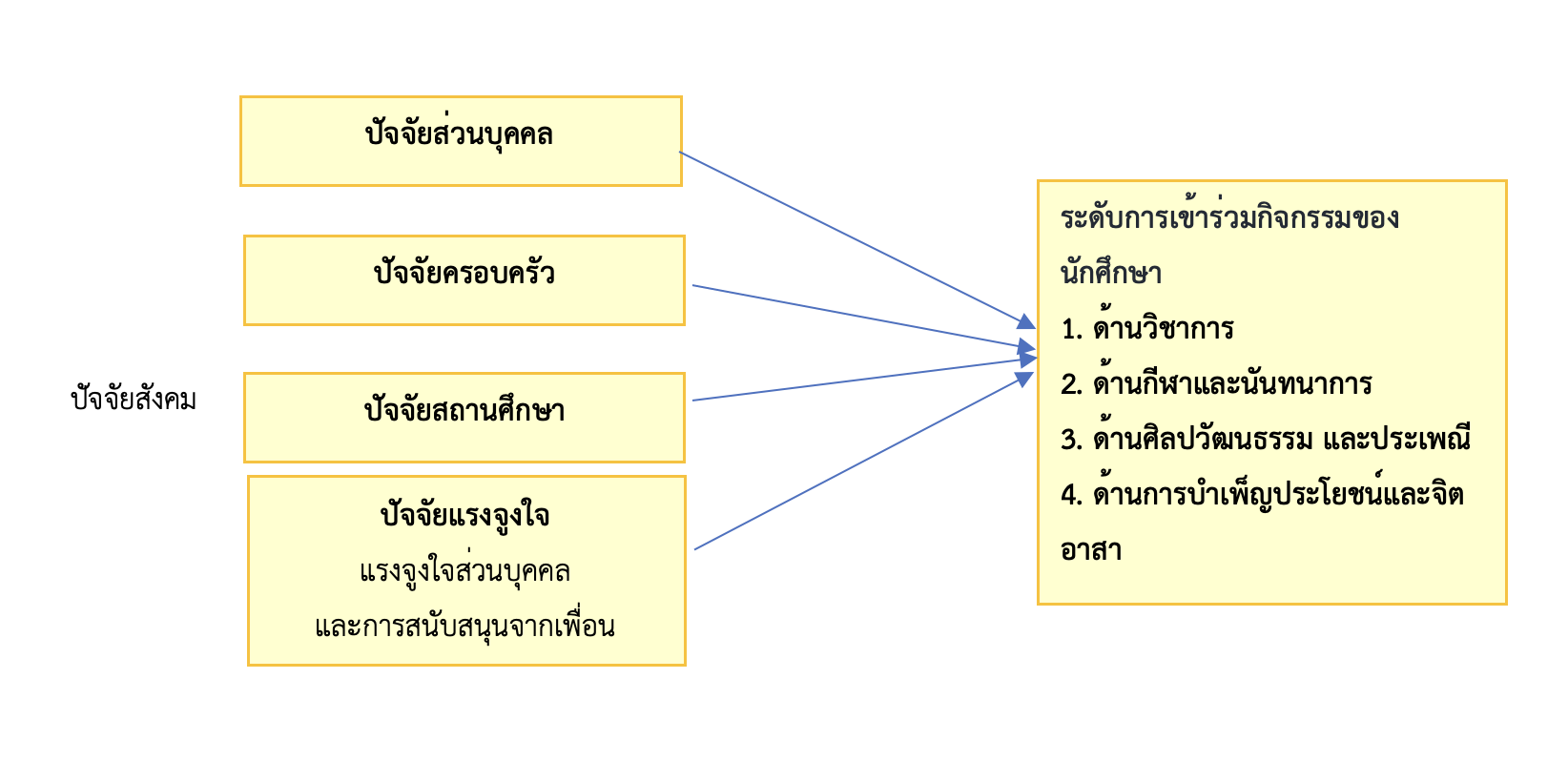
บทนำ: กิจกรรมนักศึกษาเป็นปัจจัยหนึ่งในการเสริมสร้างกระบวนการจัดการศึกษาให้มีความสมบูรณ์มากยิ่งขึ้น วัตถุประสงค์การวิจัย: เพื่อศึกษาระดับปัจจัยที่ส่งผลต่อการเข้าร่วมกิจกรรมของนักศึกษา ศึกษาระดับการเข้าร่วมกิจกรรมของนักศึกษา ศึกษาความสัมพันธ์ระหว่างปัจจัยที่ส่งผลการเข้าร่วมกิจกรรมของนักศึกษาและ เพื่อสร้างสมการพยากรณ์การเข้าร่วมกิจกรรมของนักศึกษา ระเบียบวิธีการวิจัย: ประชากรและกลุ่มตัวอย่างคือ นักศึกษาคณะครุศาสตร์ มหาวิทยาลัยราชภัฎนครสวรรค์ระดับปริญญาตรี สุ่มตัวอย่างโดยเปิดการเปิดตารางเทียบหากลุ่มตัวอย่างของเคซี่และมอร์แกน วิเคราะห์ข้อมูลโดยใช้สถิติเชิงพรรณนา และสถิติเชิงอนุมาน และสถิติที่ใช้ในการทดสอบความเชื่อมั่นได้ 0.87 เครื่องมือที่ใช้ในการวิจัยคือแบบสอบถาม ผลการวิจัย: พบว่าระดับปัจจัยที่ส่งผลต่อการเข้าร่วมกิจกรรมโดยรวมอยู่ในระดับปานกลาง โดย “แรงจูงใจส่วนบุคคล” เป็นปัจจัยที่มีระดับสูงสุด ขณะที่ “ความพร้อมด้านเวลาและทรัพยากร” อยู่ในระดับต่ำสุด ระดับการเข้าร่วมกิจกรรมของนักศึกษาอยู่ในระดับมาก โดยนิยมเข้าร่วมกิจกรรมที่เกี่ยวข้องกับหลักสูตร เช่น กิจกรรมจิตอาสาและปฐมนิเทศ นอกจากนี้ พบว่าปัจจัยด้านแรงจูงใจ การสนับสนุนจากสถาบัน และเพื่อน มีความสัมพันธ์ทางบวกกับพฤติกรรมการเข้าร่วมกิจกรรมอย่างมีนัยสำคัญทางสถิติที่ระดับ .01 ทั้งนี้ สมการพยากรณ์สามารถอธิบายความแปรปรวนของพฤติกรรมการเข้าร่วมกิจกรรมได้ร้อยละ 54.3 สรุป: ควรให้ความสำคัญกับการสร้างแรงจูงใจและพัฒนาเครือข่ายสนับสนุนทางสังคมภายในคณะ รวมถึงการออกแบบกิจกรรมให้สอดคล้องกับความสนใจและความถนัดของนักศึกษา เพื่อให้กิจกรรมนักศึกษาเป็นกลไกที่ช่วยเสริมสร้างคุณลักษณะบัณฑิตที่พึงประสงค์ได้อย่างมีประสิทธิภาพ
Downloads
Article Details

อนุญาตภายใต้เงื่อนไข Creative Commons Attribution-NonCommercial-NoDerivatives 4.0 International License.
** ข้อความ ข้อคิดเห็น หรือข้อค้นพบ ในวารสารสหวิทยาการสังคมศาสตร์และการสื่อสารเป็นของผู้เขียน ซึ่งจะต้องรับผิดชอบต่อผลทางกฎหมายใด ๆ ที่อาจเกิดขึ้นจากบทความและงานวิจัยนั้น ๆ โดยมิใช่ความรับผิดชอบของคณะนิเทศศาสตร์ มหาวิทยาลัยราชภัฏรำไพพรรณี **
เอกสารอ้างอิง
Astin, A. W. (1991). Four critical years: Effects of college on beliefs, attitudes, and knowledge. Jossey-Bass.
Chebator, P. J. (1995). Involvement and student outcome: The student development effects of co-curricular programs [Unpublished doctoral dissertation]. Boston College.
Deci, E. L., & Ryan, R. M. (2020). Self-determination theory: Basic psychological needs in motivation, development, and wellness. Guilford Press.
Frederick, R. W. (1965). The third curriculum. Appleton-Century-Crofts.
Hanthongchai, B. (2012). Factors affecting participation in recreational activities of Pathum Thani University students [Unpublished Master’s thesis]. Srinakharinwirot University.
Kamolchanok, K. (2008). Self-potential development of Naresuan University students (Research report). Naresuan University.
Kittiwat, A. (2022). Student activities and the development of desirable graduate attributes in the digital era. Journal of Education, Chiang Mai University, 14(2), 45–59.
Manusawet, P. (2010). An effective student affairs administration model of private universities in Thailand [Unpublished doctoral dissertation]. Eastern Asia University.
Office of the Education Council. (2019). National Education Act B.E. 2542 and amendments (No. 4) B.E. 2562. Ministry of Education.
Office of the Permanent Secretary, Ministry of Education. (2021). National Education Plan (B.E. 2566–2580). https://www.ops.moe.go.th
Phuttan, S. (2019). Motivational factors influencing job application decisions at Rajamangala University of Technology Thanyaburi. Rajamangala University of Technology Thanyaburi.
Premwichit, W. (2021). Motivation for entering civil service at the Office of the Auditor General, Regional Office 11 (Nakhon Sawan Province). Ramkhamhaeng University.
Rani, I. H., Jalih, J. H., & Widyowati, L. A. (2022). Indonesian Generation Z work expectation and intention to apply for jobs: The role of social media. Quantitative Economics and Management Studies, 3(2), 12-23.
Silapasorn, W. (2018). Motivation and compensation management in cooperatives. Sukhothai Thammathirat Open University.
Sritanan, S. (2020). Factors influencing undergraduate students’ participation in student activities. Journal of Research and Development, Nakhon Pathom Rajabhat University, 8(2), 45–56.
Thaniyai, P. (2022). Factors affecting Generation Z’s decision to work in organizations. Naresuan University.
Thawiworadilok, S. (2010). Development of a student affairs administration model for higher education institutions based on the balanced management approach [Unpublished doctoral dissertation]. Burapha University.
Thongkap, M. (2016). Curricular and extracurricular activities of students in higher education institutions. National Youth Promotion and Coordination Commission.
Wichaiwong, A. (2008). Educational psychology. Phatthanasueksa Publishing House.
