AN ART OF LIVING TO THE INTEGRATION FROM THERAVADA BUDDHIST PHILOSOPHY AND BRAHMA KUMARIS’ RAJA YOGA DOCTRINE
Article Sidebar
Main Article Content
Abstract
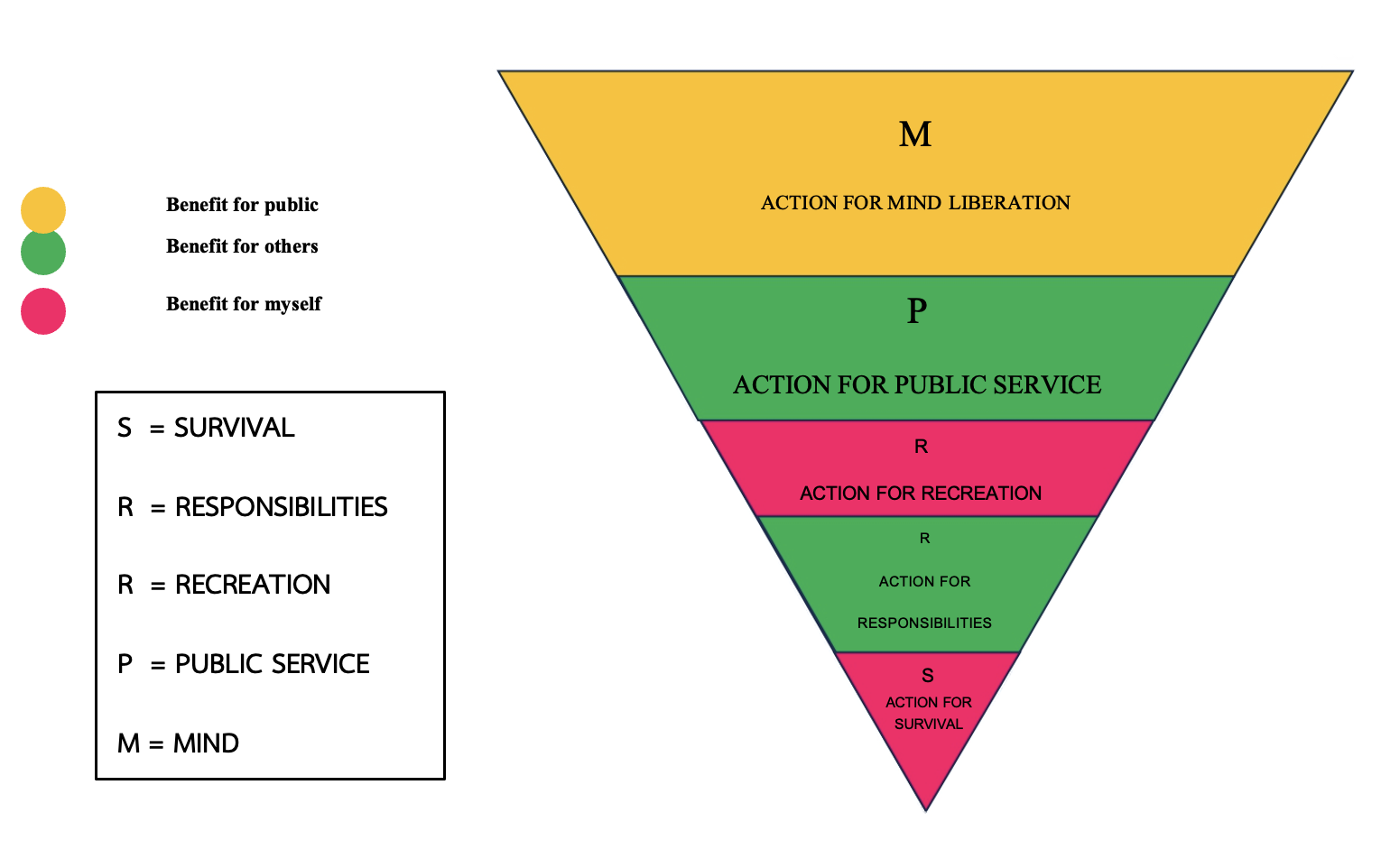
Introduction: One of the most important fundamental questions in philosophy which cannot be denied exists in every school of thought from the past to the present which is related to the concept of “man” and consisting of ethical questions about how humans should live their lives towards themselves and the world. Objective: To study the way of life according to the doctrines of Theravada Buddhist philosophy including the Raja Yoga doctrines of The Brahma Kumaris and analyze the art of living according to the integration of Theravada Buddhist philosophy and Raja Yoga doctrines of the Brahma Kumaris. Methods: This research is qualitative research with an emphasis on document research. The research was conducted by studying and searching for information from primary and secondary documents such as research documents including academic textbooks, research, articles and website reports related to the research topic. Results: Life and lifestyle according to Buddhist philosophy and Brahma Kumaris are connected by the search for truth and self-development to lead to perfect living. There are principles in life that are linked which are not to do anything that harms others in the beginning and leading to doing good deeds with the body, speech and mind. The teachings of Theravada Buddhist philosophy have “ten wholesome courses” and “ the eightfold path” as the principle of life while the doctrine of Raja Yoga of the Brahma Kumaris are to have love, faith and understanding that humans are just souls which demonstrate love and compassion for fellow human beings in order to develop their souls to the highest state of perfection called “Jiwan Mukti” Conclusion: Summary of the research results according to the first objective : the concept of human beings and the attainment of the highest spiritual state according to the teachings of Raja Yoga of the Brahma Kumaris group is to emphasize the development of the mind by creating the basic idea or consciousness in life that "I am the soul". The soul of humans still depends on actions to be under the law of action or the law of karma. When the soul is one with the highest soul, there will be neutrality in actions. There is no effect on the actions whether they are good or bad because the soul is one with the highest soul. There is a state of perfection forever called "Jiwan Mukti". Summary of the research results according to the second objective: the concept of human beings and the attainment of the highest state of perfection according to the teachings of Theravada Buddhist philosophy is “only suffering and the cessation of suffering are the choices that the Buddha offers humans in living their lives”. In the individual level and living together in society, it means living a life that will create happiness and peace in living together. In a higher level, it is living a life in the individual level by practicing the path to escaping all suffering called “Nirvana”.
Downloads
Article Details

This work is licensed under a Creative Commons Attribution-NonCommercial-NoDerivatives 4.0 International License.
The author(s) is only responsible for data appearing in the submitted manuscript of Interdisciplinary social sciences and communication journal.Besides, this journal encourages and enables you to share data such as statements, contents, figures, etc. that support your research publication where appropriate, and enables you to interlink the data with proper citation.
References
Brahma Kumaris. (1998). Spiritual art gallery. Literature Department of Brahma Kumaris.
Brahma Kumaris Raja Yoga Foundation. (2001). Raja yoga: Knowledge for the power of happiness (3rd ed.). Author.
Hanprasert, P. (2007). Acceptance of Raja Yoga beliefs among people in Chiang Mai society [Unpublished Master’s thesis]. Chiang Mai University.
Nagesh, N. V. (2023). Brahma Kumaris Raja Yoga meditation in modern times. Chikkamagaluru, Karnataka, India.
Nagesh, N. V. (2023). The transformative power of Brahma Kumaris Raja Yoga meditation: Emerging trends and future. Chikkamagaluru, Karnataka, India.
Pandya, S. P. (2019). Meditation for meaning in life and happiness of older adults: A multi-city experiment of the Brahma Kumaris’ Raja Yoga practice. Tata Institute of Social Sciences.
Ramesh, M. G. (2013). Efficacy of Raja Yoga meditation on positive thinking: An index for self- satisfaction and happiness in life. Manipal University.
Ratchawat, S. (2019). Diversity of new religious movements outside the mainstream in Chiang Mai Province.
Whaling, J., & Frank, L. (2012). Raja Yoga meditation as a contemporary spiritual practice: A phenomenological perspective. Journal of Spiritual Studies, 6(2), 45–62.
