ENTREPRENEURIAL POTENTIAL AFFECTING THE COMPETITIVENESS OF GEM AND JEWELRY BUSINESSES IN CHANTHABURI PROVINCE
Article Sidebar
Main Article Content
Abstract
The objective of this research was to study the entrepreneurial potential and business competitiveness as well as the entrepreneurial potential affecting the competitiveness of gem and jewelry businesses in Chanthaburi Province, Thailand. The population and the sample included 212 gem and jewelry entrepreneurs registered with the Office of Provincial Commercial Affairs, Chanthaburi, obtained through multi-stage sampling. Data were collected using a questionnaire, and then analyzed for various issues.
The results of the research found that:
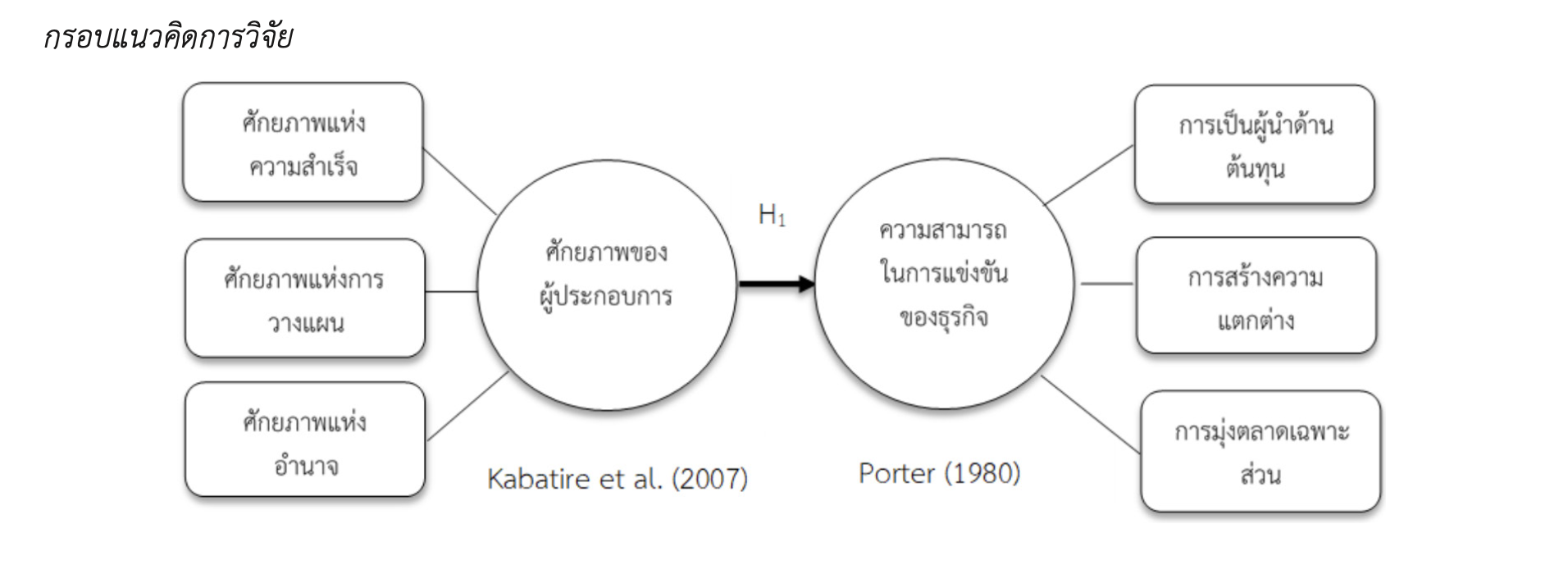
The most gem and jewelry entrepreneurs were female, aged 31–40 years, graduated with a bachelor’s degree, and received a monthly income of 30,001–50,000 baht on average. Their overall entrepreneurial potential was at the highest level, particularly in the aspect of success potential. Also, their overall competitiveness was at the highest level. As for the hypothesis testing, it was found that there were three variables of the potential of the gem and jewelry entrepreneurs in Chanthaburi Province affecting their business competitiveness, i.e., power potential, planning potential, and success potential.
Downloads
Article Details

This work is licensed under a Creative Commons Attribution-NonCommercial-NoDerivatives 4.0 International License.
The author(s) is only responsible for data appearing in the submitted manuscript of Interdisciplinary social sciences and communication journal.Besides, this journal encourages and enables you to share data such as statements, contents, figures, etc. that support your research publication where appropriate, and enables you to interlink the data with proper citation.
References
กฤตติยา สัตย์พานิช, ทัศนัย ขัตติยวงษ์ และธีรวุฒิ สุทธิประภา. (2563). การศึกษาศักยภาพของผู้ประกอบการธุรกิจขนาดกลางและขนาดย่อมในเขตการค้าชายแดนภาคตะวันออกเพื่อเพิ่มความสามารถการแข่งขัน. วารสารวิจัยรำไพพรรณี, 14(3), 128-135.
ชุลีวรรณ โชติวงษ์ และจุฑารัตน์ ปิณฑะแพทย์. (2563). การพัฒนารูปแบบศักยภาพของผู้ประกอบการในอุตสาหกรรมพลอยในยุคดิจิทัล. วารสารวิชาการพระจอมเกล้าพระนครเหนือ, 30(4), 707-716.
ติ๋ม มณีคำ. (2560, 21 ธันวาคม). ศักยภาพการเป็นผู้ประกอบการที่มีอิทธิพลต่อประสิทธิผลในการบริหารจัดการธุรกิจ กรณีศึกษา : กิจการวิสาหกิจขนาดกลางและขนาดย่อมในแขวงบอลิคาไชย สาธารณรัฐ.https://so03.tci-thaijo.org/index.php/ jms_ubu/article/view/85796/68239.
นิตยา สุภาภรณ์. (2564). ความสามรถและความได้เปรียบทางการแข่งขันชองผู้ประกอบการวิสาหกิจขนาดกลางและขนาดย่อม (SMEs) ในจังหวัดนนทบุรี, วารสารวิชาการวิทยาลัยสันตพล, 7(2), 43-52.
ปรียานันท์ โพธิ์ศิรวัฒน์ พิชา วิสิทธิ์พานิช และ ภัทราพร ตึกขาว. (2565). แนวทางการพัฒนาศักยภาพผู้ประกอบการเพื่อสร้างความได้เปรียบทางการแข่งขันของสินค้าหนึ่งตำบลหนึ่งผลิตภัณฑ์ในจังหวัดนครสวรรค์. วารสารรามคำแหง, 5(3), 75-91.
พีรพงษ์ กนกเลิศวงศ์ และวรเดช จันทรศร. (2560). การบริหารกิจการอัญมณีและเครื่องประดับไทย. วารสารวิชาการมหาวิทยาลัยอีสเทริน์เอเซีย, 7(3), 331-340.
รสดา เวษฎาพันธุ์. (2563). การวิเคราะห์ศักยภาพการแข่งขันและแนวทางการพัฒนาอัญมณีและเครื่องประดับของประเทศไทย. ใน การประชุมวิชาการของมหาวิทยาลัยเกษตรศาสตร์ ครั้งที่ 58 (183-193 น.). กรุงเทพฯ: มหาวิทยาลัยเกษตรศาสตร์.
วสุธิดา นักเกษม และประสพชัย พสุนนท์. (2561). ปัจจัยที่ส่งผลต่อการสร้างความได้เปรียบทางการแข่งขันของผู้ประกอบการธุรกิจบริการในเขตกรุงเทพมหานคร. Veridian E-Journal, Silpakorn University ฉบับภาษาไทยสาขามนุษยศาสตร์สังคมศาสตร์และศิลปะ, 11(1), 2148-2167.
สมทบ แก้วเชื้อ และสมศักดิ์ คล้ายสังข์. (2562). ความสำเร็จของการขายสินค้าออนไลน์ประเภทเครื่องสำอางของนักศึกษาคณะวิทยาการจัดการ มหาวิทยาลัยราชภัฏสวนสุนันทา. วารสารเทคโนโลยีสื่อสารมวลชน มทร.พระนคร, 4(2), 26-33.
อัครเดช ฐิศุภกร, สยมภู หาญภักดีสกุล และศิรประภา เจริญวงศ์ ฆ้องเลิศ. (2564). ปัจจัยที่มีผลต่อผู้ประกอบการในการตัดสินใจซื้ออัญมณี ตลาดพลอยจันทบุรี. ใน การประชุมวิชาการระดับชาติวิทยาลัยนครราชสีมา ครั้งที่ 8 (670-667 น.). นครราชสีมา: วิทยาลัยนครราชสีมา.
Barney, J. (1991). Firm resources and sustained competitive advantage, Journal of Management, 17(1), 99-120.
Cunningham, J. B. and Lischeron, J. (1991). Defining entrepreneurship. Journal of Small Business Management. 29, 45-61.
Dess, G. G., Lumpkin, G. T., and Taylor, M. L. (2005). Strategic management: Creating competitive advantage. McGraw-Hill.
Delmar, F. (1996). Entrepreneurial behavior and business performance. Dissertation for the Doctor's Degree in Philosophy. Stockholm School of Economics.
Frese, M. (2000). Success and failure of Mechlien Owners in Africa. Greenwood.
Hisrich, M. P. (2002). Entrepreneurship (5 th ed.). Mc Graw-Hill
Hodgetts, R. M. and Kuratko, D. F. (2001). Effective small business management (2 nd ed.). Harcourt Brace Jovanovich Inc.
Kabatire, I. S., Mutyaba, S. V. and Mcbay, B. W. (2007). Entrepreneurship skills. Netsoft.
Lambing, A. and Kuehl, C. R. (2003). Entrepreneurship (3 rd Ed.). Pearson Education Inc.
Lechner, C., and Gudmundsson, S. V. (2014). Entrepreneurial orientation, firm strategy and small firm performance. International Small Business Journal, 32(1), 36-60.
Lohaus, D. and Kleinmann, M. (2002). Analysis of Performance Potential. Wiley.
Maiese, M. (2011). Embodiment, emotion, and cognition. Palgrave Macmillan.
Nunnally, J. C. (1978). Psychometric Theory. McGraw-Hill.
Porter, M. E. (1980). Competitive strategy: techniques for analyzing industries and competitor. Free Press.
Rotter, J. B. (1996). Generalized expectancies for internal versus external control of reinforcement. Psychological Monographs: General and Applied, 80, 1-28.
Ryan, M. K. and Haslam, S. A. (2005). The Glass Cliff: Evidence that Women are Over-Represented in Precarious Leadership Positions. British Journal of Management, 16(2), 81–90.
Yamane, T. (1973). Statistics : An introductory analysis (2rd ed). Harper and Row.
