การพัฒนานักสื่อสารสันติภาพในการสื่อสารเชิงสันติและการสร้างความปรองดองสมานฉันท์ทางศาสนา ในจังหวัดจันทบุรี
Article Sidebar
Main Article Content
บทคัดย่อ
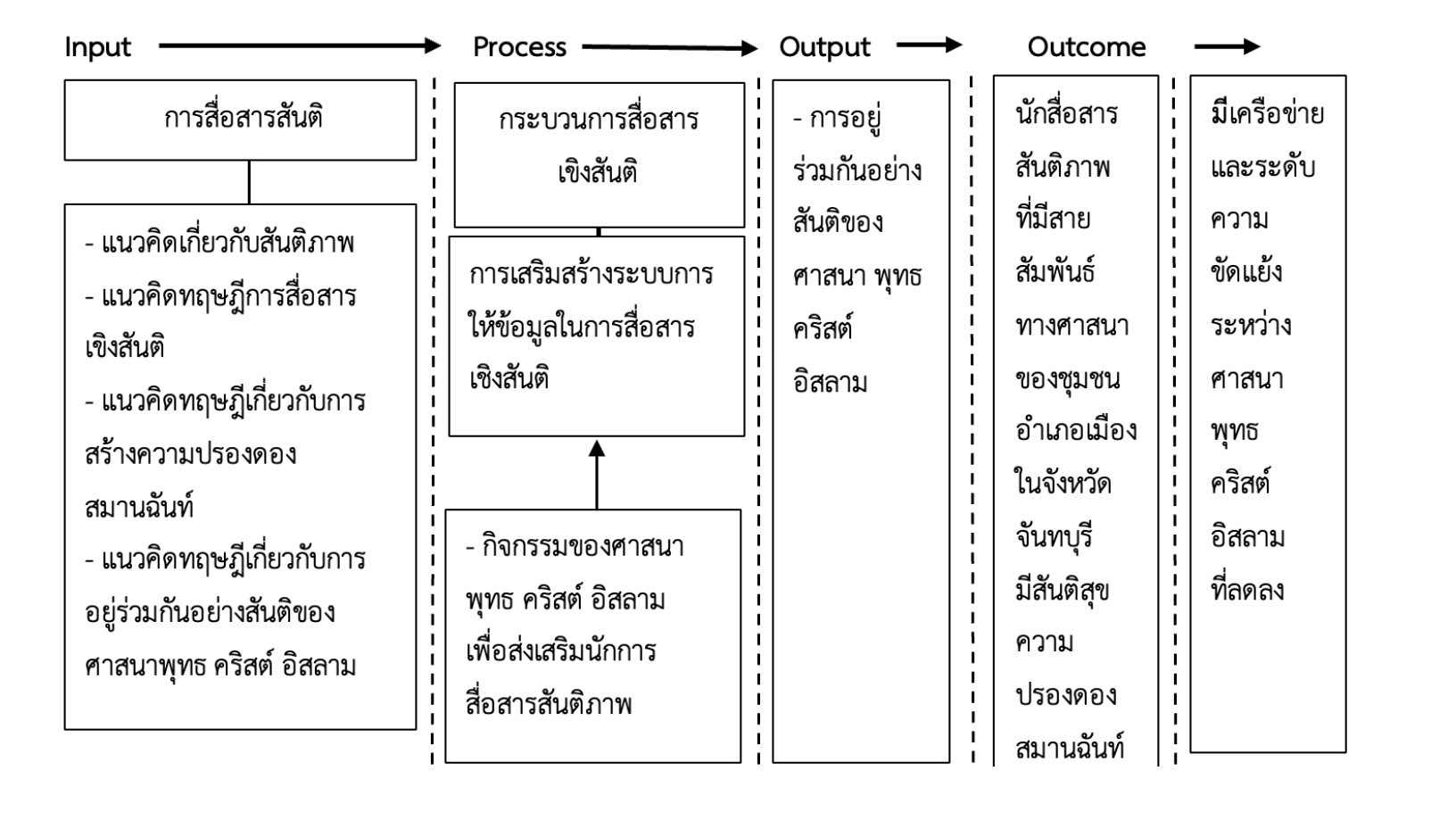
บทนำ: การพัฒนานักสื่อสารสันติภาพระหว่างศาสนา โดยอาศัยหลักคำสอนทางศาสนายังมีข้อจำกัดด้านภาคีเครือข่าย การวิจัยครั้งนี้มีวัตถุประสงค์เพื่อ 1) เพื่อศึกษากระบวนการสื่อสารเชิงสันติของผู้นำทางศาสนาในจังหวัดจันทบุรี 2) เพื่อพัฒนานักสื่อสารสันติภาพในการสื่อสารเชิงสันติทางศาสนา ในจังหวัดจันทบุรี 3) เพื่อเสริมสร้างเครือข่ายการสื่อสารเชิงสันติและการสร้างความปรองดองสมานฉันท์ทางศาสนา ในจังหวัดจันทบุรี การวิจัยในครั้งนี้ เป็นการวิจัยเชิงคุณภาพ (Qualitative Research) ด้วยการสัมภาษณ์เชิงลึกกับผู้ให้ข้อมูลสำคัญ ในกลุ่มทรงคุณวุฒิ และนักวิชาการ โดยผู้วิจัยเลือกแบบเจาะจง (Purposive sampling) จำนวน 12 รูป/คน และการสนทนากลุ่มเฉพาะ กับผู้เชี่ยวชาญด้านการสื่อสารสันติภาพ จำนวน 9 รูป/คน ผลการวิจัยพบว่า 1. กระบวนการสื่อสารเชิงสันติของผู้นำทางศาสนา ในจังหวัดจันทบุรี พบว่า ผู้นำทางศาสนา มีการส่งเสริมการทำงานเป็นทีม โน้มน้าวจูงใจคนในชุมชนให้มีส่วนร่วมในกิจกรรมภายในชุมชนที่จะต้องให้ความสำคัญกับกิจกรรมทางศาสนา เพราะเป็นรากฐานของสังคม ผู้นำทางศาสนา มีการแสวงหาจุดร่วม สงวนจุดต่างคนที่มีวัฒนธรรมแตกต่างกัน มีการสื่อสารด้วยสติและปัญญา มุ่งให้เกิดประโยชน์ต่อชุมชน สังคมเป็นที่ตั้ง ผู้นำทางศาสนา มีการแก้ไขปัญหาความรุนแรงตามแนวทางสมานฉันท์ ให้ความสำคัญกับการเข้าถึงวิธีการแก้ไขปัญหาโดยอาศัยสันติวิธี สร้างสันติสุข และความมั่นคงให้กับชุมชน 2. พัฒนานักสื่อสารสันติภาพในการสื่อสารเชิงสันติทางศาสนา ในจังหวัดจันทบุรี พบว่า ผู้นำทางศาสนา มีการอบรม พัฒนาตนเอง มีการนำหลักคำสอนทางศาสนาไปเผยแผ่ทำกิจกรรมสาธารณะประโยชน์ มีภาคีเครือข่ายการประสานงาน การช่วยเหลือด้านสาธารณะสงเคราะห์ร่วมกัน หลักคำสอนและบทบัญญัติของศาสนาพุทธ คริสต์ และอิสลาม มุ่งสอนให้ศาสนิกชนมีสันติสุข มีความรัก ความเมตตา ความสามัคคี ความเอื้ออาทร 3. เสริมสร้างเครือข่ายการสื่อสารเชิงสันติและการสร้างความปรองดองสมานฉันท์ทางศาสนา ในจังหวัดจันทบุรี พบว่า ศาสนาพุทธ: มีการเคารพสิทธิเสรีภาพ มีวัดเป็นศูนย์กลางการเรียนรู้ เพื่อเสริมสร้างการการสื่อสาร มีกิจกรรมจิตอาสาพัฒนาชุมชน มีการสอนให้รู้จักความทุกข์ที่มีจิตเป็นอิสระ ศาสนาคริสต์: มีการเสริมสร้างการมีส่วนร่วม คือ การที่คนในชุมชนเข้าไปเกี่ยวข้องกับกิจกรรม และให้ความสำคัญกับความรัก ความสามัคคี เป็นคุณธรรมที่จะหล่อหลอมคนในชุมชนให้เป็นคนมีจิตใจที่เป็นอันหนึ่งอันเดียวกัน ศาสนาคริสต์ สอนเรื่องของความรัก ความเมตตา และให้ความสำคัญกับสันติสุข คือ พระพรอันยิ่งใหญ่ ศาสนาอิสลาม: มีการเสริมสร้างเครือข่ายการสื่อสารเชิงสันติ โดยสอนให้มีการดำเนินชีวิตที่เลือกสรรเฉพาะสิ่งที่ดี อันเป็นที่ยอมรับของสังคม ปฏิบัติตนให้เป็นผู้ดำรงอยู่ในศีลธรรม พัฒนาตนเองไปสู่การมีบุคลิกภาพที่ดี เป็นคนที่รู้จักหน้าที่ ห่วงใย มีเมตตา มีความรัก มีการส่งเสริมความยุติธรรม ซื่อสัตย์ต่อผู้อื่น ได้องค์ความรู้ คือ ความรัก ความเมตตา คุณธรรม จริยธรรม ความสามัคคี ความเสมอภาค และสันติภาพ
Downloads
Article Details

อนุญาตภายใต้เงื่อนไข Creative Commons Attribution-NonCommercial-NoDerivatives 4.0 International License.
** ข้อความ ข้อคิดเห็น หรือข้อค้นพบ ในวารสารสหวิทยาการสังคมศาสตร์และการสื่อสารเป็นของผู้เขียน ซึ่งจะต้องรับผิดชอบต่อผลทางกฎหมายใด ๆ ที่อาจเกิดขึ้นจากบทความและงานวิจัยนั้น ๆ โดยมิใช่ความรับผิดชอบของคณะนิเทศศาสตร์ มหาวิทยาลัยราชภัฏรำไพพรรณี **
เอกสารอ้างอิง
Praphapan, C. (2009). The Cultural Heritage of the Waterfront Community in Chantaboon. Journal of the Way of Life of Riverside Communities: Chantaboon.
Creswell, J. W. (2007). Qualitative inquiry and research design: Choosing among five traditions. SAGE Publications.
Phrakru Khositwattananukul, et al. (2020). Creating public mind networks in cultural society and development towards seamless peace cities [Research report]. Graduate School, Mahachulalongkornrajavidyalaya University, Nakhon Si Thammarat Campus.
Kulthida, L. (2019). The Process of Developing Peace Leadership Based on Integrated Buddhism. [Unpublished doctoral Dissertation]. Mahachulalongkornrajavidyalaya University.
Phrapalad Anuchart Narindo, et al. (2020). Sacred Power: Fostering the Awareness of Reconciliation and Harmony in Thai Society. (Research Report). Mahachulalongkornrajavidyalaya University.
Phramaha Narissaro Serichon, et al. (2020). Development of a Model Peaceful Village Based on Religious Teachings (Buddhism, Christianity, Islam). (Research Report). Mahachulalongkornrajavidyalaya University.
Pansawat, N. (2018). Desirable Characteristics of Community Leaders for Peace in Thai Society. [Unpublished doctoral Dissertation]. Mahachulalongkornrajavidyalaya University.
Phrapaladnikhom Punyavachiro. (2017). Peace-Oriented Communication Processes of Religious Leaders for Peacebuilding in Surat Thani Province. (Research Report). Mahachulalongkornrajavidyalaya University.
PhraPramot Vadakovido, et al. (2020). Curriculum Development for Enhancing the Competency of Local Leaders as Peace Engineers for Community Peacebuilding. (Research Report). Mahachulalongkornrajavidyalaya University.
Khunthong, W. (2020). Local Peace Engineers: Role Models of Community Peacebuilding Leaders. (Research Report). Mahachulalongkornrajavidyalaya University.
