การเพิ่มมูลค่าทางการตลาดของผ้าลายขิดเพื่อสร้างสินค้าอัตลักษณ์ชุมชน และเสริมสร้างเศรษฐกิจ รากหญ้า บ้านโปร่งเขนง อำเภอบรรพตพิสัย จังหวัดนครสวรรค์
Article Sidebar
Main Article Content
บทคัดย่อ
การวิจัยนี้มีวัตถุประสงค์เพื่อการออกแบบลวดลายผ้าขิดกลุ่มตัวอย่างที่ใช้ในการวิจัยในครั้งนี้ผู้เชี่ยวชาญการทอผ้าจำนวน 11 คน เครื่องมือที่ใช้ในการวิจัยคือ การสัมภาษณ์ การสนทนากลุ่มแบบสอบถามแบบเจาะลึกของกลุ่มทอผ้าสตรีบ้านโปร่งเขน่ง แบบสอบถามความพึงพอใจต่อการออกแบบของสีและลวดลายผ้าด้วยแนวคิดในการออกแบบการใช้โปรแกรม Microsoft Excel ในการออกแบบลวดลายผ้าสถิติที่ใช้ในการวิเคราะห์ข้อมูล คือ ร้อยละ ค่าเฉลี่ย ส่วนเบี่ยงเบนมาตรฐาน และนำเสนอข้อมูลเชิงพรรณนา
ผลการวิจัยพบว่า
1) ลวดลายขิดไม้รอด ของกลุ่มทอผ้าสตรีบ้านโปร่งเขนงที่ผ่านการถ่ายทอดจากบรรพบุรุษแม่ ยาย และการเรียนรู้ ได้แก่ การสังเกตจากผู้ทอผ้าการบอกกล่าวหรือการเรียนด้วยตนเองรวมทั้งได้รับคำแนะนำจากหน่วยงานของรัฐการแลกเปลี่ยนความรู้ระหว่างการสนทนาพูดคุยแลกเปลี่ยนเรื่องของลวดลายผ้าประสบการณ์ในการทอผ้า 5-30 ปี และลวดลายที่มีความชำนาญ คือ ลายขิด ลายมัดหมี่ การทอผ้ามีเทคนิค มาจาก ยายและแม่ ปัญหาที่พบในระหว่างการทอผ้า คือ ระยะเวลาเร่งรีบในการทอจำกัดมากหรือมีงานเข้ามาต้องเร่งทอให้ทันตามนัด
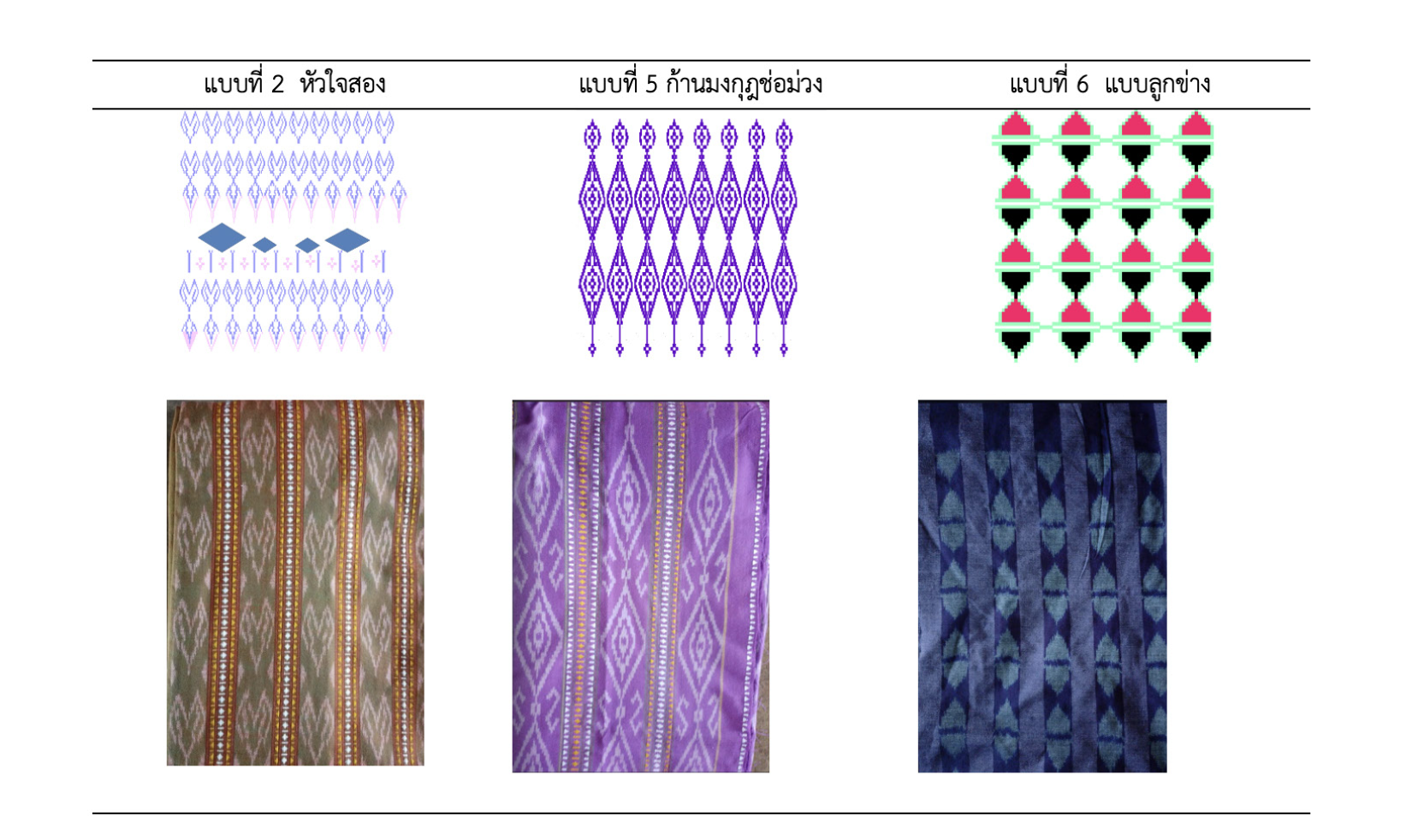
2) ผู้วิจัยได้ออกแบบลวดลายผ้าด้วยโปรแกรม Microsoft Excel จำนวน 10 ลาย ได้แก่ 1) ลายข้าวหลามตัดใจร้อยดวง 2) ลายหัวใจสอง 3) ลายช่อดอกบุษบา 4) ลายมณีหัตถเกศ 5) ลายก้านมงกุฎช่อม่วง 6) ลายลูกข่าง 7) ลายขิดประยุกต์ 8) ลายกำแพงเมือง 9) ลายกลีบดอกไม้ และ 10) ลายใบชบา และ 2) ภาพรวมผลการประเมินคุณภาพของลายผ้าทอที่ออกแบบโปรแกรมคอมพิวเตอร์ มีค่าเฉลี่ย ( =3.81) อยู่ในระดับมาก มีลายลูกข่าง ลายก้านมงกุฎช่อม่วงและลายสองหัวใจมีค่าเฉลี่ยสูงสุด (=4.3) เป็น 3 ลำดับแรกที่ผู้ทอผ้าเกิดความพึงพอใจในลวดลายและนำลายผ้ามาทอจนได้ผ้าตัวอย่าง จำนวน 3 ลาย รวมทั้งได้เก็บข้อมูลผู้เชี่ยวชาญจากประธานกลุ่มทอผ้าสตรีบ้านโปร่งเขนงและช่างทอผ้าจำนวน 4 ท่านมีความคิดเห็นด้วยกับคุณภาพของลายทอผ้าทอมือที่ออกแบบด้วยโปรแกรมคอมพิวเตอร์โดยรวมมีคุณภาพอยู่ในระดับดี
Downloads
Article Details

อนุญาตภายใต้เงื่อนไข Creative Commons Attribution-NonCommercial-NoDerivatives 4.0 International License.
** ข้อความ ข้อคิดเห็น หรือข้อค้นพบ ในวารสารสหวิทยาการสังคมศาสตร์และการสื่อสารเป็นของผู้เขียน ซึ่งจะต้องรับผิดชอบต่อผลทางกฎหมายใด ๆ ที่อาจเกิดขึ้นจากบทความและงานวิจัยนั้น ๆ โดยมิใช่ความรับผิดชอบของคณะนิเทศศาสตร์ มหาวิทยาลัยราชภัฏรำไพพรรณี **
เอกสารอ้างอิง
กรมพัฒนาชุมชน. (2564). สืบสานอนุรักษ์ถิ่นไทยดำรงไว้ในแผ่นดิน. กรมพัฒนาชุมชน กระทรวงมหาดไทย.
เกศินี บัวดิศ. (2560). ผ้าทอพื้นเมืองของชาวอีสาน. วารสารพื้นถิ่นโขง ชี มูล,3(1), 55-84.
คณะกรรมการวัฒนธรรมแห่งชาติ.(2534). ภูมิปัญญาชาวบ้านกับการดำเนินงานด้านวัฒนธรรมและการพัฒนาชนบท. อมรินทร์พริ้นติ้งกรุ๊ฟ.
จุรีวรรณ จันพลา, วลี สงสุวงค์,เพ็ญสินี กิจค้า,และสุรีรัตน์วงศ์สมิง. (2559). การพัฒนารูปแบบผลิตภัณฑ์ผ้าทอไทยทรงดำเพื่อสร้างมูลค่าเพิ่มตามแนวทางเศรษฐกิจสร้างสรรค์. วารสารวิชาการ Veridian E-Journal, Silpakorn University, 9(2), 82-98.
ฉัตยาพร เสมอใจ, และมัทนียา สมมิ.(2546). พฤติกรรมผู้บริโภค. ธรรมกมลการพิมพ์.
นพรัตน์ ภูมิวุฒิสาร. (2558). การจัดการส่งเสริมการตลาด (พิมพ์ครั้งที่ 2). โรงพิมพ์แห่งจุฬาลงกรณ์มหาวิทยาลัย.
นวรัตน์ เลขะกุล. (2547). หอแสงผ้าไทยพื้นบ้าน เฉลิมพระเกียรติสมเด็จพระนางเจ้าฯพระบรมราชินีนาถ.โรงพิมพ์กรุงเทพ.
ประเสริฐ ศิลรัตนา. (2538). การออกแบบลวดลาย. เดียนสโตร์.
พีนาลิน สาริยา. (2549). การออกแบบลวดลาย. เดียนสโตร์.
พูนลาภ ทิพชาติโยธิน. (2553). Value-Added Activities เพิ่มลูกค้าด้วย กิจกรรมเพิ่มมูลค่า. บรรณกิจ.
ยุพา ทรัพย์อุไรรัตน์. (2537). การใช้ภูมิปัญญาชาวบ้านในงานการศึกษานอกระบบโรงเรียนภาคตะวันออก. [วิทยานิพนธ์ปริญญาบัณฑิต ไม่ตีพิมพ์]. จุฬาลงกรณ์มหาวิทยาลัย
รุ่ง แก้วแดง. (2541). ปฏิวัติการศึกษาไทย (พิมพ์ครั้งที่ 2). มติชน.
รัชฎา สุขแสงสุวรรณ. (2547). ผ้าไทคั่ง ไทเวียง. ภูมิปัญญา.
ศิริวรรณ เสรีรัตน์,และคณะ. (2541). การบริหารการตลาดยุคใหม่. ธีระฟิล์มและไซเท็กซ์.
สุจินดา เจียมศรีพงษ์ และ ปิยวัน เพชรหมี.(2560).การสร้างมูลค่าเพิ่มจากภูมิปัญญาท้องถิ่นไทย: กรณีศึกษา ผ้าทอลายโบราณ (รายงานผลการวิจัย). มหาวิทยาลัยนเรศวร.
สินีนาฏ รามฤทธิ์, เกรียงศักดิ์ เขียวมั่ง, และซัมฮี คิม. (2562). การพัฒนาอัตลักษณ์ผ้าไหมบุรีรัมย์สู่การออกแบบผลิตภัณฑ์เชิงพาณิชย์.วารสารมนุษยสังคมสาร(มสส.), 17(2),1-20. https://so03.tci-thaijo.org/index.php/jhusoc/article/view/199782/147550
Argandona, A. (2011). Stakeholder theory and value creation. IESE Business School: University of Navarra.
Cornish, G. (1993). Copyright Management of Document Supply in an Electronic Age: THE CITED™ SOLUTION. Interlending & document supply, 21(2), 13-20.
Freeman, R.E. (1984). Strategic management: A stakeholder approach.Cambridge: Cambridge University press.
Günaydın, G. K., & Avinc, O. (2022). A sustainable alternative for the woven fabrics:“Traditional Buldan handwoven fabrics”. In Handloom Sustainability and Culture: Entrepreneurship, Culture and Luxury. Singapore: Springer Nature Singapore.
Janchai, D. (2004). Marketing Strategy: Big fish eat small fish. Bangkok, Thailand: SE–Educations.
Phiantham, M., Phaengsoi, K., & Panthachai, T. (2015). Khit cloth: Networking and creative economy oriented
product development based on Isan culture. Asia Pacific Journal of Education, Arts and Sciences, 2(4), 22-29.
Na-Thalang, E. (1998). Wisdom and the learning process of Thailand.Nonthaibui: Sukhothai Thammathirat Open University.
Serirat,S. (1999). Principles of Marketing. Bangkok: Phetjaratsang hangthurakit press.
Smith, J. B., & Colgate, M. (2007). Customer value creation: a practical framework. Journal of marketing Theory and Practice, 15(1), 7-23.
Tipphachartyothin, P. (2014). Quality Control: The importance of consistency. Journal of Productivity world, 19(110), 91-96.
Yathongchai, C.,& Yathongchai, W. (2022). Development of Textile Design Program for Creating and Continuation of Thai Fabric Wisdom. J. Res. Unit Sci. Technol. Environ. Learning, 13(2), 198-213.
Yohanis, N.D.,& Stanislaus, A. (2019). Geometry Concept on the Motifs of Woven Fabric in
Kefamenanu Community.Journal of Research and Advances in Mathematics Education, 4(1), 23 -30.
