PUBLIC POLICY: A CASE STUDY RICE PLEDGING SCHEME UNDER GOVERNMENT IN A.D. 2011 – 2014
Article Sidebar
Main Article Content
Abstract
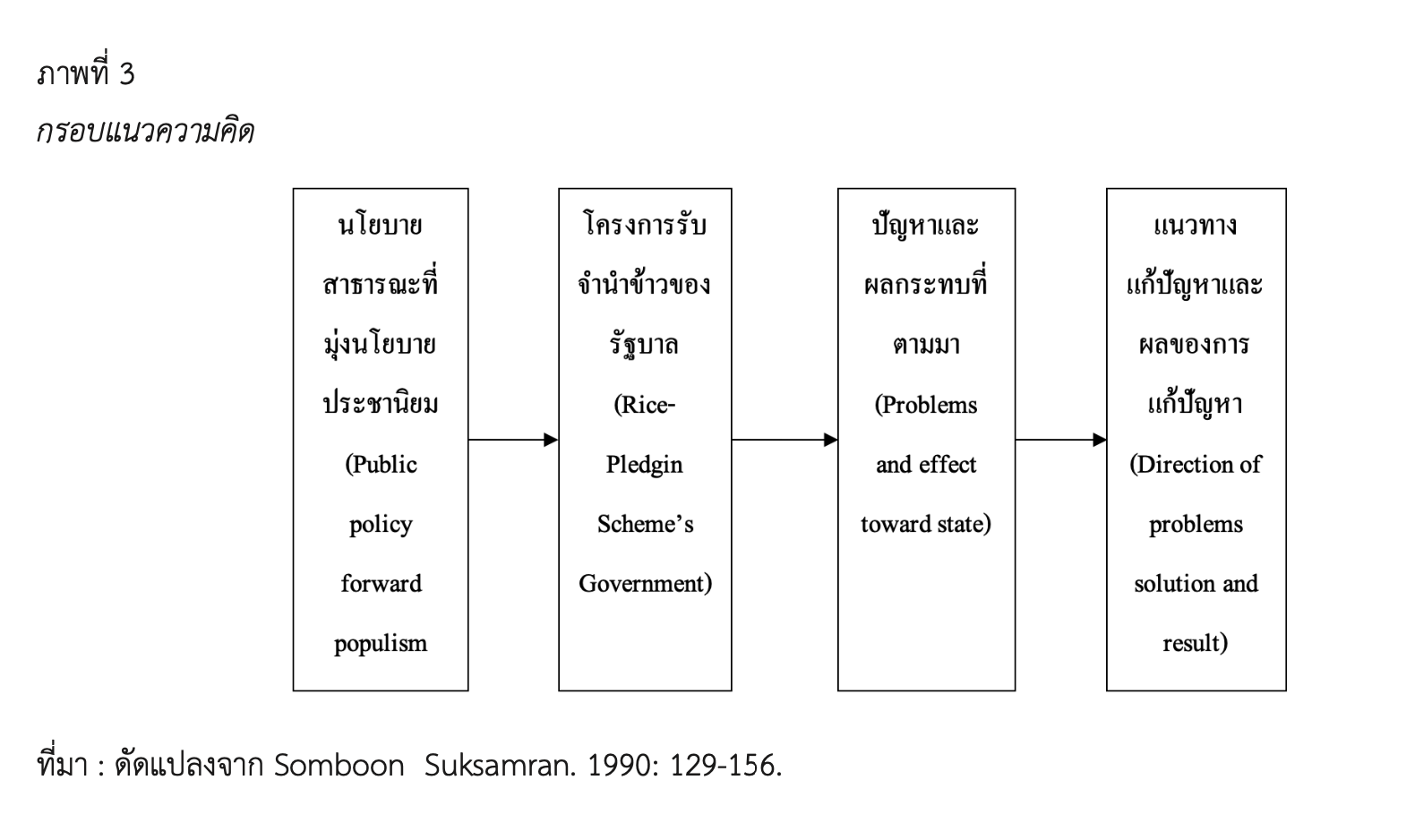
The purpose of this study was: 1) The rice pledging scheme policy, which was one of the populism policies of Phue Thai Party used as a campaign in the general election on July 4th, 2011. The main issue of this policy was all paddies were pledged at 15,000 baht per ton. This was an important factor which led Phue Thai Party won the election and used it in practical way as soon as they became the government.
2) The problem and the following effects from this policy. 3) The strategy from The Government to solve this problem.
This article was reported as qualitative research. The data were collected by using an in-depth interview, an observation, a focus group, and the documents to analyze data.
The result of the report found that:
1) The results had been shown that Phue Thai government faced the inadequate revolving money about 130,000 million baht for pledging paddy during the harvesting season of 2013/2014, after spending 500,000 million baht for pledging paddy during the harvest season of 2011/2012 and 2012/2013.
2) Moreover, this scheme caused many problems such as the corruption between policymakers and policy practice, the subrogation of the rice supply, the domestic pledged rice distribution. These problems became the burden of the new government to find the solution urgently.
3) The Government cannot solve them.
Downloads
Article Details

This work is licensed under a Creative Commons Attribution-NonCommercial-NoDerivatives 4.0 International License.
The author(s) is only responsible for data appearing in the submitted manuscript of Interdisciplinary social sciences and communication journal.Besides, this journal encourages and enables you to share data such as statements, contents, figures, etc. that support your research publication where appropriate, and enables you to interlink the data with proper citation.
References
กรุงเทพธุรกิจ. (15 ธันวาคม 2556). ธ.ก.ส.ยันรัฐบาลเดินหน้าจำนำข้าว. 11
เรืองวิทย์ เกษสุวรรณ. (2546). ประชานิยม-นักบุญหรือคนบาป. สงวนกิจการพิมพ์.
สุภางค์ จันทวานิช. (2551). การวิเคราะห์ข้อมูลในการวิจัยเชิงคุณภาพ (พิมพ์ครั้งที่ 8). โรงพิมพ์จุฬาลงกรณ์แห่งวิทยาลัย.
กรมการค้าภายใน กระทรวงพาณิชย์. (2555). หลักเกณฑ์การดำเนินการโครงการรับจำนำข้าวเปลือกนาปรัง ปี 2555.
อัมมาร์ สยามวาลา. (2556). ข้าวในเศรษฐกิจไทย. โรงพิมพ์มหาวิทยาลัยธรรมศาสตร์.
สมพร อิศวลานนท์. (2557). แนะทบทวนจำนำข้าว. สัมภาษณ์กรุงเทพ. 21.
ฐานเศรษฐกิจ. (2557). ธีระชัย-นิพนธ์ ผลโครงการจำนำข้าวถึงเวลาประเทศเลิก. 9.
เดลินิวส์. (2556). การทุจริตจำนำข้าวช่วง 3 ปี มีถึง 242 คดี. 22.
เดลินิวส์. (2556). ลงนามขายข้าวจีทูจีฉลุย 1.2 ล้านตัน คาดขาดทุน 50%. 11.
Suksamrar Somboon. (1990). “Socio-Political Constraints on the Decision making process in
Thailand”. In Samart Chiasakul and Mikimasa Yoshida. Eds, Thai Economy in changing decade and industrial promotion policy. (129-156). Bangkok: Inthamara Communication Service.
Cress Well. J. W. (1994). Research Design: Qualitative and Qualitative Approaches.
California: SAGE Publication.
Panizza, F. (2003). Populism and the mirror of democracy. United Kingdom : University of Leicester.
Zedillo, E. (2002).“Lula: The end of Latin America populism”. Forbes Global.
Eyestone Robert. (1978). Form Social Issues to Public Policy. John Wiley and sons, Inc.
