PARTICIPATORY COMMUNICATION MANAGEMENT FOR BAN TAPON COMMUNITY KHLUNG DISTRICT CHANTHABURI PROVINCE TO SUPPORT CULTURAL TOURISM
Article Sidebar
Main Article Content
Abstract
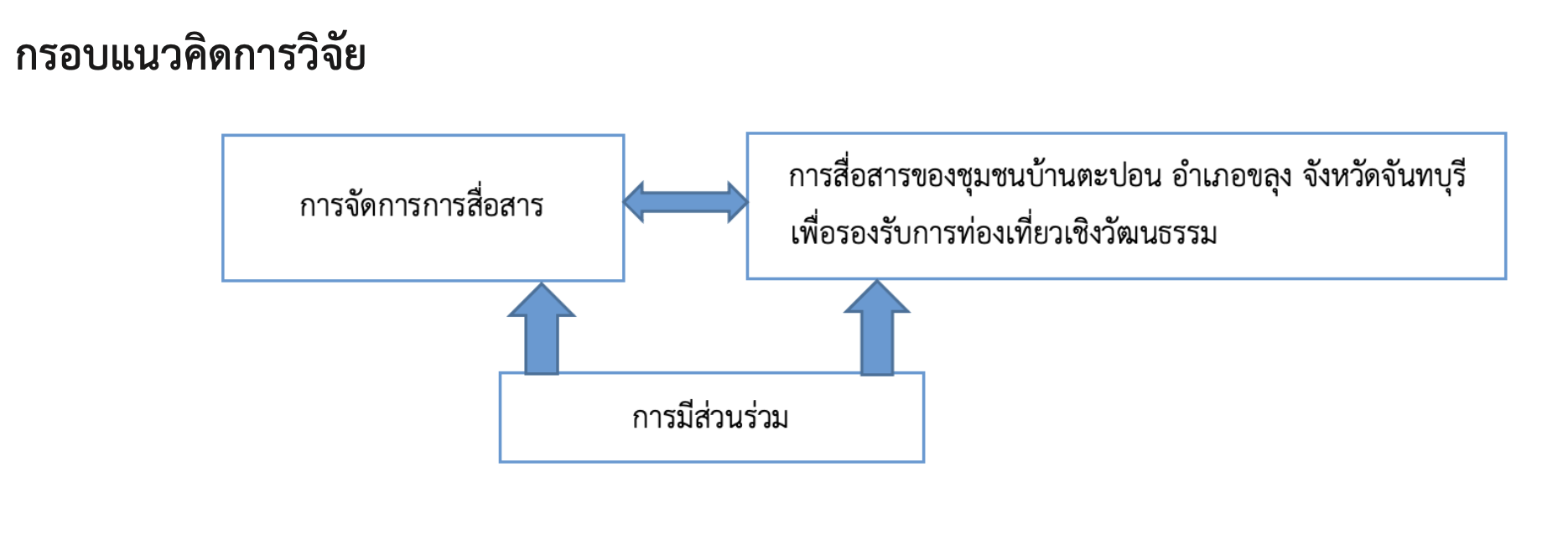
This research aims to study participatory communication management to support cultural tourism. and problems and obstacles in organizing participatory cultural tourism of the Ban Tapon community, Khlung District, Chanthaburi Province. By collecting data by Analysis of documents, field visits, in-depth interviews, group discussions, and organizing a forum to brainstorm ideas with providers. Important information includes the leadership group and the Tapon Community Committee. A group of network members of the Tapon community found that Community participatory communication management in cultural tourism will be developed sustainably and be of maximum benefit to local people. Must start from “Participation” of all groups of stakeholders, both people in the community and people outside the community, from using cultural heritage as a tourism resource through member leaders until it forms a network of shared success, using negotiations and discussions to create agreements Agreed among network members It works in an integrated manner to receive mutual benefits.
It also shows the creation of love, unity, continuation and conservation of the people in this community. It conveys meaning from the unique identity of the community. It was found that the problems and obstacles that occurred consisted of 2 things: lack of continuous budget support; Communication aimed specifically at community leaders and social drivers. and community management To create knowledge, understanding, and cooperation is not yet effective enough to achieve sustainability.
Downloads
Article Details

This work is licensed under a Creative Commons Attribution-NonCommercial-NoDerivatives 4.0 International License.
The author(s) is only responsible for data appearing in the submitted manuscript of Interdisciplinary social sciences and communication journal.Besides, this journal encourages and enables you to share data such as statements, contents, figures, etc. that support your research publication where appropriate, and enables you to interlink the data with proper citation.
References
กาญจนา แก้วเทพ. (2548). ก้าวต่อไปของการสื่อสารเพื่อการพัฒนาชุมชน. (น.28). สำนักงานกองทุนสนับสนุนการวิจัย.
ชณัฎฐ์ พงศ์ธราธิก, สุมนรตรี นิ่มเนติพันธ์ และอนันต์ มาลารัตน์. (2564). การพัฒนากลยุทธ์การท่องเที่ยวเชิงวัฒนธรรมใน
จังหวัดประจวบคีรีขันธ์. คณะพลศึกษา มหาวิทยาลัยศรีนครินทรวิโรฒ. วารสาร มจร พุทธปัญญาปริทรรศน์,6(3), 7.
ชาญ ปฐมกาญจนา และนรินทร์ สังข์รักษา. (2558). แนวทางการส่งเสริมการท่องเที่ยวเชิงวัฒนธรรมแบบมีส่วนร่วมของ
ชุมชนตลาดบางหลวง อำเภอบางเลน จังหวัดนครปฐม. วารสารวิทยบริการมหาวิทยาลัยสงขลานครินทร์, 26(1), 5.
นุชนารถ รัตนสุวงศ์ชัย. (2554). กลยุทธ์การพัฒนาการท่องเที่ยวเชิงวัฒนธรรม. วารสารมนุษยศาสตร์, 18(1), 31-50.
ยุบล เบ็ญจรงค์กิจ.(2554). การวางแผนและการประเมินผลการสื่อสารเชิงกลยุทธ์. (น.121). คณะนิเทศศาสตร์ จุฬาลงกรณ์มหาวิทยาลัย.
สรชัย ชวรางกูร. (2561). การพัฒนาสื่อดิจิทัลมรดกทางวัฒนธรรมไทยด้วยแบบจำลอง 3 มิติเชิงสถาปัตยกรรมวัดไชย
วัฒนารามในสมัยกรุงศรีอยุธยา. มหาวิทยาลัยเทคโนโลยีพระจอมเกล้าพระนครเหนือ. วารสารการอาชีวะและเทคนิคศึกษา, 8(15), 42-52.
สุชานาถ สิงหาปัด. (2560). ท่องเที่ยวเชิงสร้างสรรค์ทางวัฒนธรรม : กิจกรรมสร้างรายได้เพิ่มแก่ชุมชนผู้ไทบ้านโพน
จังหวัดกาฬสินธุ์. วารสารเศรษฐศาสตร์การเมืองบูรพา, 5(1), 53-67.
สำนักงานสภาพัฒนาการเศรษฐกิจและสังคมแห่งชาติ. (2566). เอกสารอัดสำเนา.
Lasswell, H. (1948). The communication of ideas. New York : Harper and Row Richards, G. (2010). Cultural
Tourism : A review of recent research and trends. Journal of Hospitality and Tourism Management, 3(6), 12-21.
Um, S., & Crompton, J. L. (1990). Development of pleasure travel attitude dimensions. Annals of TourismResearch, 1(8), 374-378.
