THE MANAGEMENT GUIDELINE OF HOTEL ENTREPRENEURS IN KOH CHANG DISTRIC, TRAT PROVINCE DURING THE EPIDEMIC OF COVID-19
Article Sidebar
Main Article Content
Abstract
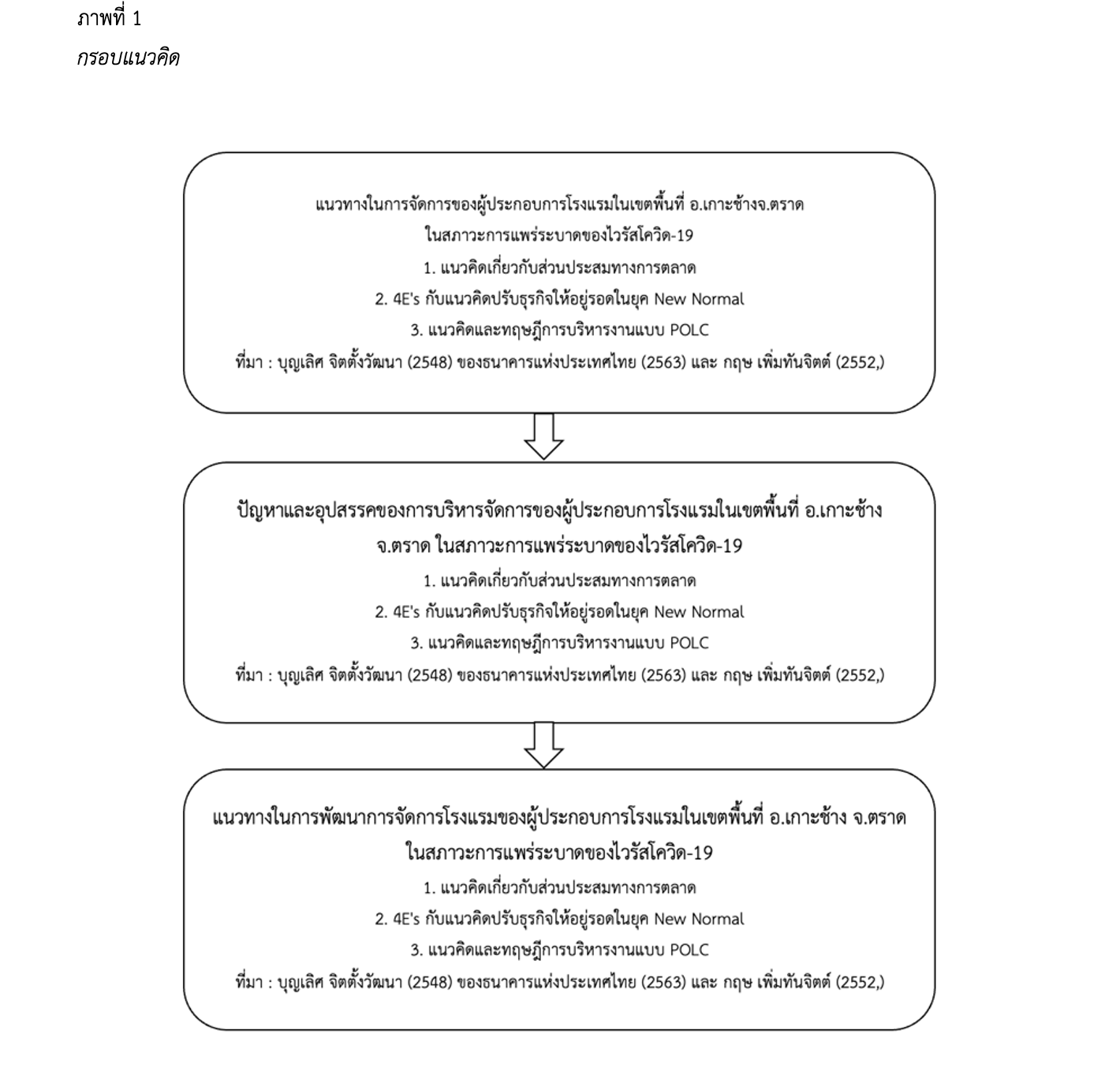
The purpose of this study were: 1) to study management approaches, 2) to examine problems and challenges in management. and 3) to explore strategies for developing hotel management practices in the Koh Chang district, Trat province, under the circumstances of the COVID-19 pandemic. The research methodology employed a qualitative research approach, conducting interviews with a selected sample of 12 hotel operators in the Koh Chang area. The data collected from the interviews were analyzed using content analysis to identify key findings. The purpose of this study is to investigate strategies for developing hotel management practices in the context of the COVID-19 pandemic.
The results of the research found that:
1.When the COVID-19 virus spread in the Koh Chang district, Trat province, hotel operators at all levels were significantly affected. This was due to government prevention measures and the hesitancy of tourists, which resulted in many operators having to close their businesses, while others had to adjust their management strategies, particularly in terms of service, marketing, building confidence, and pricing.
2.The outbreak of the COVID-19 virus has presented numerous challenges and obstacles for hotel operators in the Koh Chang district, Trat province. The impact on hotel operators in the area has been significant, as the spread of the virus has taken various forms and the government measures to address it have been implemented with delays. This has caused concerns and anxieties among both tourists and hotel operators themselves. As a result, managing hotels has become problematic and challenging. However, hotel operators have made adjustments to adapt to the problems and obstacles posed by the COVID-19 pandemic.
3.With the spread of the COVID-19 virus in the Koh Chang district, Trat province, hotel operators at all levels have been significantly impacted. Due to the government's preventive measures, hotel operators in the Ko Chang area have had to develop strategies to manage the COVID-19 crisis collectively. This includes the development of pricing, management approaches, marketing techniques, and building confidence among tourists. The objective is to foster improvements in these areas and effectively deal with the challenges posed by the COVID-19 pandemic.
Downloads
Article Details

This work is licensed under a Creative Commons Attribution-NonCommercial-NoDerivatives 4.0 International License.
The author(s) is only responsible for data appearing in the submitted manuscript of Interdisciplinary social sciences and communication journal.Besides, this journal encourages and enables you to share data such as statements, contents, figures, etc. that support your research publication where appropriate, and enables you to interlink the data with proper citation.
References
กรกนก ทิพรส. (2548). องค์การและการจัดการ. อภิชาตการพิมพ์.
ฑิตาพร รุ่งสถาพร. (2563). พฤติกรรมผู้บริโภคต่อการซื้อสินค้าบนช่องทาง ออนไลน์ ในภาวะวิกฤตโควิด-19 ในเขตกรุงเทพมหานครปริมณฑลและพิษณุโลก. [วิทยานิพนธ์ปริญญามหาบัณฑิต ไม่ได้ตีพิมพ์]. มหาวิทยาลัยกรุงเทพ
ธีรภัทร เกื้อชู และยุทธชัย ฮารีบิน. (2564). แนวทางกำหนดกลยุทธ์การปรับตัวเพื่อความอยู่รอดของอุตสาหกรรมโรงแรมในสถานการณ์การแพร่ระบาดโรคติดเชื้อไวรัสโคโรน่า2019(COVID-19) พื้นที่ตำบลป่าตอง จังหวัดภูเก็ต. การประชุมนำเสนอผลงานวิจัยบัณฑิตศึกษาระดับชาติ มหาวิทยาลัยราชภัฏอุดรธานี ครั้งที่ 14 ประจำปีการศึกษา 2564
นิติ รัตปรีชาเวชและจิตตาภรณ์ ศรีบุญจิตต์. (2559). ศึกษากลยุทธ์การรับมือกับความไม่แน่นอน ของอัตราว่างในช่วงนอกฤดูกาลการเดินทางในธุรกิจโรงแรม. คณะพาณิชยศาสตร์และการบัญชี มหาวิทยาลัยธรรมศาสตร์. จุฬาลงกรณ์ธุรกิจปริทัศน์, 38(150), 23-34.
บัวขาว จารุจินดา. (2546). แนวทางการจัดการธุรกิจสถานรับเลี้ยงเด็กก่อนวัยเรียนด้านการเตรียมการก่อนดำเนินการ. เชียงใหม่. [วิทยานิพนธ์ปริญญามหาบัณฑิต ไม่ได้ตีพิมพ์]. มหาวิทยาลัยเชียงใหม่.
ปาริชาติ ดีผักแว่น. (2547). การบริหารจัดการการธุรกิจเครื่องปั้นดินเผา ตำบลด่านเกวียน อำเภอโชคชัย จังหวัดนครราชสีมา. [การศึกษาปัญหาพิเศษปริญญามหาบัณฑิต ไม่ได้ตีพิมพ์]. มหาวิทยาลัยมหาสารคาม.
ศศิพิมล แสงจันทร์. (2560). การจัดการเพื่อเสริมสร้างการเติบโตของธุรกิจโรงแรมขนาดเล็กในเขตภาคตะวันออกของประเทศ ไทย. [วิทยานิพนธ์ปริญญาดุษฎีบัณฑิต ไม่ได้ตีพิมพ์]. มหาวิทยาลัยราชภัฏวไลอลงกรณ์.
ศิริวรรณ เสรีรัตน์ และคณะ. (2541). กลยุทธ์ทางการตลาดและการบริหารการตลาด. ธีระฟิล์มและไซแท็กซ์,
Epuran, G., Ivasciuc, I. S., & Micu, A. (2015). From 4P's to 4 E's–How to avoid the risk of unbalancing the marketing mix in today hotel businesses. Annals of Dunarea de Jos University of Galati Fascicle Economics and Applied Informatics, 21(2), 78-85.
Ha, Y. H., & Perks, H. (2005). Effects of consumer perceptions of brand experience on the web: Brand familiarity, satisfaction and brand trust. Journal of Consumer Behavior, 4(6), 438-452.
Konhäusner, P., Shang, B., & Dabija, D.-C. (2021). Application of the 4Es in online crowdfunding platforms: A comparative perspective of Germany and China.Journal of Risk and Financial Management, 14(2), 1-19.
Kotler, Philip. (1997). Marketing management : analysis, planning, implementation and control (9th ed). A Simon & Schuster Company.
Marketingoops. (2563). Highlight: ผลสำรวจ ‘Adobe’ แนะกลยุทธ์ฟื้นธุรกิจหลัง COVID-19 เน้นสื่อสารระดับพอเหมาะ – ใช้ data วิเคราะห์ CX strategy.
