การวิเคราะห์และประเมินความคุ้มค่าโครงการวิจัยภูมิปัญญาการแพทย์แผนไทยและสมุนไพร
Article Sidebar
Main Article Content
บทคัดย่อ
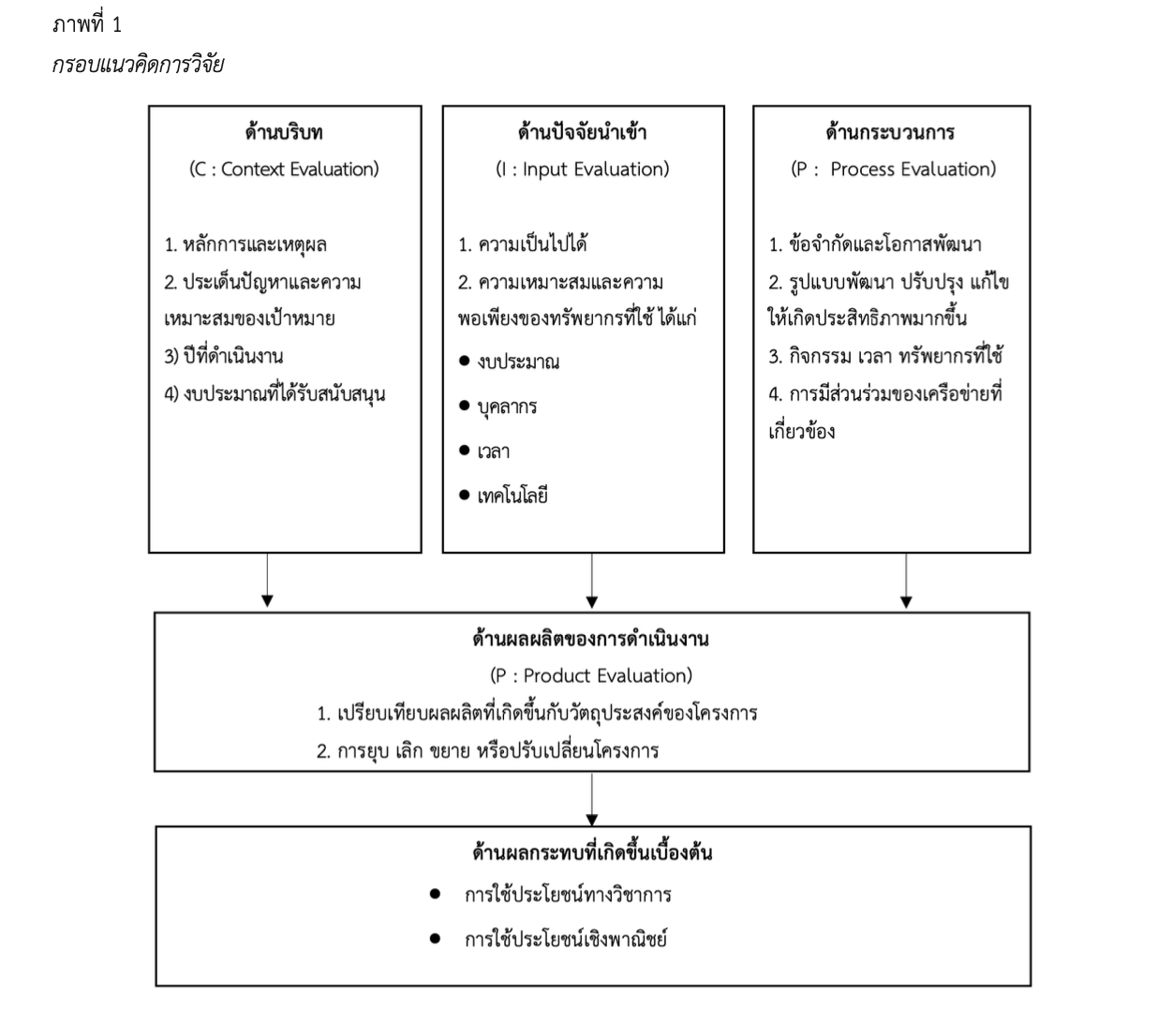
การวิจัยนี้มีวัตถุประสงค์ เพื่อวิเคราะห์และประเมินความคุ้มค่าโครงการวิจัยภูมิปัญญาการแพทย์แผนไทยและสมุนไพร ปี 2560-2564 ที่ได้รับสนับสนุนทุนเพื่อการศึกษาวิจัยและพัฒนาต่อยอดภูมิปัญญาการแพทย์แผนไทย ภายใต้แผนปฏิบัติงานกองทุนภูมิปัญญาการแพทย์แผนไทย เก็บข้อมูลและกำหนดประเด็นวิเคราะห์ประเมินความคุ้มค่าและผลกระทบที่เกิดขึ้นจากการนำไปใช้ประโยชน์ทางวิชาการและเชิงพาณิชย์จากข้อมูลเอกสาร ได้แก่ รายงานความก้าวหน้าโครงการฯ โดยใช้รูปแบบของ CIPP Model ทั้ง 4 ด้าน ประกอบด้วย ด้านบริบท (Context Evaluation) ด้านปัจจัยนำเข้า (Input Evaluation) ด้านกระบวนการ (Process Evaluation) และด้านผลผลิต (Product Evaluation) เสร็จสิ้นสมบูรณ์ 80 โครงการ ด้านบริบท ผลการวิจัยพบว่า องค์ความรู้ภูมิปัญญาการแพทย์แผนไทยและสมุนไพร 40% ได้รับอนุมัติปี 2563 และ 21.25% ปี 2562 ตามลำดับ ด้านปัจจัยนำเข้า พบว่า 75% หัวหน้าโครงการเป็นบุคลากรสังกัดมหาวิทยาลัยที่จัดการเรียนการสอนและมีประสบการณ์ด้านการแพทย์แผนไทยและสมุนไพร 25% สังกัดหน่วยงานรัฐ ตามลำดับ ระยะเวลาดำเนินงาน 1 ปี (88.75%) และใช้งบประมาณอย่างเหมาะสมสอดคล้องตามกิจกรรมกำหนด ด้านกระบวนการ พบว่า ปี 2562-2563 จำเป็นต้องทบทวนรูปแบบดำเนินงานให้ประสบผลสำเร็จท่ามกลางสถานการณ์แพร่ระบาดของโรคโควิด-19 และด้านผลผลิตของการดำเนินงาน พบว่า รูปแบบการวิจัยตำรับยาสมุนไพร 46.25% วิจัยสมุนไพรเดี่ยว 35% และวิจัยรูปแบบหัตการ/อื่นๆ 18.75% ตามลำดับ ผลกระทบที่เกิดขึ้นเบื้องต้น พบว่า สามารถนำข้อมูลไปใช้ประโยชน์ทางวิชาการ ได้แก่ ข้อมูลการเพิ่มข้อบ่งใช้ใหม่ตามองค์ความรู้ภูมิปัญญาการแพทย์แผนไทยของตำรับยาแผนไทยและยาสมุนไพร เช่น ยาหอมนวโกฐ (เพิ่มความจำ) ยาปลูกไฟธาตุ (บำรุงน้ำนม) และเชิงพาณิชย์ ได้แก่ ข้อมูลการพัฒนารูปแบบการใช้ (ยาธาตุอบเชยแบบเม็ดเคี้ยว) และข้อมูลเพื่อรองรับโรคอุบัติใหม่ เช่น ยาฟ้าทะลายโจร ต้านโควิด-19 สามารถเกิดผลลัพธ์ด้านการส่งเสริม รักษา ฟื้นฟู สุขภาพของประชาชน ทดแทนการขาดแคลนยา ลดการนำเข้ายาจากต่างประเทศ และสร้างมูลค่าทางเศรษฐกิจทำให้ประเทศพึ่งตนเองด้านผลิตภัณฑ์สมุนไพรมากขึ้น
Downloads
Article Details

อนุญาตภายใต้เงื่อนไข Creative Commons Attribution-NonCommercial-NoDerivatives 4.0 International License.
** ข้อความ ข้อคิดเห็น หรือข้อค้นพบ ในวารสารสหวิทยาการสังคมศาสตร์และการสื่อสารเป็นของผู้เขียน ซึ่งจะต้องรับผิดชอบต่อผลทางกฎหมายใด ๆ ที่อาจเกิดขึ้นจากบทความและงานวิจัยนั้น ๆ โดยมิใช่ความรับผิดชอบของคณะนิเทศศาสตร์ มหาวิทยาลัยราชภัฏรำไพพรรณี **
เอกสารอ้างอิง
กรมการแพทย์แผนไทยและการแพทย์ทางเลือก (2564). รวมพระราชบัญญัติและกฎหมายลำดับรอง พระราชบัญญัติคุ้มครองและส่งเสริมภูมิปัญญาการแพทย์แผนไทย พ.ศ. 2542 (พิมพ์ครั้งที่ 6). สำนักพิมพ์พุ่มทอง.
กองทุนภูมิปัญญาการแพทย์แผนไทย เรื่อง รายงานผลการดำเนินงานโครงการที่กองทุนภูมิปัญญาการแพทย์แผนไทย สนับสนุน พ.ศ. 2560 - 2564.
กังสดาล กนกหงษ์ และอรทัย เลาอลงกรณ์ (2559). การประเมินผลการดำเนินงานโครงการกองทุนพัฒนาการเมือง ภาคพลเมืองใน 8 จังหวัดภาคเหนือตอนบน
ประกาศคณะกรรมการหลักประกันสุขภาพแห่งชาติ เรื่อง หลักเกณฑ์การดำเนินงานและการบริหารจัดการกองทุนหลักประกันสุขภาพแห่งชาติสำหรับผู้มีสิทธิหลักประกันสุขภาพแห่งชาติ ปีงบประมาณ พ.ศ. 2565. (26 กรกฎาคม 2565). ราชกิจจานุเบกษา . เล่มที่ 139 ตอนพิเศษ 174 ง: หน้า 99.
ภัทรพล จึงสมเจตไพศาล 2562 การพัฒนาต้นแบบการส่งเสริมการใช้ยาสมุนไพร ในครัวเรือน (Med Kit) ในประเทศไทย
พัชรินทร์ อินโอ้ (2558) การประเมินประสิทธิผลโครงการตามยุทธศาสตร์ด้านการค้าชายแดนของจังหวัดแม่ฮ่องสอน
เยาวดี รางชัยกุล วิบูลย์ศรี (2546) การประเมินโครงการแนวคิดและแนวปฏิบัติ (พิมพ์ครั้งที่ 3 ).จุฬาลงกรณ์มหาวิทยาลัย.
ราชกิจจานุเบกษา.(2562) พระราชกฤษฎีกาว่าด้วยหลักเกณฑ์วิธีการบริหารกิจการบ้านเมืองที่ดี(ฉบับที่2)พ.ศ. 2562. 136 (56ก) ,น.253-256.
ราชกิจจานุเบกษา.(2565) ประกาศคณะกรรมการพัฒนาระบบยาแห่งชาติ เรื่อง บัญชียาหลักแห่งชาติด้านสมุนไพร พ.ศ. 2564. (18 กุมภาพันธ์ 2565). เล่มที่ 139 ตอนพิเศษ 41 ง: หน้า 47.
รุจินาถ อรรถสิษฐ และคณะ (2565) การวิเคราะห์และสังเคราะห์องค์ความรู้การแพทย์พื้นบ้านและการแพทย์บูรณาการใช้ประโยชน์ในระบบสุขภาพไทย (ภาพรวม) กรมการแพทย์แผนไทยและการแพทย์ทางเลือก
วิชัย โชควิวัฒน, บรรณาธิการ. ระบบยาของประเทศไทย 2563. กรุงเทพฯ: ธนอรุณการพิมพ์; 2564.
แววตา พฤกษา (2550) ประเมินโครงการส่งเสริมนิสัยรักการอ่านของนักเรียน สังกัด สำนักงานเขตพื้นที่การศึกษาพระนครศรีอยุธยา เขต 1 โดยใช้รูปแบบการประเมินซิปป์ (CIPP Model)
สุดารัตน์ ตันฑะอาริยะ. การวิเคราะห์ตำรับยาแผนแผนไทยและสมุนไพร, 2548 Available from: https://dric.nrct.nrct.go.th
สถาบันส่งเสริมการบริหารกิจการบ้านเมืองที่ดี.(2560). คู่มือการประเมินผลลัพธ์และความคุ้มค่าของโครงการที่ส่วนราชการสังกัดรัฐสภาดำเนินการ. กรุงเทพฯ : รัฐสภา.
สำนักงานบริหารกองทุนภูมิปัญญาการแพทย์แผนไทย (2560) รายงานผลการดำเนินงานโครงการที่กองทุนภูมิปัญญาการแพทย์แผนไทย สนับสนุน พ.ศ. 2557 - 2559 .สำนักพิมพ์ จุฑาเจริญทรัพย์.
Stufflebeam, D. L. (2003). The CIPP Model for Evaluation. In: Kellaghan, T., Stufflebeam, D.L. (eds) International Handbook of Educational Evaluation. Kluwer International Handbooks of Education (Vol. 9). (T. a. Kellaghan, Ed.) Dordrecht: Springer Netherlands.
