การประเมินความต้องการจำเป็นของการพัฒนาสมรรถนะในศตวรรษที่ 21 ของครูพลศึกษา สังกัดสำนักงานเขตพื้นที่การศึกษาประถมศึกษากระบี่
Article Sidebar
Main Article Content
บทคัดย่อ
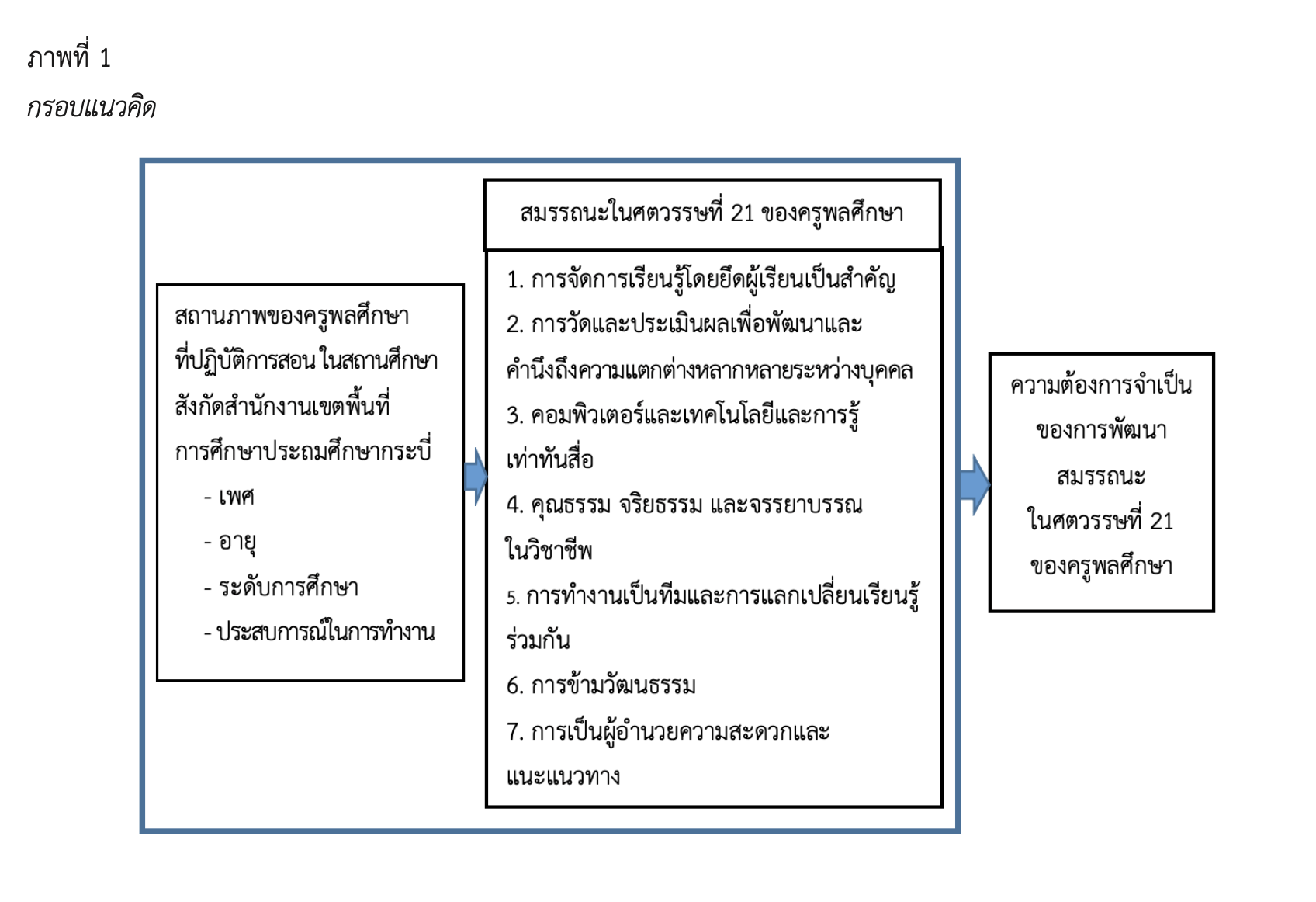
การวิจัยครั้งนี้มีวัตถุประสงค์ 1) เพื่อประเมินความต้องการจำเป็นของการพัฒนาสมรรถนะในศตวรรษที่ 21 ของครูพลศึกษา และ 2) เพื่อเปรียบเทียบความต้องการจำเป็นของการพัฒนาสมรรถนะในศตวรรษที่ 21 ของครูพลศึกษา กลุ่มตัวอย่างที่ใช้ คือ ครูที่ปฏิบัติการสอนวิชาพลศึกษา สังกัดสำนักงานเขตพื้นที่การศึกษาประถมศึกษากระบี่ จำนวน 87 คน เครื่องมือที่ใช้เป็นแบบประเมินสมรรถนะครู วิเคราะห์ข้อมูลวิเคราะห์โดยใช้ค่าดัชนี PNImodified
ผลการวิจัยพบว่า ระดับสมรรถนะในศตวรรษที่ 21 ของครูพลศึกษา สังกัดสำนักงานเขตพื้นที่การศึกษาประถมศึกษากระบี่ ตามความคาดหวังในภาพรวมอยู่ในระดับมากที่สุด ส่วนระดับสมรรถนะตามสภาพที่เป็นจริงอยู่ในระดับมาก โดยมีค่าดัชนีลำดับความของความต้องการจำเป็น PNIModified ภาพรวมมีค่าเท่ากับ 0.24 ซึ่งสมรรถนะที่มีความต้องการจำเป็นสูงสุด คือ ด้านคอมพิวเตอร์และเทคโนโลยีและการรู้เท่าทันสื่อ PNIModified = 0.34 การเปรียบเทียบจำแนกตามสมรรถนะดังนี้ 1) ครูพลศึกษาเพศหญิง มีความต้องการจำเป็นในการพัฒนาสมรรถนะ สูงกว่าเพศชาย 2) ครูพลศึกษาอายุต่ำกว่า 30 ปี และระหว่าง 41-50 ปี มีความต้องการจำเป็นในการพัฒนาสมรรถนะสูงกว่าอายุระหว่าง 30-40 ปี และ 51-60 ปี 3) ครูพลศึกษาระดับการศึกษาปริญญาตรีมีความต้องการจำเป็นในการพัฒนาสมรรถนะมากกว่าระดับการศึกษาปริญญาโท และ 4) ครูพลศึกษาที่มีประสบการณ์การทำงานต่ำกว่า 1 ปี มีความต้องการจำเป็นในการพัฒนาสมรรถนะสูงสุด
Downloads
Article Details

อนุญาตภายใต้เงื่อนไข Creative Commons Attribution-NonCommercial-NoDerivatives 4.0 International License.
** ข้อความ ข้อคิดเห็น หรือข้อค้นพบ ในวารสารสหวิทยาการสังคมศาสตร์และการสื่อสารเป็นของผู้เขียน ซึ่งจะต้องรับผิดชอบต่อผลทางกฎหมายใด ๆ ที่อาจเกิดขึ้นจากบทความและงานวิจัยนั้น ๆ โดยมิใช่ความรับผิดชอบของคณะนิเทศศาสตร์ มหาวิทยาลัยราชภัฏรำไพพรรณี **
เอกสารอ้างอิง
กัลย์วิสาข์ ธาราวร. (2558). การประเมินความต้องการจำเป็นของครูเพื่อพัฒนาความสามารถในการวัดและประเมินผลการเรียนรู้ของนักเรียนระดับมัธยม. [วิทยานิพนธ์ปริญญามหาบัณฑิต ไม่ได้ตีพิมพ์]. จุฬาลงกรณ์มหาวิทยาลัย.
ฉัตรชัย หวังมีจงมี. (2560). สมรรถนะของครูไทยในศตวรรษที่ 21 : ปรับการเขียน เปลี่ยนสมรรถนะ. วารสารสถาบันเสริมศึกษาและทรัพยากรมนุษย์ มหาวิทยาลัยธรรมศาสตร์, 12(2). 47-63.
ทรงเดช สอนใจ. (2560). การพัฒนาวิชาชีพและการเสริมสร้างสมรรถภาพของวิชาชีพครู. http://www.medu.srru.ac.th/?p=15
นิตยา บุญปริตร. (2556). การพัฒนาสมรรถนะครูในอนาคต. ส เจริญการพิมพ์.
วิจารณ์ พานิช. (2556). การสร้างการเรียนรู้สู่ศตวรรษที่ 21 (พิมพ์ครั้งที่ 2). มูลนิธิสยามกัมมาจล.
วิจารณ์ พานิช. (2555). วิธีสร้างการเรียนรู้เพื่อศิษย์ในศตวรรษที่ 21. ตถาตา พับลิเคชั่น.
ศิริพร อาจปักษา. (2557). การประเมินความต้องการจำเป็นในการพัฒนาตนเองของครูสถานศึกษาสังกัดสำนักงานคณะกรรมการส่งเสริมการศึกษาเอกชนจังหวัดราชบุรี (วิทยานิพนธ์ปริญญาโท ไม่ได้ตีพิมพ์). มหาวิทยาลัยศิลปากร.
สมภัสสร บัวรอด และ กรองทอง พิพิธทพงษ์. (2560). การประเมินความต้องการจำเป็นในการพัฒนาสมรรถนะด้านการวัดและประเมินผลการศึกษาของนักศึกษาวิชาชีพครูตามการรับรู้ของอาจารย์นิเทศก์และครูพี่เลี้ยง โรงเรียนร่วมพัฒนาวิชาชีพครูมหาวิทยาลัยราชภัฎหมู่บ้านจอมบึง. การประชุมวิชาการระดับชาติ ครั้งที่ 5 ราชภัฏหมู่บ้านจอมบึงวิจัย. มหาวิทยาลัยราชภัฏหมู่บ้านจอมบึง, ราชบุรี.
สุวิมล ว่องวานิช. (2548). การวิจัยประเมินความต้องการจำเป็น. สำนักพิมพ์จุฬาลงกรณ์มหาวิทยาลัย
สำนักงานเลขาธิการสภาการศึกษา. (2557). แนวทางการพัฒนาการศึกษาไทยกับการเตรียมความพร้อมสู่ศตวรรษที่ 21. รายงานวิจัย. บริษัท พริกหวานกราฟฟิค จำกัด
อัญชลี สุขในสิทธิ์ และอนุพันธ์ คำปัน . (2560). การประเมินความต้องการจำเป็นในการพัฒนาสมรรถนะครูในศตวรรษที่ 21. วารสารสังคมศาสตร์ มหาวิทยาลัยศรีนครินทรวิโรฒ, 20(1). 56-62.
Dusitkul, C. (2012). Effects of physical education activity management by using group dynamic games on aggressive behaviors of elementary school students. Journal of Education. Retrieved November 15, 2017. http://www.edu.chula.ac.th/ojed, OJED, Vol.7, No.1, 2012, pp.1057 – 1071.
Jitmitrapap, S. (2014). Transforming the world of 21st century learning and development into a "professional teacher", Retrieved October 23, 2017. http://hu.swu.ac.th/files/ km/55/2_changes_in_the_world21@.pdf.
Khongsanoh, S. (2017). The roles of teacher in 21st century. Retrieved October 23, 2017. http://www.parliament.go.th/ewtadmin/ewt/parliament_parcy/ewt_dl_link.php? nid=28182.
McKinsey. (2007). McKinsey Report on Education. (2011, March 1) Retrieved. http//www.mckinsey.com
Pianchob, W. (2005). Compiling article of philosophy, principle, method of teaching, and evaluation for physical education assessment. Bangkok : Chulalongkorn Universitty Press.
Yamane, Taro. (1973). Statistics: An Introductory Analysis. 3rded. New York: Harper and Row Publications.
UNESCO. (2014). Education Development in Japan. Retrieved. http://www.unesco.org/edu/conyryreprts/ japan/rapport 1.html.
