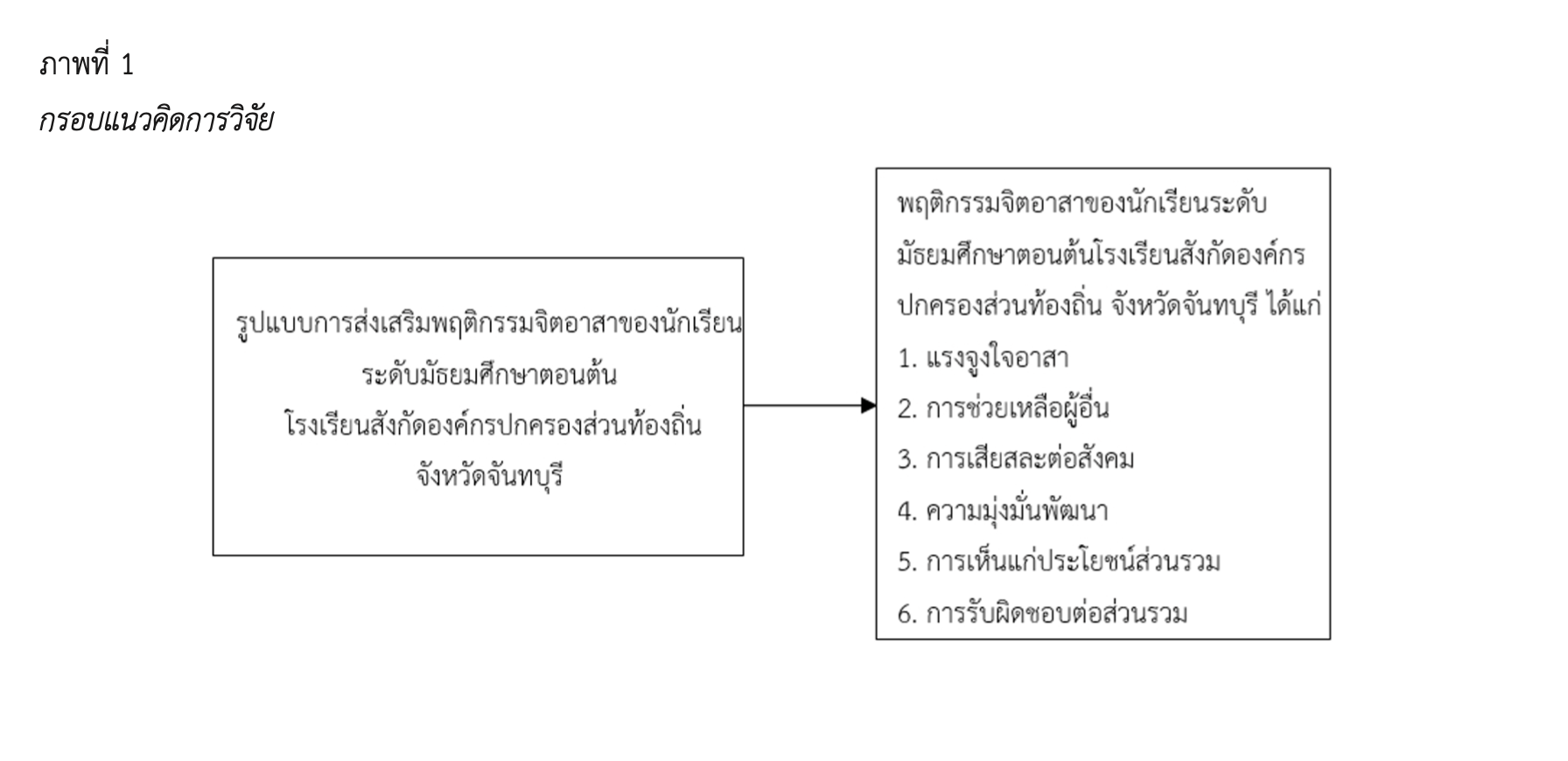
รูปแบบการส่งเสริมพฤติกรรมจิตอาสาของนักเรียนระดับมัธยมศึกษาตอนต้น โรงเรียนสังกัดองค์กรปกครองส่วนท้องถิ่น จังหวัดจันทบุรี
Article Sidebar
Main Article Content
บทคัดย่อ
การวิจัยครั้งนี้มีวัตถุประสงค์เพื่อ 1) ศึกษาสภาพปัญหา และแนวทางการส่งเสริมพฤติกรรมจิตอาสา 2) เพื่อสร้างและตรวจสอบคุณภาพของรูปแบบการส่งเสริมพฤติกรรมจิตอาสา และ 3) เพื่อทดลองใช้และประเมินผลการใช้รูปแบบการส่งเสริมพฤติกรรมจิตอาสา ใช้รูปแบบการวิจัยแบบผสมผสาน กลุ่มตัวอย่างแบ่งตามวัตถุประสงค์ ดังนี้ ข้อที่ 1 คือ นักเรียน ผู้บริหารและครู โรงเรียนสังกัดองค์กรปกครองส่วนท้องถิ่น จังหวัดจันทบุรี จำนวน 301 คน เลือกกลุ่มตัวอย่างแบบเจาะจง ข้อที่ 2 คือ ผู้บริหารและครู โรงเรียนต้นแบบ จำนวน 9 คน เลือกกลุ่มตัวอย่างแบบเจาะจง ข้อที่ 3 คือ นักเรียนโรงเรียนเทศบาลเมืองจันทบุรี 2 จำนวน 30 คน เลือกกลุ่มตัวอย่างแบบเจาะจง เก็บรวบรวมข้อมูลโดยใช้เครื่องมือ ได้แก่ แบบสอบถาม แบบสัมภาษณ์ แบบประเมิน ชุดกิจกรรมและแบบวัดผล วิเคราะห์ข้อมูลโดยสถิติ ร้อยละ ค่าเฉลี่ย ส่วนเบี่ยงเบนมาตรฐาน และ t-test (Dependent-t)
ผลการวิจัยพบว่า
1) สภาพปัญหาการส่งเสริมพฤติกรรมจิตอาสา โดยรวมอยู่ในระดับปฏิบัติบางครั้ง
2) รูปแบบการส่งเสริมพฤติกรรมจิตอาสาของนักเรียน ประกอบด้วยกิจกรรมส่งเสริมพฤติกรรมจิตอาสา 6 โมดูล ได้แก่ แรงจูงใจอาสา การช่วยเหลือผู้อื่น การเสียสละต่อสังคม ความมุ่งมั่นพัฒนา การเห็นแก่ประโยชน์ส่วนรวม การรับผิดชอบต่อส่วนรวม และ
3) รูปแบบ พบว่า พฤติกรรมจิตอาสาของนักเรียนหลังการการใช้รูปแบบมีพฤติกรรมจิตอาสาสูงขึ้นกว่าก่อนการใช้รูปแบบ
Downloads
Article Details

อนุญาตภายใต้เงื่อนไข Creative Commons Attribution-NonCommercial-NoDerivatives 4.0 International License.
** ข้อความ ข้อคิดเห็น หรือข้อค้นพบ ในวารสารสหวิทยาการสังคมศาสตร์และการสื่อสารเป็นของผู้เขียน ซึ่งจะต้องรับผิดชอบต่อผลทางกฎหมายใด ๆ ที่อาจเกิดขึ้นจากบทความและงานวิจัยนั้น ๆ โดยมิใช่ความรับผิดชอบของคณะนิเทศศาสตร์ มหาวิทยาลัยราชภัฏรำไพพรรณี **
เอกสารอ้างอิง
นันทรัตน์ ปริวัติธรรม. (2554). การศึกษาปัจจัยที่ส่งผลต่อพฤติกรรมจิตอาสาของเด็กและเยาวชนที่รับทุนการศึกษา
สำนักงานทรัพย์สินส่วนพระมหากษัตริย์. [วิทยานิพนธ์ปริญญามหาบัณฑิต]. มหาวิทยาลัยธรรมศาสตร์.
ลัดดาวัลย์ เกษมเนตร. (2547). รูปแบบการพัฒนานักเรียนระดับประถมศึกษาให้มีจิตสาธารณะ: การศึกษาระยะยาว.
ในเอกสารประกอบการประชุมวิชาการเนื่องในวันสถาปนาสถาบันวิจัยพฤติกรรมศาสตร์ครบรอบ 49 ปี.
กรุงเทพฯ: มหาวิทยาลัยศรีนครินทรวิโรฒ.
วิวรรธน์ วรรณศิริ. (2560). (28 พฤศจิกายน 2563). ต้นแบบแหล่งเรียนรู้เชิงคุณธรรม โรงเรียนบ้านหนองตาบ่ง หมู่ที่ 4
ตำบลวังขนาย อำเภอท่าม่วง จังหวัดกาญจนบุรี.
http://moralcenter.or.th/images/files/พัฒนาแหล่งการเรียนรู้-7.pdf.
วลัยรักษ์ บุญภา. (2553). กระบวนการสร้างจิตอาสาของคณะกรรมการชุมชนในเขตเทศบาล ตำบลโพธิ์ไทร
อำเภอโพธิ์ไทร จังหวัดอุบลราชธานี. [การศึกษาอิสระปริญญามหาบัณฑิต]. มหาวิทยาลัยขอนแก่น.
สมศรี ฐานะวุฒิกุล. (2555). กลยุทธ์การพัฒนาจิตสาธารณะของนักเรียนในสถานศึกษาขั้นพื้นฐานระดับ
ประถมศึกษา. [วิทยานิพนธ์ปริญญาดุษฎีบัณฑิต]. มหาวิทยาลัยนเรศวร.
สัญญาศรณ์ สวัสดิ์ไธสง. (2558). การจัดการเรียนรู้เพื่อพัฒนาแนวโน้มพฤติกรรมจิตอาสาของนักศึกษาเชิงบูรณา
การระหว่างท้องถิ่น ศาสนา และมหาวิทยาลัย โดยใช้กระบวนการของโครงงานคุณธรรม. วารสารศิลปะ
ศาสตร์และวิทยาการจัดการมหาวิทยาลัยเกษตรศาสตร์, 2(1), 143 - 178.
สำนักงานสภาพัฒนาการเศรษฐกิจและสังคมแห่งชาติ. (2560). แผนพัฒนาเศรษฐกิจและสังคมแห่งชาติฉบับที่สิบสอง
(พ.ศ. 2560 – 2564). สำนักงานสภาพัฒนาการเศรษฐกิจและสังคมแห่งชาติ.
สํานักงานเลขาธิการสภาการศึกษา. (2552). สภาพการจัดการศึกษาในจังหวัดชายแดนภาคใต้.วี.ที.ซี. คอมมิวนิเคชั่น.
อรนุช แสนสุข. (2557). การศึกษาจิตอาสาทางสังคมของนักเรียนระดับประกาศนียบัตร วิชาชีพวิทยาลัยเทคนิคสุรินทร์.
การประชุมสัมมนาเสนอผลงานวิจัยระดับบัณฑิตศึกษา ครั้งที่ 8. สุรินทร์: มหาวิทยาลัยราชภัฏสุรินทร์.
Krejcie, R.V., & Morgan, D.W. (1970). Determining Sample Size for Research Activities. Educational and Psychological Measurement, 30(1), 607-610.
