
อิทธิพลของปัจจัยตามทฤษฎีพฤติกรรมตามแผนต่อความตั้งใจซื้ออาหารเพื่อสุขภาพประเภทอาหารจากพืชของผู้บริโภคชาวไทย
Article Sidebar
Main Article Content
บทคัดย่อ
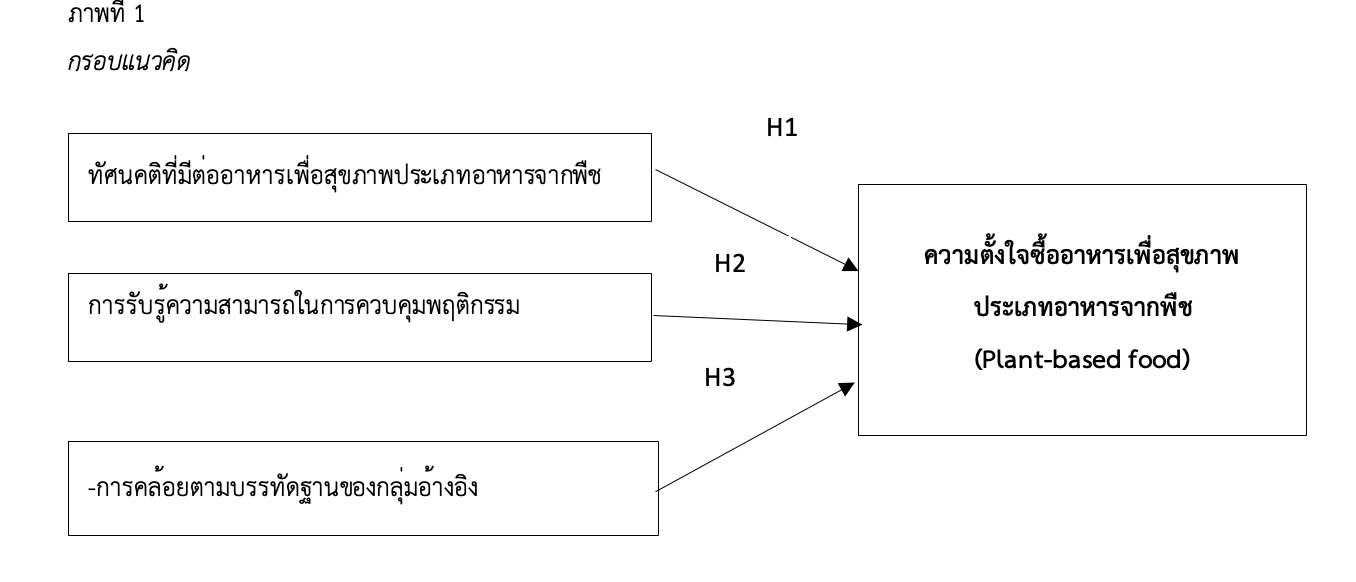
บทนำ: ในปัจจุบันผู้บริโภคชาวไทยมีการบริโภคอาหารเพื่อสุขภาพจากพืชเพิ่มขึ้นเนื่องมาจากกระแสเพื่อสุขภาพและกระแสการรักษ์สิ่งแวดล้อมของสังคมจากงานวิจัยที่ผ่านมาพบว่ามีหลายปัจจัยที่มีอิทธิพลต่อความตั้งใจซื้ออาหารเพื่อสุขภาพประเภทอาหารจากพืชแต่อย่างไรก็ตามยังมีงานวิจัยไม่มากนักที่ทำการทดสอบอิทธิพลดังกล่าวในเชิงประจักษ์ในบริบทโดยใช้ทฤษฎีพฤติกรรมตามแผน วัตถุประสงค์ของการวิจัย: เพื่อศึกษาปัจจัยด้านทัศนคติที่มีต่ออาหารเพื่อสุขภาพประเภทอาหารจากพืชการคล้อยตามกลุ่มอ้างอิงและการรับรู้ความสามารถในการควบคุมที่ส่งผลต่อความตั้งใจซื้ออาหารเพื่อสุขภาพประเภทอาหารจากพืชในบริบทของผู้บริโภคชาวไทย โดยใช้กรอบแนวคิดจากทฤษฎีพฤติกรรมตามแผนซึ่งประกอบด้วย 3 ปัจจัย ได้แก่ ทัศนคติ การคล้อยตามกลุ่มอ้างอิง และการรับรู้ความสามารถในการควบคุมพฤติกรรม ระเบียบวิธีวิจัย: การวิจัยครั้งนี้เป็นการวิจัยเชิงปริมาณทำการสุ่มตัวอย่างแบบบังเอิญ โดยใช้แบบสอบถามเป็นเครื่องมือในการเก็บรวบรวมข้อมูลจากกลุ่มตัวอย่างจำนวน 400 คน ซึ่งเป็นผู้บริโภคชาวไทยและวิเคราะห์ข้อมูลด้วยสถิติเชิงพรรณนาและสมการการถดถอยพหุคูณ ผลการวิจัย: พบว่า ปัจจัยทั้งสาม ได้แก่ ทัศนคติ การคล้อยตามกลุ่มอ้างอิง และการรับรู้ความสามารถในการควบคุมพฤติกรรม มีอิทธิพลเชิงบวกและมีนัยสำคัญทางสถิติต่อความตั้งใจซื้อ สรุป: ข้อค้นพบข้างต้นยืนยันว่าแนวคิดจากทฤษฎีพฤติกรรมตามแผนสามารถอธิบายความตั้งใจซื้ออาหารเพื่อสุขภาพประเภทอาหารจากพืชได้อย่างมีนัยสำคัญและข้อค้นพบยังสามารถใช้เป็นแนวทางในการส่งเสริมพฤติกรรมผู้บริโภค และกำหนดกลยุทธ์การสื่อสารทางการตลาดได้อย่างเหมาะสมและมีประสิทธิภาพ
Downloads
Article Details

อนุญาตภายใต้เงื่อนไข Creative Commons Attribution-NonCommercial-NoDerivatives 4.0 International License.
** ข้อความ ข้อคิดเห็น หรือข้อค้นพบ ในวารสารสหวิทยาการสังคมศาสตร์และการสื่อสารเป็นของผู้เขียน ซึ่งจะต้องรับผิดชอบต่อผลทางกฎหมายใด ๆ ที่อาจเกิดขึ้นจากบทความและงานวิจัยนั้น ๆ โดยมิใช่ความรับผิดชอบของคณะนิเทศศาสตร์ มหาวิทยาลัยราชภัฏรำไพพรรณี **
เอกสารอ้างอิง
Ajzen, I. (1991). The theory of planned behavior. Organizational Behavior and Human Decision Processes, 50(2), 179-211. https://doi.org/10.1016/0749-5978(91)90020-T
Bang, H. K., Ellinger, A. E., Hadjimarcou, J., & Traichal, P. A. (2000). Consumer concern, knowledge, belief, and attitude toward renewable energy: An application of the reasoned action theory. Psychology & Marketing, 17(6), 449–468. https://doi.org/10.1002/(SICI)1520- 6793(200006)17:6<449:AID-MAR1>3.0.CO;2-8
Chuthathipat, A. (2023). Marketing mix and perceived value influencing plant-based food purchasing decisions among consumers in Bangkok and surrounding areas.Procedia of Multidisciplinary Research, 1(7), 79.
Cochran, W. G. (1953). Matching in analytical studies. American Journal of Public Health and the Nations Health, 43(6), 684-691. https://doi.org/10.2105/AJPH.43.6.684
Hair, J. F., Black, W. C., Babin, B. J., & Anderson, R. E. (2010). Multivariate data analysis (7th ed.). Pearson Prentice Hall.
Jansson, J., Marell, A., & Nordlund, A. (2010). Green consumer behavior: Determinants of curtailment and eco‐innovation adoption. Journal of Consumer Marketing, 27(4), 358-370. https://doi.org/10.1108/07363761011052396
Kalafatis, S. P., Pollard, M., East, R., & Tsogas, M. H. (1999). Green marketing and Ajzen’s theory of planned behaviour: A cross-market examination. Journal of Consumer Marketing, 16(5), 441-460. https://doi.org/10.1108/07363769910289550
Kotler, P. (2003). Marketing management (11th ed.). Prentice-Hall.
Kotler, P., Keller, K. L., Brady, M., Goodman, M., & Hansen, T. (2016). Marketing management (3rd European ed.). Pearson Higher Education.
Limsanguan, N., & Cheewaphruek, K. (2022). Plant-based protein products: Current trends in consumer behavior. Journal of Food Product Research and Development, 52(2), 5-15.
Liwjaroem, C., & Chokpitakkul, N., (2016). Knowledge, attitude and intention to purchase clean food: a guideline for health communication on clean food consumption promotion. Bu Academic Review, 15(2), 17-28.
Madden, T. J., Ellen, P. S., & Ajzen, I. (1992). A comparison of the theory of planned behavior and the theory of reasoned action. Personality and Social Psychology Bulletin, 18(1), 3-9.https://doi.org/10.1177/0146167292181001
Mathieson, K. (1991). Predicting user intentions: Comparing the technology acceptance model with the theory of planned behavior. Information Systems Research, 2(3), 173-191. https://doi.org/10.1287/isre.2.3.173
Nilthiam, W., & Lekmat, L. (2024). Factors affecting the decision to purchase plant-based food in Bangkok. Journal of Marketing and Management Rajamangala University of Technology Thanyaburi, 11(2), 40-57.
Phoyoy, P., Sasithanakornkaew, S., & Apisuphachok, W. (2022). The influence of online media and marketing factors on the purchase intention of plant-based meat among consumers in Bangkok. Journal of MCU Nakhondhat, 9(5), 146-160.
Piyapimonsit, C. (1998). Regression analysis. Walailak University.
Thabmuang, A., & KANANUKUL, C. (2021). Knowledge, Consumption Values, and Clean Food Consumption of Thai Consumers. [Unpublished doctoral dissertation]. Burapha University.
Thipmanee, C. (2016). The effect of marketing communications towards purchase intention of healthy food in Hatyai District, Songkhla Province. [Unpublished master’s thesis]. Prince of Songkla University.
Thitaporn, P., & Chumponsathian, A. (2023). Media exposure, knowledge, attitude, and behavior in consuming plant-based food among working-age people. Media and Communication Inquiry, 5(1), 126-142.
