กลยุทธ์การสื่อสารการตลาดผสมผสานเพื่อยกระดับศักยภาพการแข่งขัน ของธุรกิจการท่องเที่ยวในจังหวัดจันทบุรี
Article Sidebar
Main Article Content
บทคัดย่อ
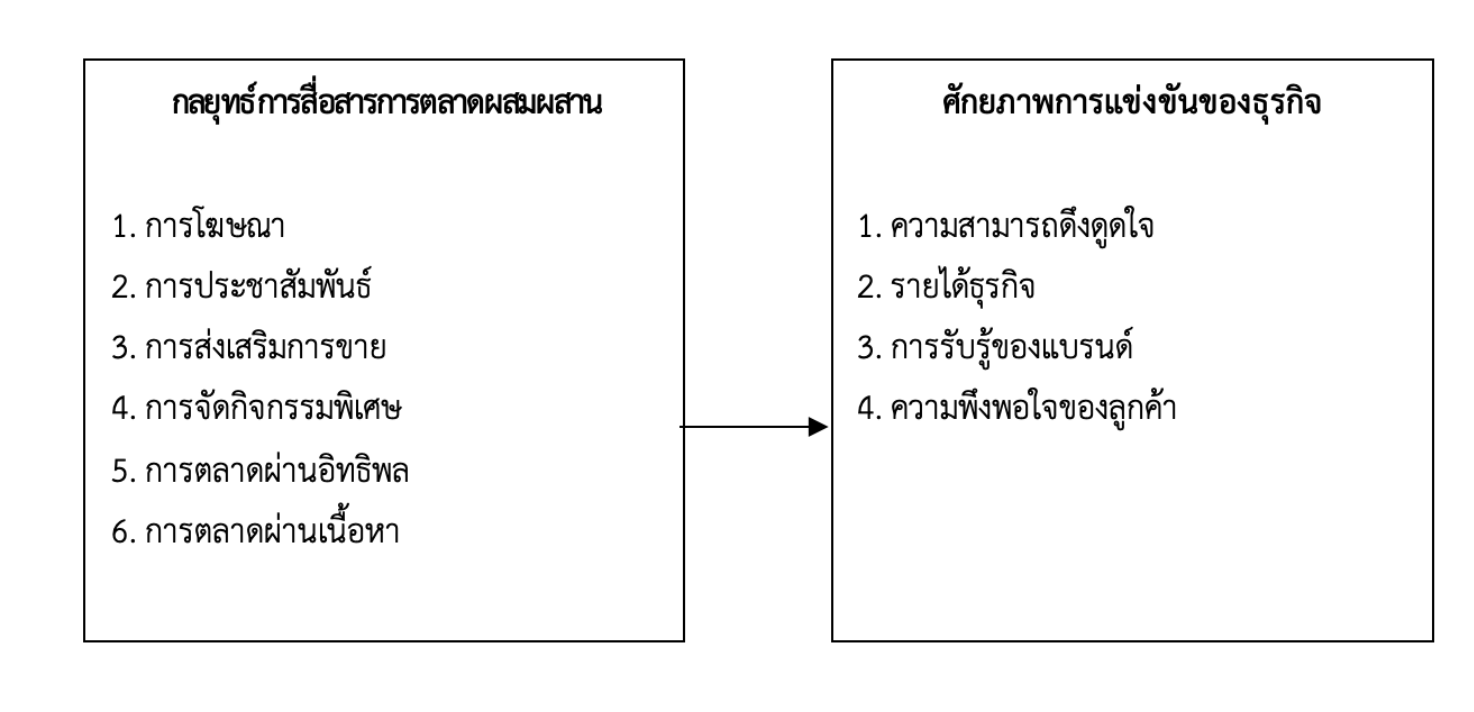
บทนำ: จังหวัดจันทบุรีเป็นหนึ่งในจังหวัดที่มีศักยภาพด้านการท่องเที่ยวทางวัฒนธรรมและธรรมชาติหลากหลาย เช่น ชายหาด อุทยานแห่งชาติ และตลาดน้ำท้องถิ่น ที่ดึงดูดนักท่องเที่ยวจากทั้งในประเทศและต่างประเทศ โดยธุรกิจการท่องเที่ยวเป็นภาคบริการที่มีความสำคัญในการพัฒนาเศรษฐกิจ สังคมและสิ่งแวดล้อม นำไปสู่การพัฒนาโครงสร้างพื้นฐาน การกระตุ้นเศรษฐกิจ และการส่งเสริมเอกลักษณ์ของท้องถิ่น วัตถุประสงค์ของการวิจัย: 1) ศึกษากลยุทธ์การสื่อสารการตลาดผสมผสานศักยภาพการแข่งขันของธุรกิจการท่องเที่ยว และ 2) เพื่อศึกษากลยุทธ์การสื่อสารการตลาดผสมผสานเพื่อยกระดับศักยภาพการแข่งขันของธุรกิจการท่องเที่ยว ในจังหวัดจันทบุรี ระเบียบวิธีวิจัย: ใช้วิธีการเลือกตัวอย่างแบบโควตาและสุ่มแบบเฉพาะเจาะจง กลุ่มตัวอย่าง คือ ผู้ประกอบการหรือตัวแทนของธุรกิจการท่องเที่ยว จำนวน 384 ราย เครื่องมือที่ใช้ในการวิจัย คือ แบบสอบถาม สถิติที่ใช้ในการวิเคราะห์ข้อมูล คือ ค่าความถี่ ค่าร้อยละ ค่าเฉลี่ย ค่าส่วนเบี่ยงเบนมาตรฐาน ค่าสัมประสิทธิ์สหสัมพันธ์ของเพียรสัน และการวิเคราะห์ถดถอยพหุคูณ ผลการวิจัย: กลยุทธ์การสื่อสารการตลาดผสมผสานโดยรวมอยู่ในระดับมาก และศักยภาพการแข่งขันของธุรกิจการท่องเที่ยวโดยรวมอยู่ในระดับมาก ส่วนความสัมพันธ์ของกลยุทธ์การสื่อสารการตลาดผสมผสานกับศักยภาพการแข่งขันของธุรกิจอยู่ในระดับสูง โดยผลการทดสอบสมมติฐาน พบว่า ตัวแปรกลยุทธ์การสื่อสารการตลาดผสมผสานที่มีผลต่อศักยภาพการแข่งขันของธุรกิจการท่องเที่ยว มี 4 ปัจจัย คือ การตลาดผ่านเนื้อหา การตลาดผ่านอิทธิพล การส่งเสริมการขาย และการโฆษณา โดยกลยุทธ์เหล่านี้มีส่วนช่วยเพิ่มศักยภาพการแข่งขันของธุรกิจอย่างมีนัยสำคัญที่ระดับ .01 โดยมีค่าอธิบายความแปรปรวนได้ร้อยละ 84.2 (R² = 0.842) สรุป: กลยุทธ์ IMC ที่มีประสิทธิภาพในจังหวัดจันทบุรีควรผสานการใช้สื่อทั้งออฟไลน์และออนไลน์สร้างภาพลักษณ์ที่ชัดเจน ใช้เครื่องมือที่เหมาะสมกับกลุ่มเป้าหมาย และสร้างประสบการณ์การท่องเที่ยวที่น่าจดจำ ซึ่งจะช่วยยกระดับขีดความสามารถในการแข่งขันของธุรกิจท่องเที่ยวทั้งในระดับท้องถิ่นและระดับประเทศได้อย่างยั่งยืน
Downloads
Article Details

อนุญาตภายใต้เงื่อนไข Creative Commons Attribution-NonCommercial-NoDerivatives 4.0 International License.
** ข้อความ ข้อคิดเห็น หรือข้อค้นพบ ในวารสารสหวิทยาการสังคมศาสตร์และการสื่อสารเป็นของผู้เขียน ซึ่งจะต้องรับผิดชอบต่อผลทางกฎหมายใด ๆ ที่อาจเกิดขึ้นจากบทความและงานวิจัยนั้น ๆ โดยมิใช่ความรับผิดชอบของคณะนิเทศศาสตร์ มหาวิทยาลัยราชภัฏรำไพพรรณี **
เอกสารอ้างอิง
Srisakheerin, P. (2018). Communication and marketing promotion (4th ed., Teaching material). Sukhothai Thammathirat Open University Press.
Phuangmaha, L. (2020). The use of influencer online marketing strategies to effectively communicate brand in the digital age [In Thai]. Journal of Communication Arts, 38(3), 17–28. https://so02.tci- thaijo.org/index.php/jcomm/article/view/240841/166169
Baker, M. J., & Hart, S. (2020). The marketing book (8th ed.). Butterworth-Heinemann.
Barney, J. B. (1991). Firm resources and sustained competitive advantage. Journal of Management, 17(1): 99120. https://doi.org/10.1177/014920639101700108
Belch, G. E., & Belch, M. A. (2021). Advertising and promotion: An integrated marketing
communications perspective (12th ed.). McGraw-Hill Education.
Belsley, D. A., Kuh, E. and Welsch, R. E. (1980). Regression Diagnostics; Identifying Influence Data and Source of Collinearity. http://dx.doi.org/10.1002/0471725153.
Biuksane, I. (2016). Model of the Factors Influencing Competitiveness of the Latvian Fisheries Sector Cluster. Economic and Business, 28(1), 76-82.
Byrd, E. T. (2007). Stakeholders in sustainable tourism development and their roles: applying stakeholder theory to sustainable tourism development. Tourism Review, 62(2), 6-13.
Chaffey, D. (2019). Digital marketing: Strategy, implementation, and practice (7th ed.). Pearson Education.
Chen, S., & Lee, Y. (2021). Integrated marketing communications in tourism: A systematic
review. Journal of Tourism Marketing, 15(2), 45-62.
Cochran, W. G. (1977). Sampling Techniques (3rd ed.). John Wiley and Sons Inc.
Fill, C., & Turnbull, S. (2019). Marketing communications: Discovery, creation and Conversations (8th ed.). Pearson.
Hollensen, S. (2015). Global marketing (6th ed.). Pearson Education.
Kallas, P. (2018, May 15). 48 social media KPIs you need to know (Key Performance Indicators).
https://www.dreamgrow.com/48-social-media-kpis-key-performance-indicators/.
Kim, S. H., & Lee, S. A. (2020). The Role of Marketing Communication Mix on Korean Customers' Coffee Shop Brand Evaluations. Journal of Hospitality and Tourism Insights, 3(3), 291-309.
Kotler, P., & Armstrong, G. (2018). Principles of marketing (17th ed.). Pearson Prentice.
Kotler, P., & Keller, K. L. (2016). Marketing management (15th ed.). Pearson Education.
Kotler, P., & Keller, K. L. (2020). Marketing Management (15th Global ed.). Pearson Education Limited.
Porter, M. E. (1990). The Competitive Advantage of Nations. Macmillan.
Schultz, D. E., Tannenbaum, S. I., & Lauterborn, R. F. (1993). The new marketing paradigm: Integrated marketing communications. McGraw-Hill.
TAT Review. (2023). Summary of the tourism situation in Thailand (January–March 2023) [In Thai]. Tourism Authority of Thailand, Marketing Research Division. https://shorturl.asia/Y6wM1
Wang, L., & Chung, Y. (2020). The impact of service quality on tourist satisfaction and revisit intention in heritage tourism. Tourism Management Perspectives, 35, 100721. https://doi.org/10.1016/j.tmp.2020.100721
Zhang, M., Guo, L., Hu, M., & Liu, W. (2017). Influence of Customer Engagement with Company Social Networks on Stickiness: Mediating Effect of Customer Value Creation. International Journal of Information Management, 37(3), 229-240.
