
สถานะทางกฎหมายของผู้ครอบครองที่ดินในพื้นที่กันชนรอบเขตป่าอนุรักษ์
Article Sidebar
Main Article Content
บทคัดย่อ
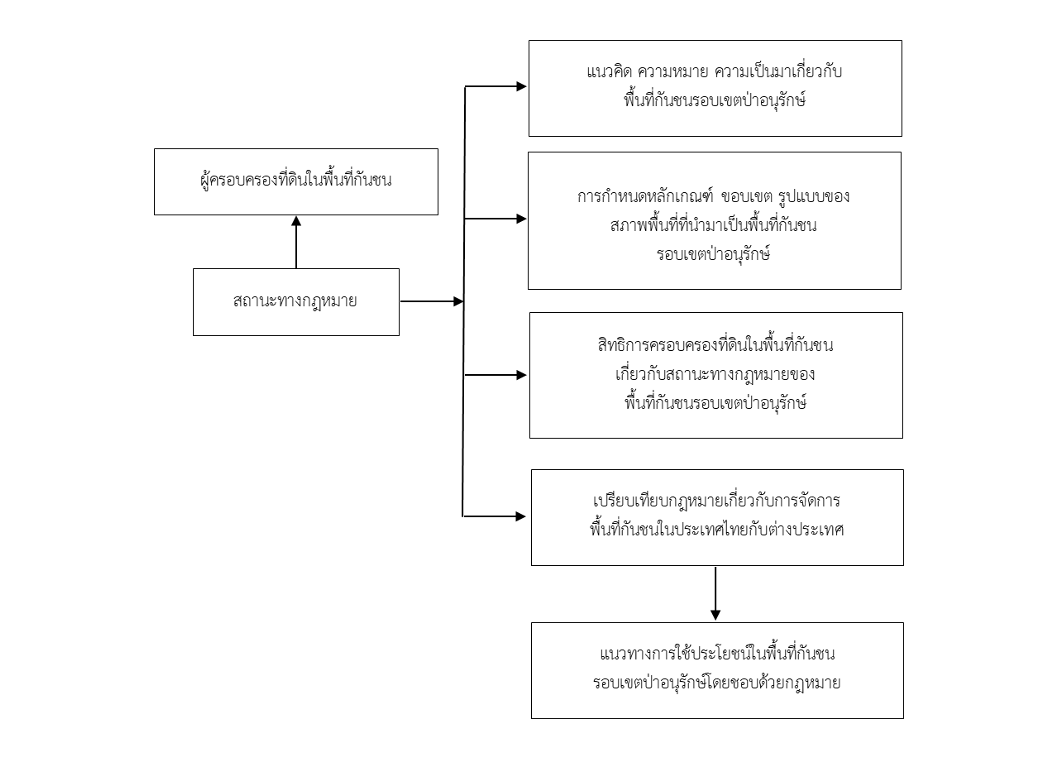
บทนำ การจัดตั้งพื้นที่กันชนรอบเขตป่าอนุรักษ์ เพื่อเป็นการป้องกันการบุกรุกพื้นที่ป่าอนุรักษ์ ความหลากหลายทางชีวภาพ ทรัพยากรธรรมชาติ เป็นการลดผลกระทบหรือความรุนแรงจากการกระทำของประชาชนที่อาจเกิดขึ้นต่อพื้นที่ป่าอนุรักษ์วัตถุประสงค์การศึกษา: 1) ศึกษาแนวคิด ความหมาย ความเป็นมาเกี่ยวกับพื้นที่กันชนรอบเขตป่าอนุรักษ์ที่ดินที่เป็นพื้นที่ กันชน 2) ศึกษาสิทธิการครอบครองที่ดินในพื้นที่กันชนเกี่ยวกับสถานะทางกฎหมายของพื้นที่กันชนรอบเขตป่าอนุรักษ์ 3) ศึกษาเปรียบเทียบกฎหมายเกี่ยวกับการจัดการพื้นที่กันชนในประเทศไทยกับต่างประเทศ 4) เสนอแนวทางการใช้ประโยชน์ในพื้นที่กันชนรอบเขตป่าอนุรักษ์โดยชอบด้วยกฎหมาย วิธีการศึกษา: เป็นการศึกษาวิจัยเชิงคุณภาพ ศึกษาวิจัยเอกสาร จากเอกสาร ตำรากฎหมาย วารสาร หนังสือ และบทความทางวิชาการทั้งในประเทศ และต่างประเทศเกี่ยวข้องกับพื้นที่กันชนรอบเขตป่าอนุรักษ์ เพื่อให้ทราบถึงสถานะพื้นที่ กันชนรอบเขตป่าอนุรักษ์ และได้มาซึ่งแนวทางการใช้ประโยชน์ในพื้นที่กันชนรอบเขตป่าอนุรักษ์โดยชอบด้วยกฎหมาย ผลการศึกษา: การนำที่ดินของรัฐซึ่งอยู่ติดหรือรอบเขตพื้นที่ป่าอนุรักษ์ เช่น ที่ราชพัสดุ ที่ดินปฏิรูป ที่สาธารณประโยชน์ ที่ป่า ที่รกร้างว่างเปล่า เป็นต้น มาจัดตั้งเป็นพื้นที่กันชนต้องมีการเปลี่ยนแปลงสถานะที่ดินเป็นพื้นที่กันชนเพื่อไม่ให้เกิดการทับซ้อนระหว่างพื้นที่กันชนกับที่ดินของรัฐ ส่วนที่ดินของเอกชนที่นำมาเป็นพื้นที่กันชนต้องได้รับความยินยอมเป็นหนังสือจากเอกชน และมีการจ่ายค่าตอบแทนหรือค่าชดเชยให้ประชาชน เอกชนยังคงมีสิทธิใช้ประโยชน์ในพื้นที่กันชนต่อไปได้ ซึ่งที่ดินมีสถานะเป็นของเอกชน ส่วนกรณีสิทธิของประชาชนในที่ดินพื้นที่กันชน ประชาชน ไม่มีกรรมสิทธิ์ในที่ดินของรัฐที่นำมาจัดตั้งเป็นพื้นที่กันชน แต่ประชาชนมีสิทธิครอบครอง มีสิทธิอยู่อาศัย ทำกิน และใช้ประโยชน์ในที่ดิน มีสิทธิหวงกั้น ขัดขวาง และยกขึ้นเป็นข้อต่อสู้กับบุคคลภายนอกมิให้เข้ามายุ่งเกี่ยวในที่ดินได้ แต่จะยกเป็นข้อต่อสู้กับหน่วยงานรัฐไม่ได้ ประชาชนไม่เสียสิทธิในการทำประโยชน์ในที่ดินเดิมที่เคยทำประโยชน์มาก่อนนำมาจัดตั้งเป็นพื้นที่กันชน จึงมีข้อเสนอแนะ ดังนี้ 1) ให้ภาครัฐกำหนดแนวทางในการจัดตั้งพื้นที่กันชน รวมถึงการบริหารจัดการพื้นที่กันชน โดยตั้งคณะกรรมการบริหารพื้นที่กันชน ตามกฎหมายของประเทศสหพันธ์สาธารณรัฐประชาธิปไตยเนปาล กล่าวคือ จัดทำแผนจัดการพื้นที่กันชน พร้อมทั้งระบุถึงมาตรการและ การบริหารจัดการพื้นที่กันชน โดยคำนึงถึงการอนุรักษ์สิ่งแวดล้อม การใช้ประโยชน์จากทรัพยากรป่าไม้ในพื้นที่กันชน และนำเสนอแผนเพื่อขออนุมัติจากหน่วยงานที่รับผิดชอบ เมื่อได้รับอนุญาตให้จัดตั้งพื้นที่กันชนแล้ว กำหนดให้มีคณะกรรมการบริหารพื้นที่กันชนเพื่อผู้ควบคุมพื้นที่กันชน และมีหน้าที่ดำเนินการตาม การดำเนินงาน และการบำรุงรักษาพื้นที่กันชน 2) ให้ภาครัฐกำหนดให้อำนาจพนักงานเจ้าหน้าที่รับรองสิทธิครอบครองในพื้นที่กันชนให้สิทธิประชาชนอยู่อาศัย ทำกินในที่ดินได้ โดยห้ามซื้อ ขาย แลกเปลี่ยน ให้เช่า ให้เช่าซื้อ ให้ยืม หรือโอนการครอบครองให้บุคคลอื่น เว้นแต่เป็นการตกทอดทางมรดกให้แก่ทายาทโดยธรรมเท่านั้น เป็นมาตรการสำคัญที่ส่งเสริมให้ประชาชนมีสิทธิประโยชน์ในพื้นที่กันชน โดยเทียบเคียงกับมาตรการตามพระราชบัญญัติการปฏิรูปที่ดินเพื่อเกษตรกรรม พ.ศ. 2518 สรุป: สถานะทางกฎหมายของพื้นที่กันชน มีทั้งที่ดินของรัฐและที่ดินของเอกชนที่สามารถนำมาจัดตั้งเป็นพื้นที่กันชน โดยประชาชนไม่มีกรรมสิทธิ์ในที่ดิน ของรัฐ แต่มีสิทธิครอบครอง อยู่อาศัย ทำกิน และใช้ประโยชน์ในที่ดิน
Downloads
Article Details

อนุญาตภายใต้เงื่อนไข Creative Commons Attribution-NonCommercial-NoDerivatives 4.0 International License.
** ข้อความ ข้อคิดเห็น หรือข้อค้นพบ ในวารสารสหวิทยาการสังคมศาสตร์และการสื่อสารเป็นของผู้เขียน ซึ่งจะต้องรับผิดชอบต่อผลทางกฎหมายใด ๆ ที่อาจเกิดขึ้นจากบทความและงานวิจัยนั้น ๆ โดยมิใช่ความรับผิดชอบของคณะนิเทศศาสตร์ มหาวิทยาลัยราชภัฏรำไพพรรณี **
เอกสารอ้างอิง
Land Code, B.E. 2497 (1954). (1954, November 30). Royal Thai Government Gazette, 71(Special Part 78 Ng), 1–51.
Civil and Commercial Code, B.E. 2535 (1992). (1992, March 31). Royal Thai Government Gazette, 169(Part 42), 1–306.
Reform of Agricultural Land Act, B.E. 2518 (1975). (1975, February 14). Royal Thai Government Gazette, 92 (Part 45, Special Issue), 1–19.
Act on Expropriation and Acquisition of Immovable Property, B.E. 2562 (2019). (2019, May 24). Royal Thai Government Gazette, 136(Part 71), 1–26.
Phadungsak, N. (2000). Land law [in Thai]. Ramkhamhaeng University.
Thepthong, W. (2007). Explanation of the principles of land law according to the Land Code [in Thai].(5th ed). Niti.
Nakwibunwong, W., et al. (2007). Buffer Zone Management in Thailand. Thailand Research Fund (TRF).
Promchom, S. (2014). Interesting legal tips on land rights. Chulniti Journal, 11(4), 135-145.
Royal Forest Department. (1997). Seminar report on buffer zones: Strategies for sustainable forest management in collaboration with the Art Conservation Association, the Environment and the Thai Environmental Institute. Supported by the International Tropical Timber Organization and Netherlands Government.
Ronnakorn Teerakanont. (n.d.). Forest for conservation .. is .. what?. Forest news and communities.
https://www.nectec.or.th/schoolnet/library/snet6/envi2/anuruk/anurn.html
Wichianlaw. (2023, February 27). Acquiring possession rights.
Chaiworamukkul, N. (2012, April 16). What is development? (1). G๐toKnow.https://www.gotoknow.org/posts/485293
Wildlife Conservation Club Vet. KU. (2017). What is a Buffer Zone area?. [Facebook post]. Facebook.https://www.facebook.com/WildlifeConservationClubVetKU/posts/778128025705255/
