การพัฒนาสมรรถนะด้านนาฏศิลป์ไทย [โขนยักษ์] โดยการเรียนรู้ในการปฏิบัติงานจริง
Article Sidebar
Main Article Content
บทคัดย่อ
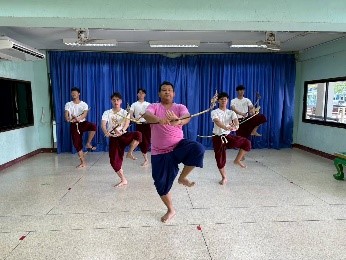
การวิจัยนี้มีวัตถุประสงค์เพื่อ 1) พัฒนาแผนการจัดการเรียนรู้โดยบูรณาการรูปแบบการสอนทักษะปฏิบัติของเดวีส์ รูปแบบการสอนซิปปาโมเดลและรูปแบบการสอนของครูนาฏศิลป์ไทยในอดีตในการจัดการเรียนรู้ 2) พัฒนาสมรรถนะทางด้านทักษะปฏิบัติของผู้เรียน และ 3) ประเมินความพึงพอใจของผู้ใช้ประโยชน์ต่อผู้เรียน กลุ่มตัวอย่างเป็นนักเรียนนาฏศิลป์ไทย สาขาโขนยักษ์ ชั้นประกาศนียบัตรวิชาชีพปีที่ 3 วิทยาลัยนาฏศิลปอ่างทอง สถาบันบัณฑิตพัฒนศิลป์ ปีการศึกษา 2567 ได้จากการเลือกแบบเจาะจง เครื่องมือวิจัยประกอบด้วย 1) แผนการจัดการเรียนรู้ เรื่องรำหน้าพาทย์เชิดฉิ่งศรประจัน จำนวน 8 แผนการเรียนรู้ แผนละ 2 ชั่วโมง รวม 16 ชั่วโมง 2) แบบประเมินทักษะปฏิบัติ และ 3) แบบประเมินความพึงพอใจผู้ที่เกี่ยวข้องในการใช้ประโยชน์ สถิติที่ใช้ในการวิเคราะห์ข้อมูล ได้แก่ ค่าร้อยละ ค่าเฉลี่ย ค่าส่วนเบี่ยงเบนมาตรฐาน
ผลการวิจัย พบว่า การพัฒนาแผนการจัดการเรียนรู้โดยบูรณาการรูปแบบการสอนทักษะปฏิบัติของเดวีส์ รูปแบบการสอนซิปปาโมเดล และรูปแบบการสอนของครูนาฏศิลป์ไทยในอดีต มีทั้งหมด 7 ขั้นตอน คือ ขั้นที่ 1 ทบทวนความรู้เดิม ขั้นที่ 2 ให้ความรู้ใหม่ ขั้นที่ 3 ปฏิบัติทักษะย่อย ขั้นที่ 4 แลกเปลี่ยนความรู้และปฏิบัติซ้ำ ๆ ขั้นที่ 5 ให้เทคนิคและเก็บรายละเอียด ขั้นที่ 6 เชื่อมโยงให้สมบูรณ์ และขั้นที่ 7 ประเมินผล โดยมีผลการพัฒนาสมรรถนะทางด้านทักษะปฏิบัติของผู้เรียน คิดเป็นค่าเฉลี่ยเท่ากับ 56.84 มีส่วนเบี่ยงเบนมาตรฐานเท่ากับ 4.36 และมีผลการพัฒนาสมรรถนะด้านทักษะปฏิบัติคิดเป็นร้อยละ 79.57 ซึ่งสูงเกณฑ์ที่กำหนดไว้ รวมถึงมีผลการประเมินความพึงพอใจของผู้ใช้ประโยชน์ต่อผู้เรียน มีผลรวมค่าเฉลี่ยเท่ากับ 4.67 มีค่าส่วนเบี่ยงเบนมาตรฐาน เท่ากับ 0.57 คิดเป็นร้อยละ 93.38 อยู่ในระดับมากที่สุด เมื่อเทียบกับเกณฑ์แล้วมีความพึงพอใจสูงกว่าเกณฑ์ที่กำหนดไว้
Article Details

อนุญาตภายใต้เงื่อนไข Creative Commons Attribution-NonCommercial-NoDerivatives 4.0 International License.
เนื้อหาและข้อมูลที่ได้รับการเผยแพร่ในวารสารวิพิธพัฒนศิลป์ ถือเป็นข้อคิดเห็นและความรับผิดชอบของผู้แต่งเท่านั้น โดยกองบรรณาธิการวารสารไม่มีส่วนรับผิดชอบต่อเนื้อหาหรือข้อคิดเห็นใด ๆ ที่ปรากฏในบทความ
เอกสารอ้างอิง
กายสิทธิ์ ศรีทา. (2564). การพัฒนากิจกรรมการเรียนรู้ทักษะปฏิบัตินาฏยศัพท์ โดยใช้รูปแบบของเดวีส์
กลุ่มสาระการเรียนรู้ศิลปะ สำหรับนักเรียนชั้นประถมศึกษาปีที่ 6. [วิทยานิพนธ์ปริญญามหาบัณฑิต]. มหาวิทยาลัยมหาสารคาม.
กองส่งเสริมวิชาการและงานวิจัย สถาบันบัณฑิตพัฒนศิลป์ กระทรวงวัฒนธรรม. (2562). หลักสูตรนาฏดุริยางคศิลป์ ระดับประกาศนียบัตรวิชาชีพ พุทธศักราช 2562. (พิมพ์ครั้งที่ 2). นนทบุรี: บริษัทไทภูมิ พับลิชชิ่ง.
จตุพร รัตนวราหะ. (2519). เพลงหน้าพาทย์. กรุงเทพฯ: ประพันธ์สาส์น.
ฉวีวรรณ กุดหอม, อุษา ปราบหงษ์ และพจมาน ชำนาญกิจ. (2558). การพัฒนากิจกรรมการเรียนรู้วิชานาฏศิลป์ ตามรูปแบบซิปปาและรูปแบบพัฒนาทักษะปฏิบัติของซิมพ์ซัน ระดับชั้นมัธยมศึกษาปีที่ 2. [วิทยานิพนธ์ปริญญามหาบัณฑิต]. มหาวิทยาลัยราชภัฏสกลนคร.
ทิศนา แขมมณี. (2561). ศาสตร์การสอน. กรุงเทพฯ: สำนักพิมพ์แห่งจุฬาลงกรณ์มหาวิทยาลัย.
ธนิต อยู่โพธิ์. (2511). โขน. กรุงเทพฯ: กรมศิลปากร.
นฤเบศร์ ระดาเขต. (2565). การพัฒนาทักษะปฏิบัติการแสดงนาฏศิลป์พื้นบ้าน โดยใช้รูปแบบการเรียนการสอน ตามแนวคิดทักษะปฏิบัติของเดวีส์กับมัลติมีเดีย ของนักเรียนชั้นมัธยมศึกษาปีที่ 4. [วิทยานิพนธ์ปริญญามหาบัณฑิต]. มหาวิทยาลัยมหาสารคาม.
ประวิทย์ ฤทธิบูลย์. (2560). การพัฒนาความสามารถในการสร้างสรรค์ผลงานทางด้านนาฏศิลป์ไทย โดยใช้
โมเดลซิปปา. วารสารสถาบันวัฒนธรรมและศิลปะ, 18(2): 72-89.
ประวิทย์ ฤทธิบูลย์. (2563). โขนวิทยา: ศาสตร์ ศิลป์ ถิ่นสยาม. พิมพ์ครั้งที่ 2. กรุงเทพฯ: ทริปเพิ้ลเอ็ดดูเคชั่น.
ภัทราพร ชาลีดี. (2565). การพัฒนาทักษะปฏิบัตินาฏศิลป์ ชุด ไก่ขัน โดยใช้แนวคิดของเดวีส์ร่วมกับแอปพลิเคชั่น Tik Tok สำหรับนักเรียนชั้นประถมศึกษาปีที่ 5. [วิทยานิพนธ์ปริญญามหาบัณฑิต] มหาวิทยาลัยรังสิต.
มาโนช บุญทองเล็ก. (2564). การพัฒนารูปแบบการจัดการเรียนรู้นาฏศิลป์ไทยสู่ความเป็นพลเมืองโลก.
[วิทยานิพนธ์ปริญญาดุษฎีบัณฑิต]. มหาวิทยาลัยเทคโนโลยีราชมงคลธัญบุรี.
มนตรี ตราโมท. (2531). ศัพท์สังคีต. กรุงเทพฯ: การศาสนา.
วารี ทิมอินทร์. (2564). การพัฒนาผลสัมฤทธิ์ทางการเรียน รายวิชานาฏศิลป์: ระบำนกสามหมู่ โดยใช้รูปแบบการสอนทักษะปฏิบัติของเดวีส์สำหรับนักเรียนชั้นประถมศึกษาปีที่ 4. [วิทยานิพนธ์ปริญญามหาบัณฑิต]. มหาวิทยาลัยเทคโนโลยีราชมงคลธัญบุรี.
วรินทร์พร ทับเกตุ. (2566). การเปรียบเทียบผลสัมฤทธิ์การพัฒนาทักษะการรำเชิดฉิ่ง-เชิดจีนด้วยการจัดการเรียนรู้แบบห้องเรียนกลับด้าน ในรายวิชาทักษะนาฏศิลป์ 1 สำหรับผู้เรียนระดับปริญญาตรีปีที่ 1.วารสารวิพิธพัฒนศิลป์. 3(2): 16-32.
ศุภชัย จันทร์สุวรรณ์. (2547). การศึกษาวิเคราะห์วิธีการร่ายรำ และลีลาท่ารำของโขนตัวพระ : กรณีศึกษาตัวพระราม. [วิทยานิพนธ์ปริญญาดุษฎีบัณฑิต]. จุฬาลงกรณ์มหาวิทยาลัย.
Davies, I. K. (1971). The Management of Learning. London: McGraw-Hill.
Boontonglek, M., Rittibul, P., Orachun, R., & Boonsong, P. (2023). Dramatic Arts Innovation and
Learning Management in the 21st Century. Asian Journal of Arts and Culture. vol.23, no.2. pp. 1-11. https://doi.org/10.48048/ajac.2023.260039
Rittibul, P., Boontonglek, M., Orachun, R., Ngerndang, A., & Boonsong, P. (2024). The
Development of Learning Media in Virtual Classroom On Topics of Thai Performing Arts. Edelweiss Applied Science and Technology. vol.8, no.6, pp. 7655-7662. https://doi.org/10.55214/25768484.v8i6.3659
