
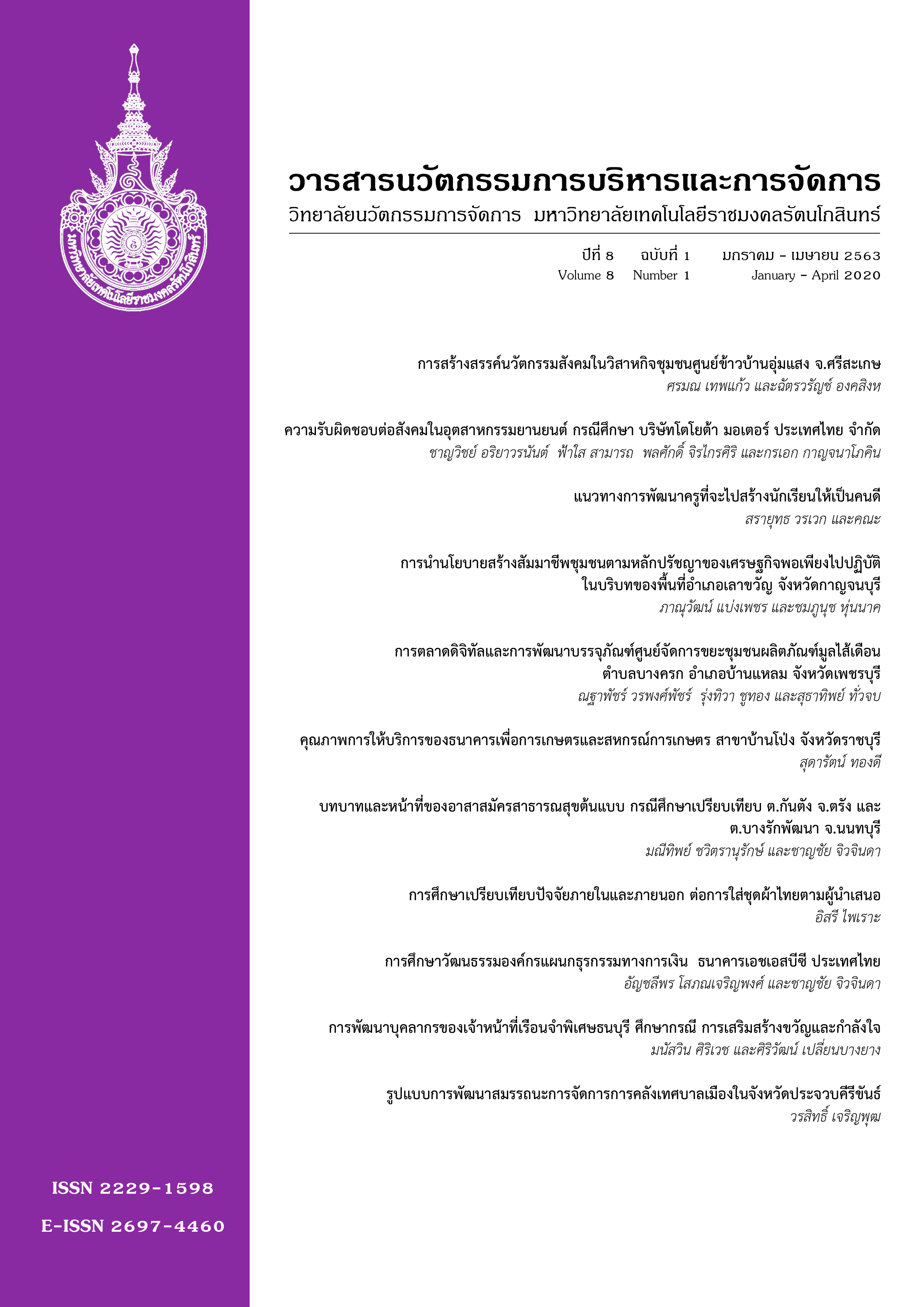
Corporate Social Responsibility in Automotive Industrial in case of Toyota Motor Thailand Company Limited
Article Sidebar
Main Article Content
Abstract
The levels of particulate matter of 2.5 microns - PM2.5 or dust pollution in Thailand is hard to solve out if there is no anyone in Government Agencies to involve and responsibilities. Despite, everyone knew the big issues is coming from industrials especially automotive industrial which is generated both direct and indirect pollution. Toyota was the one of automotive company which has considered environmental issues for many years. Since 1963, a team and committees had been established to study and focus in Environmental. Moreover, The Sustainability Report has been submitted since 2013 by 3 mains subjects which are on the Environment, Society, and Economic under Global Standardization. In addition, Toyota also reports GRI Index Reference or Global Report Initiative which was an international independent standards organization that can helps businesses, government and others understand and communicate their impact on issues in environmental, economics and society to comply with Global Standard. The Principles at Toyota consider environmental issues as a paramount importance and aim to establish a future society in harmony with nature and sustainability. Toyota Motor announced the “Toyota Environmental Challenge 2050”, to reduce the environmental burden attributed to automobiles such as CO2 close to zero or “0” and aiming to developing measures to contribute a positive impact to achieving a sustainable society. Most activities are compiled with Stock Exchange of Thailand’s Corporate Social Responsibility Principle as follows 1. Good Corporate Governance 2. Fair Operating Practices 3. Respect of Human Rights and Employment and Labour Practices 4. Consumer Rights 5. Community Involvement and Society Development 6. The Environment 7. Dissemination of Innovation from Social Responsibility Operations In Conducting Business. and 8. Social and Environment Reporting.
Article Details
ข้อความและบทความในวารสารนวัตกรรมการบริหารและการจัดการ เป็นแนวคิดของผู้เขียน ไม่ใช่ความคิดเห็นและความรับผิดชอบของคณะผู้จัดทำ บรรณาธิการ กองบรรณาธิการ วิทยาลัยนวัตกรรมการจัดการ และมหาวิทยาลัยเทคโนโลยีราชมงคลรัตนโกสินทร์
ข้อความ ข้อมูล เนื้อหา รูปภาพ ฯลฯ ที่ได้รับการีพิมพ์ในวารสารนวัตกรรมการบริหารและการจัดการ ถือเป็นลิขสิทธิ์ของวารสารนวัตกรรมการบริหารและการจัดการ หากบุคคลใดหรือหน่วยงานใดต้องการนำทั้งหมดหรือส่วนหนึ่งส่วนใดไปเผยแพร่ต่อหรือกระทำการใดๆ จะต้องได้รับอนุญาติเป็นลายลักษณ์อักษรจากวารสารนวัตกรรมการบริหารและการจัดการก่อนเท่านั้น
