MEMORIES OF DEATH: FUNERAL PHOTOGRAPHS, NARRATIVES, AND THE DEFINING IDENTITY OF THE NONG BUA CHINESE COMMUNITY
Article Sidebar
Main Article Content
Abstract
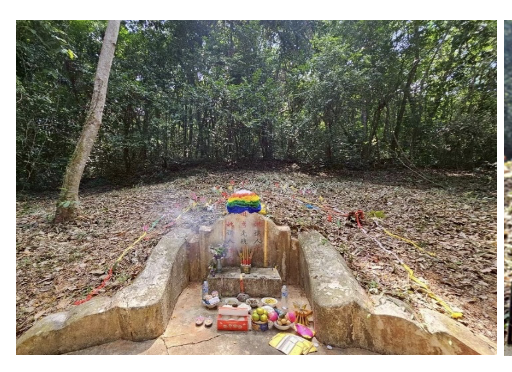
Introduction: Funeral rituals reflect beliefs about the afterlife and shape the meanings attached to relationships between the living and the deceased across societies. However, studies of death culture have tended to focus on the period of funeral rituals rather than on meanings that persist afterward. Objective: This study analyzes the framing and compositional processes of funeral photographs and the narratives surrounding them as objects of past memory, reflecting cultural meanings of death and the construction of Chinese community identity in Nong Bua Community, Chanthaburi Province. Methods: This qualitative study adopts an ethnographic approach, analyzing connections between memories narrated by community members and funeral photographs collected from three families in Nong Bua Community. Results: Memories associated with funeral photographs can be examined from two dimensions. First, photographs function as historical witnesses to funeral rituals. Through framing and the arrangement of objects within the images, photographs convey beliefs about the afterlife embedded in the cultural practices of the Nong Bua Chinese community. Second, narratives of memories associated with the photographs reveal meanings of death constructed through hierarchical relationships within the family lineage and within the community. These meanings extend beyond the visual elements represented in the photographs. Conclusion: These two dimensions demonstrate that funeral photographs are not merely records of past rituals but also sites where memories and meanings of death are transmitted, interpreted, and reconstructed, thereby contributing to the construction of Chinese community identity.
Downloads
Article Details

This work is licensed under a Creative Commons Attribution-NonCommercial-NoDerivatives 4.0 International License.
The author(s) is only responsible for data appearing in the submitted manuscript of Interdisciplinary social sciences and communication journal.Besides, this journal encourages and enables you to share data such as statements, contents, figures, etc. that support your research publication where appropriate, and enables you to interlink the data with proper citation.
References
Borggreve, E. (2022). Photography The Witnessed or The Witness. https://www.ellen borggreve.com/blog/2022/4/photography-the-witnessed-or-the-witness.
Chatudomphol, W. (2017). Communication Through Tableau Staged Photography. Journal of Journalism, 10(1), 7 - 60.
Edwards, E. (1999). Photographs as Objects of Memory. Material memories. In M. Kwint, C. Breward, & J. Aynsley (Eds.), Material Memories: Design and Evocation (pp. 221-236). Berg.
Huang, C., & Suk-erb, S. (2020). The conservation and inheritance of the ancestral ritual tradition of the Thai Chinese in three provinces in the Northeast. Academic Journal of Mahamakut Buddhist University Roi Et Campus, 9(2), 116–128.
Kerdsap, P. (1997). Persistence and change in Chinese funeral ritual at Wat Hualumpong in Bangkok Metropolis [Unpublished master’s thesis]. Chulalongkorn University.
Lei, S., Tabsri, C., & Nu-Im, B. (2016). The funeral culture of Chinese-Thai in Chonburi, Thailand: Belief and practice. Journal of Education and Social Development, 12(2), 144–155.
MoMA. (n.d.). Photography as Witness. https://www.moma.org/collection/terms/photo graphy/photography-as-witness.
Na, E. (2024). Chinese funeral customs to pay respects to the dead, from what to wear to why age is key. https://www.scmp.com/lifestyle/arts-culture/article/3276196/chi nese-funeral-customs-pay-respect-dead-what-wear-why-age-key.
Namphet, P. (2023). Reflecting on Death Through Anthropology. https://www.sac.or.th/portal/th/ article/detail/452.
Orachun, C., Khuninthong, K., Ngamlerd, C., Sookprasert, M., Duangprom, L., & Suksangun, W. (2021). Kanom Kuay Ling: Community identity of rare and unknown dessert community in Nongbua Sub-district, Mueang District, Chanthaburi Province. RBRU Journal of Humanities and Social Sciences, 2(2), 24–31.
Osodcharoen, A. (2018). Factors involved in the management of Kha Nom Plak Rim Klong Nong Bua Community Market [Unpublished master’s thesis]. Thammasat University.
Pink, S. (2006). The future of visual anthropology: Engaging the senses. Routledge.
Pothisita, C. (2019). The science and art of qualitative research. Amarin.
Rattanopat, P., Chamsoon, J., Sunthornviphart, A., Boonma, L., & Sobkhunthot, P. (2024). Enhancing community tourism potential through products and linking tourist routes along the coastline, Chanthaburi Province. Journal of Social Science Panyapat, 6(1), 309–324.
Saensra, A., Wongkaew, W., & Sriwan, C. (2024). Beliefs and rituals regarding death of Hua Phai Catholic community in Chonburi and Chachoengsao Provinces. Journal of Liberal Arts RMUTT, 5(2), 72–85.
Songsiri, W. (2018). Observations Regarding Dr. Bradley's Journey to Chanthaburi During the Reign of King Rama III. https://walailaksongsiri.com/2018/06/08/chanthaboon-bradley/.
Sotwitee, S., Potipat, J., & Tagong, W. (2022). The compared process of community product development for promoted tourism between community tourism enterprise of Nam Chiew, Trat Province and Nong Bua Tourism Community, Chanthaburi Province. DRIRDI Research for Community Service Journal, 8(1), 18–30.
Strassler, K. (2010). Refracted visions: Popular photography and national modernity in Java. Duke University Press.
Suphathit, N., Boonkird, B., & Yongpetch, B. (2016). The rituals for the dead of Chinese-Thai in Chonburi. Journal of Politics, Administration and Law, 8(1), 323–340.
