STUDY OF MUSIC APPLICATION RECOMMENDATION FEATURES AFFECTING USER EXPERIENCE AND SATISFACTION
Article Sidebar
Main Article Content
Abstract
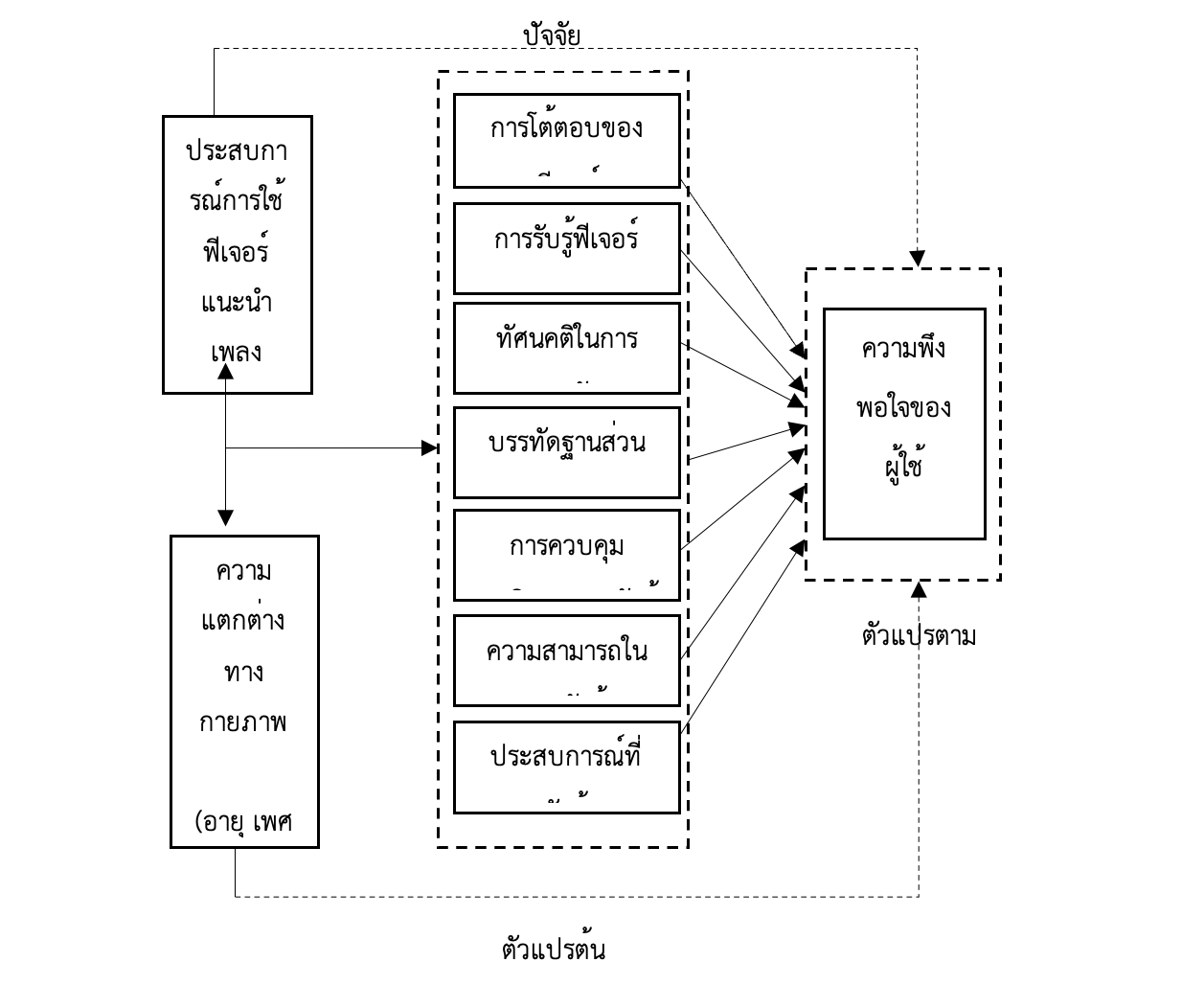
Introduction: The rapid development of the modern Internet has transformed patterns of entertainment consumption, with music applications emerging as highly popular platforms that provide convenience, variety, and personalized listening experiences. Objective: (1) examine the general usage of music application recommendation features among users, (2) investigate the relationships among factors influencing user experience, and (3) assess user satisfaction with such features. Methods: A mixed-methods research design integrating quantitative and qualitative approaches was employed. Results: indicate that user experience is shaped by multiple dimensions, including recommendation accuracy, social influence, interactivity, perceived control, and contextual adaptability, with accuracy and social influence identified as the most critical determinants. Older users (aged 46 and above) demonstrated greater acceptance of recommendation accuracy, while occupational differences were not statistically significant (p > 0.05). User satisfaction was further influenced by feature interaction, awareness, acceptance attitudes, subjective norms, perceived behavioral control, perceived capability, and perceived experience. The measurement instruments exhibited high reliability and validity (Cronbach’s α > 0.87, KMO = 0.950). Conclusion: recommendation accuracy and social influence are the key drivers of user experience and satisfaction, with older users showing greater acceptance of recommendation systems.
Downloads
Article Details

This work is licensed under a Creative Commons Attribution-NonCommercial-NoDerivatives 4.0 International License.
The author(s) is only responsible for data appearing in the submitted manuscript of Interdisciplinary social sciences and communication journal.Besides, this journal encourages and enables you to share data such as statements, contents, figures, etc. that support your research publication where appropriate, and enables you to interlink the data with proper citation.
References
Adorno, T. W. (2021). Posthumous writings: Section IV: Lectures, Volume 11: Questions of dialectics (1963/64) (C. Ziermann, Ed.). Suhrkamp Verlag
Ajzen, I. (1991). The Theory of Planned Behavior. Organizational Behavior and Human Decision Processes, 50(2), 179-211
Buatang, P. (2016). Angklung handicrafts. Support Arts and Crafts International Centre of Thailand (Public Organization). Phra Nakhon Si Ayutthaya, Thailand.
Hassenzahl, M. (2008). User Experience (UX): Towards an Experiential Perspective on Product Quality. Proceedings of the 20th International Conference of the Association Francophone d’Interaction Homme-Machine, 11-15.
Resnick & Varian. (1997). Recommender systems. Communications of the ACM, 40(3), 56–58.
Tantsiura, P. (2022, February 5). AI: The future of healthtech. DZone. https://dzone.com/articles/ai-the-future-of-healthtech
Quesenbery, W. Quesenbery. (2004). Balancing the 5Es: Usability. Cutter IT Journal, 17(2), 4–11.
