A SYSTEMATIC REVIEW OF COMPUTER TEACHING BEHAVIORS FOR ENHANCING PTRU COMPETENCIES IN DIGITAL AGE TEACHERS -
Article Sidebar
Main Article Content
Abstract
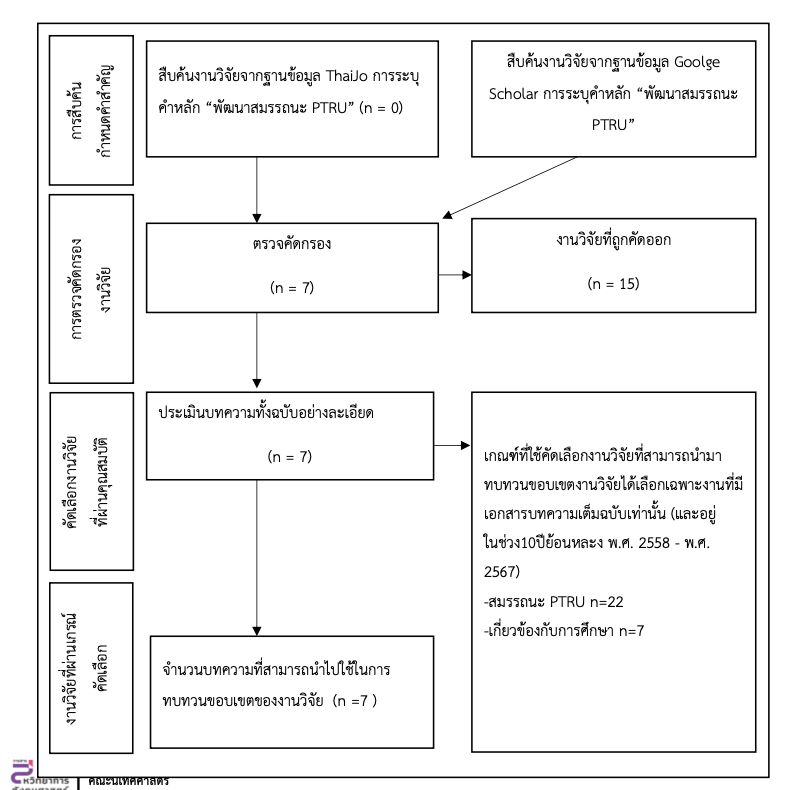
This research aims to analyze computer teaching behaviors that promote PTRU (Professionalism, Technology, Research, Unity) competencies of teachers in the digital age and to synthesize guidelines for developing computer teaching behaviors that can be applied in the context of digital-age teachers using a systematic literature review covering research between 2015–2024 from the ThaiJo and Google Scholar databases. The research results found that teaching behaviors that emphasize technology integration stimulate creativity, develop research skills, and create collaboration between teachers and students, resulting in more effective learning. In addition, training and development of teachers’ skills in using technology appropriately, as well as support from educational organizations, play an important role in developing PTRU competencies. The development of such competencies not only helps to improve the quality of teaching and learning but also affects the creation of a workforce with digital competencies, which are important for the development of society and the economy in the present era. The research results indicate guidelines for developing teaching and learning in the digital age that teachers can apply in their own contexts.
Downloads
Article Details

This work is licensed under a Creative Commons Attribution-NonCommercial-NoDerivatives 4.0 International License.
The author(s) is only responsible for data appearing in the submitted manuscript of Interdisciplinary social sciences and communication journal.Besides, this journal encourages and enables you to share data such as statements, contents, figures, etc. that support your research publication where appropriate, and enables you to interlink the data with proper citation.
References
กิตติยา รัศมีแจ่ม, รุ่งนภา ตั้งจิตรเจริญกุล และ ศิโรจน์ ผลพันธิน. (2566). สมรรถนะในยุคการเปลี่ยนแปลงของนักศึกษาวิชาชีพครู. วารสารมหาวิทยาลัยนราธิวาสราชนครินทร์ สาขามนุษยศาสตร์และสังคมศาสตร์, 10(2), 301-318.
จันทร์จิรา หาวิชา และ หนึ่งฤทัย ชวนะลิขิกร. (2567). การศึกษาความต้องการจำเป็นในการจัดการเรียนรู้วรรณคดีไทย โดยใช้ภูมิปัญญาท้องถิ่นสำหรับนักศึกษาวิชาชีพครูมหาวิทยาลัยราชภัฏพระนครศรีอยุธยา. วารสารวไลยอลงกรณ์ปริทัศน์, 4(2), 167-177.
นรากร มั่นแก้ว, ดลนภา มั่นแก้ว, น้ำฝน แสงอรุณ, จิรภัทร สิงห์มนต์ และ ณัฐกานต์ ประจัญบาน. (2567). ปัจจัยที่ส่งผลต่อการดำเนินงานตามนโยบายหลักสูตรฐานสมรรถนะในโรงเรียน สังกัดสำนักงานคณะกรรมการการศึกษาขั้นพื้นฐาน. Journal of Modern Learning Development, 9(10), 737-745.
ปริญา ปริพุฒ. (2567) การรับรู้ความสามารถในการใช้เทคโนโลยีดิจิทัลเพื่อออกแบบการเรียนรู้ของครูในโครงการพัฒนา
นวัตกรทางการศึกษาเพื่อพัฒนาท้องถิ่นโดยใช้สมรรถนะเป็นฐาน. วารสารครุทรรศน์, 4(2), 37-49.
พลธาวิน วัชรทรธำรง, ธนาวดี ทองอ้ม และ ศศินันท์ ศิริธาดากุลพัฒน์. (2566). การศึกษาความต้องการพัฒนาทักษะภาษา อังกฤษเพื่อการสื่อสารของ ผู้บริหารสถานศึกษาในเขตเมืองพัทยา. วารสารครุศาสตร์ มหาวิทยาลัยราชภัฏบ้านสมเด็จเจ้าพระยา, 17(2), 130-143.
วาสนา กีรติจำเริญ และ สุภาวดี วิสุวรรณ (2565). การจัดการเรียนรู้เพื่อพัฒนาสมรรถนะวิชาชีพครูด้านการบริหารหลักสูตรและการจัดการเรียนรู้ด้วยการสอดแทรกสมรรถนะสำคัญ. วารสารชุมชนวิจัยสังคม, 16(3), 70-81.
วิษณุ อรุณเมฆ, จิราวัฒน์ ขจรศิลป์ และธิติพงษ์ สุขดี. (2567). การพัฒนาหลักสูตรฝึกอบรมเสริมสร้างสมรรถนะทางวิชาชีพครูด้านความรู้ และประสบการณ์วิชาชีพตามมาตรฐานวิชาชีพครู สำหรับนักศึกษาสาขาพลศึกษา (4 ปี) คณะศึกษาศาสตร์. วารสารวิชาการมหาวิทยาลัยการกีฬาแห่งชาติ, 16(2), 247-258.
Anand, S. (2023). Professional training of computer science teachers in the context of methodological approaches. https://doi.org/10.30525/978-9934-26-297-5-34.
Anwar, A., Hasan, S., & Haerani, E. (2023). Increasing student learning enthusiasm through multimedia-based learning. AL-ISHLAH: Jurnal Pendidikan, 15(3), 3210–3217. https://doi.org/10.35445/alishlah.v15i3.3430
Chalkiadakis, A., Seremetaki, A., Kanellou, A., Kallishi, M., Morfopoulou, A., Moraitaki, M., & Mastrokoukou, S. (2024). Impact of Artificial Intelligence and Virtual Reality on Educational Inclusion: A Systematic Review of Technologies Supporting Students with Disabilities. Neveléstudomány. https://doi.org/ 10.3390/ educsci14111223
Fatekhah, K., Rahmawati, D., & Handayani, A. (2024). Tantangan dan Peluang Guru dalam Mengatasi Kemalasan Belajar Siswa di Era Digital. Tematik: Jurnal Penelitian Pendidikan Dasar, 3(1), 30–34. https://doi.org/10.57251/tem.v3i1.1402
Ferreira, H. S., & Pereira, H. (2023). Educação profissionalizante e o impacto do preparo profissional na transformação do desenvolvimento econômico regional. Revista Científica Multidisciplinar Viabile, 2(2). https://doi.org/10.56876/revistaviabile.v2n2.01
Heggart, K., & Yoo, J. (2018). Getting the most from google classroom: A pedagogical framework for tertiary educators. Australian Journal of Teacher Education, 43, 140-153.
Johnson, A. M., Jacovina, M. E., Russell, D. G., & Soto, C. M. (2016). Challenges and solutions when using technologies in the classroom. In Adaptive educational technologies for literacy instruction (pp. 13-30). Routledge.
Slamet, J., & Basthomi, Y. (2024). Assessing gamification-based LMS for EFL students: A self-directed learning framework. Studies in Linguistics, Culture and FLT, 12(2), 100–122. https://doi.org/10.46687/cvht3942
Shubina, I., & Kulakli, A. (2019). Pervasive Learning and Technology Usage for Creativity Development in Education. Int. J. Emerg. Technol. Learn., 14, 95-109.
Su, C. (2024). Learning Environment as an Influencer of Students’ Performance in A University in China. Journal of Education and Educational Research.
Taghizadeh, M., & Yourdshahi, Z. (2020). Integrating technology into young learners' classes: language teachers' perceptions. Computer Assisted Language Learning, 33, 982 - 1006.
Trilling, B., & Fadel, C. (2009). 21st century skills: Learning for life in our times. John Wiley & Sons.
