การศึกษารูปแบบการเรียนรู้ของนักเรียนในระดับชั้นมัธยมศึกษาตอนปลายจังหวัดจันทบุรี
Article Sidebar
Main Article Content
บทคัดย่อ
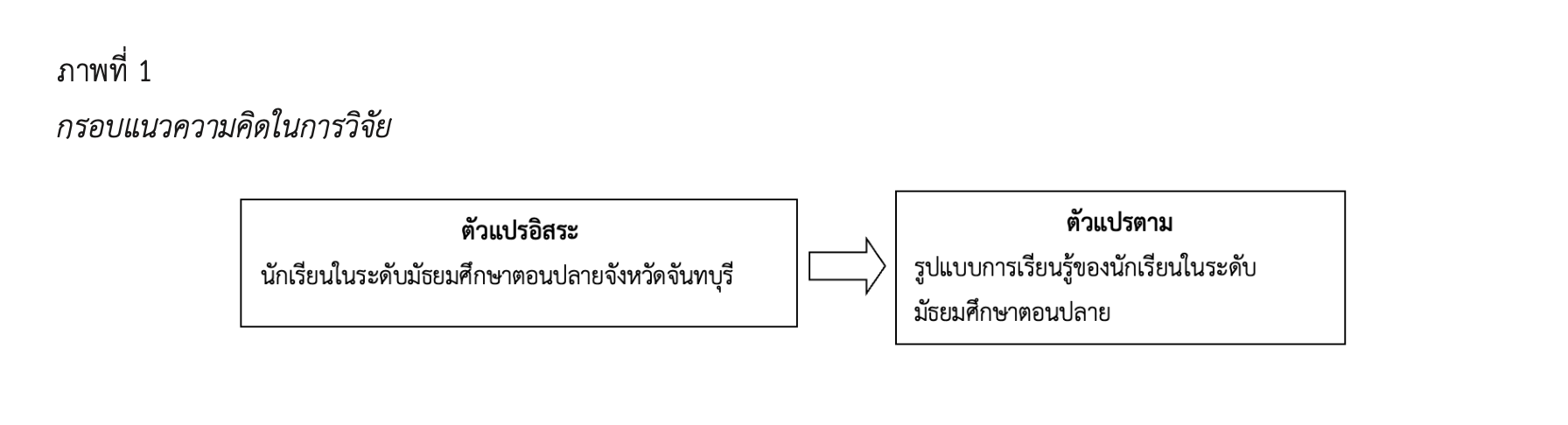
ผลการศึกษาสภาพปัจจุบันการจัดการเรียนรู้ที่ส่งเสริมรูปแบบการเรียนรู้ของนักเรียนในระดับมัธยมศึกษาตอนปลายจังหวัดจันทบุรี พบว่า 1) ผู้เรียนรู้ทางสายตา ครูจัดการเรียนรู้โดยใช้สื่อการสอนที่เป็นรูปภาพ แผนผัง สไลด์ วีดีโอ และวีดีทัศน์ เน้นให้ผู้เรียนได้รับความรู้ ความเข้าใจ จากการสังเกตสิ่งที่เกิดขึ้น 2) ผู้เรียนรู้ทางโสตประสาท พบว่า ครูออกแบบการจัดการเรียนรู้แบบอภิปรายและแลกเปลี่ยนเรียนรู้ร่วมกัน เพื่อกระตุ้นความสนใจ อธิบาย และเล่าเรื่องเชื่อมโยงเนื้อหากับสถานการณ์ในชีวิตประจำวัน 3) ผู้เรียนรู้ทางร่างกายและความรู้สึก พบว่า ครูจัดการเรียนรู้โดยใช้การทดลองและทำกิจกรรมกลุ่ม เน้นให้ผู้เรียนได้เรียนรู้โดยการลงมือปฏิบัติและค้นหาความรู้ด้วยตนเอง และผลการศึกษารูปแบบการเรียนรู้ของนักเรียนในระดับมัธยมศึกษาตอนปลายจังหวัดจันทบุรี จำนวน 398 คน ซึ่งแบ่งรูปแบบการเรียนรู้เป็น 3 รูปแบบ ได้แก่ รูปแบบ (ก) ความถนัดที่เกิดจากการได้ยิน รูปแบบ (ข) ความถนัดที่เกิดจากการดู และ รูปแบบ (ค) ความถนัดที่เกิดจากการลงมือทำ พบว่า ความถนัดที่เกิดจากการดูมากที่สุด จำนวน 190 คน คิดเป็นร้อยละ 48.84 รองลงมา คือ ความถนัดที่เกิดจากการลงมือทำ จำนวน 140 คน คิดเป็นร้อยละ 35.99 และความถนัดเกิดจากจากการได้ยินมีจำนวนน้อยที่สุด 59 คน คิดเป็นร้อยละ 15.17
Downloads
Article Details

อนุญาตภายใต้เงื่อนไข Creative Commons Attribution-NonCommercial-NoDerivatives 4.0 International License.
** ข้อความ ข้อคิดเห็น หรือข้อค้นพบ ในวารสารสหวิทยาการสังคมศาสตร์และการสื่อสารเป็นของผู้เขียน ซึ่งจะต้องรับผิดชอบต่อผลทางกฎหมายใด ๆ ที่อาจเกิดขึ้นจากบทความและงานวิจัยนั้น ๆ โดยมิใช่ความรับผิดชอบของคณะนิเทศศาสตร์ มหาวิทยาลัยราชภัฏรำไพพรรณี **
เอกสารอ้างอิง
ชนาธิป พรกุล. (2560). การออกแบบการสอน. จุฬาลงกรณ์มหาวิทยาลัย.
ทิศนา แขมมณี. (2560). การสอนจิตวิทยาการเรียนรู้เรื่องศาสตร์การสอนองค์ความรู้เพื่อการจัดกระบวนการเรียนรู้ที่มีประสิทธิภาพ.
สำนักพิมพ์จุฬาลงกรณ์มหาวิทยาลัย.
พิมพันธ์ เดชะคุปต์. (2561). การเรียนรู้เชิงรุกแบบรวมพลังกับ PLC เพื่อการพัฒนา. โรงพิมพ์แห่งจุฬาลงกรณ์มหาวิทยาลัย.
พีรเทพ รุ่งคุณากร. (2560). การประยุกต์จิตวิทยาเพื่อการเรียนรู้. คณะครุศาสตร์ มหาวิทยาลัยราชภัฏนครปฐม.
รัตติกร ภิรมย์โคร่ง (2563) ลีลาการเรียนรู้และการใช้แหล่งการเรียนรู้ของนักเรียนระดับชั้นมัธยมศึกษาชั้นปีที่ 1 โรงเรียนวัดไร่ขิงวิทยา.
มหาวิทยาลัยศิลปากร.
ราชบัณฑิตยสถาน. (2560). พจนานุกรมศัพท์ภาษาศาสตร์ประยุกต์. ราชบัณฑิตยสถาน.
วิจารณ์ พานิช. (2560). วิถีสร้างการเรียนรู้เพื่อศิษย์ในศตวรรษที่ 21. มูลนิธิสดศรี สฤษดิ์วงศ์.
Barrow, Haward S. (1985). How to Design a Problem Based Curriculum for the Preclinical Years. Springer Publishing.
Combs, A. W. (1989). A theory of therapy: guidelines for counseling practice. SAGE Publications.
Conbach, L. J. (1977). Educational Psychology. Harcourt Brace Jevanoich Inc.
Coombs, P. H., & Ahmed, M. (1974). Attacking Rural Poverty: How Nonformal Education Can Help
A Research Report for the World Bank Prepared by the International Council for Educational
Development. Hopkins University
Piaget, J. (1957). Construction of reality in the child. Routledge & Kegan Paul.
Rahman, M. M. (2023). Sample Size Determination for Survey Research and Non-Probability Sampling Techniques: A Review and Set of Recommendations. Entrepreneurship, Business and Economics, 11(1), 42–62.
Rogers, C. R. (1946). Significant aspects of client-centered therapy. American Psychologist. 1, 415-422.
Tileston, D. W. (2005). 10 Best Teaching Practices. Corwin Press.
