COPING STRATEGIES OF PARENTS WHEN CHILD BULLYING IN SCHOOL
Article Sidebar
Main Article Content
Abstract
The purposes of this study were: Coping strategies of parents when child Bullying in school to The study was a descriptive research design as a sample size of 169 participants was determined based on a percentage of the total population. Data were collected through a questionnaire measuring Coping strategies of parents when child Bullying in school. The confidence value of the tool (Reliability) equals 0.93 Statistical analysis involved the use of a (One-way ANOVA) analysis of variance to examine the variance in coping strategies.
The results of the research found that:
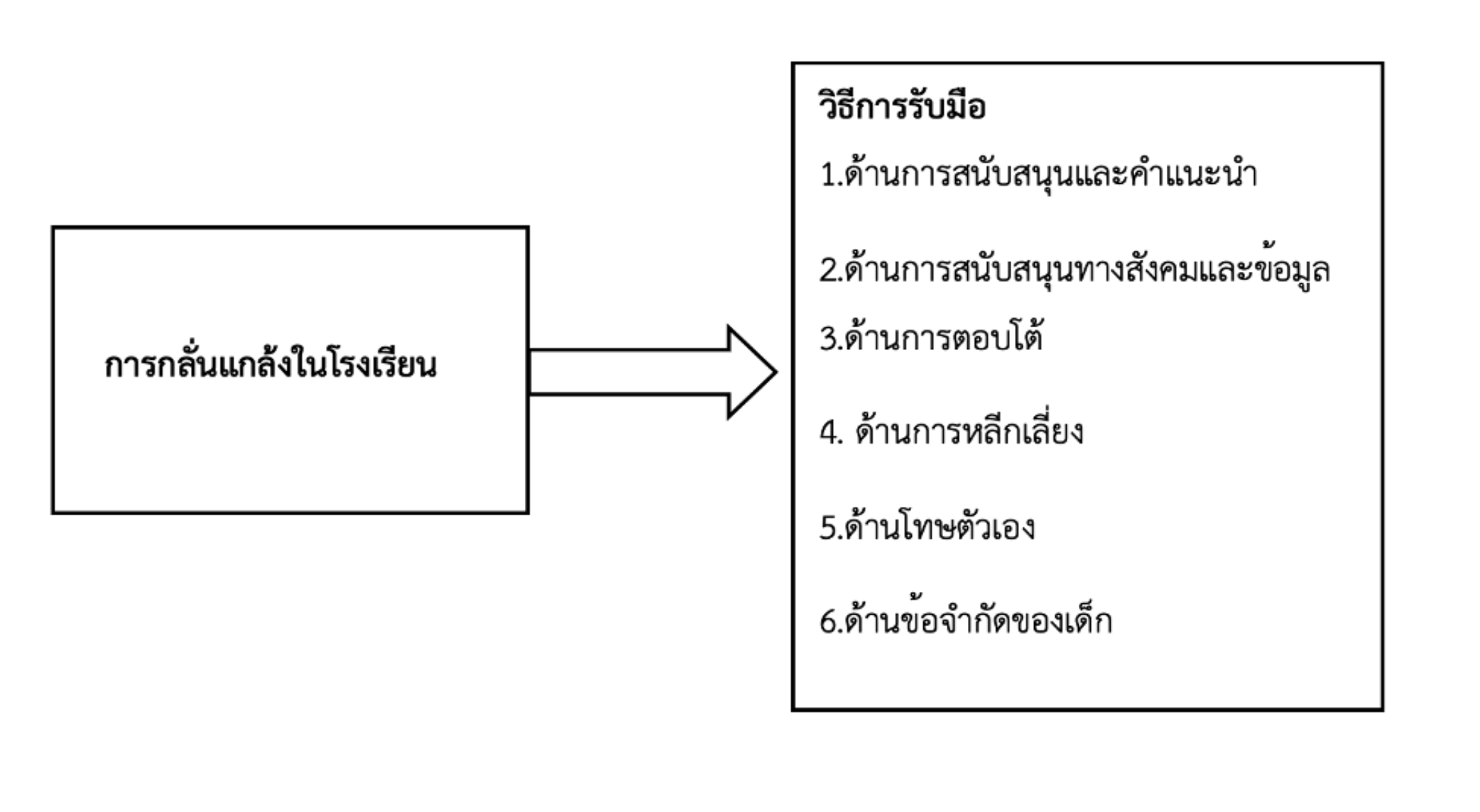
- Coping strategies of parents when child Bullying in school have six dimensions Provide Support & Advise to Child, Social support & Information, Retaliation, Avoidance, Self-blame and Child Restriction these strategies are at a relatively low level
- The variables of gender, age, income, education, and occupation, when different, do not result in significant differences in Coping strategies of parents when child Bullying in school
Downloads
Article Details

This work is licensed under a Creative Commons Attribution-NonCommercial-NoDerivatives 4.0 International License.
The author(s) is only responsible for data appearing in the submitted manuscript of Interdisciplinary social sciences and communication journal.Besides, this journal encourages and enables you to share data such as statements, contents, figures, etc. that support your research publication where appropriate, and enables you to interlink the data with proper citation.
References
กรมส่งเสริมสุขภาพจิต. (2563). บูลลี่ไม่ใช่เรื่องเด็ก ๆ ความรุนแรงที่รอวันปะทุ. สืบค้นเมื่อ 21 สิงหาคม 2565 จาก https://www.dmh.go.th/news-dmh/view.asp?id=30150.
ไชยชาญ เผือดคล้าย. (2565). แนวทางการแก้ปัญหาการกลั่นแกล้งรังแกกันในห้องเรียนชั้นประถมศึกษาด้วยการพัฒนาทักษะการเรียนรู้ทางอารมณ์และสังคม. วารสารปรัชญาปริทรรศน์, 27(1), 219-232. https://so05.tci-thaijo.org/index.php/phiv/article/view/256325/174643
ธิดารัตน์ ปุรณะชัยคีรี และคณะ. (2558). กลยุทธในการแก้ปัญหาการถูกรังแกของเด็กนักเรียนระดับชั้ประถมศึกษาตอนปลาย. มหาวิทยาลัยมหิดล.
เพ็ญนภา กุลนภาดล. (2565). การปรึกษาครอบครัว Family Counseling (พิมพ์ครั้งที่ 4). เนติกุลการพิมพ์.
วีรวิชญ์ เลิศรัตน์ธำรงกุล. (2564). การกลั่นแกล้งกันในพื้นที่ไซเบอร์ของนักเรียนระดับมัธยมศึกษาตอนต้น: ความชุกวิธีการจัดการปัญหาและพฤติกรรมเสี่ยง. มหาวิทยาลัยภาคตะวันออกเฉียงเหนือ.
สมิทธิ์ เจือจินดา. (2563). ผลของโปรแกรมการให้คําปรึกษารายบุคคลเพื่อเสริมสร้างความฉลาดทางสังคมที่มีต่อการลดพฤติกรรมรังแกของนักเรียนระดับชั้นมัธยมศึกษาตอนต้น. [วิทยานิพนธ์ปริญญาดุษฎีบัณฑิต ไม่ได้ตีพิมพ์]. มหาวิทยาลัยศรีนครินทรวิโรฒ.
สุมณฑา หิ้มทอง.(2559). การสำรวจพฤติกรรมก้าวร้าวในเด็กปฐมวัยโดยผู้ดูแลของศูนย์พัฒนาเด็กเล็ก สังกัดองค์กรปกครองส่วนท้องถิ่น. [วิทยานิพนธ์ปริญญามหาบัณฑิต ไม่ได้ตีพิมพ์]. มหาวิทยาลัยสงขลานครินทร์.
สุฮัยณี อาหวังและคณะ. (2564). ผลกระทบจากพฤติกรรมการกลั่นแกล้งของนักเรียนในจังหวัดปัตตานี. [วิทยานิพนธ์ปริญญามหาบัณฑิต ไม่ได้ตีพิมพ์]. มหาวิทยาลัยสงขลานครินทร์ วิทยาเขตปัตตานี.
อนุรักษ์ จันทร์รอด.(2565). การศึกษาความรุนแรงของพฤติกรรมการกลั่นแกล้งกันของนักเรียนในโรงเรียนอำเภอเมือง จังหวัดพิษณุโลก. [วิทยานิพนธ์ปริญญามหาบัณฑิต ไม่ได้ตีพิมพ์]. มหาวิทยาลัยราชภัฏพิบูลสงคราม.
Joy Benatov. (2019). Parents’ Feelings, Coping Strategies and Sense of Parental Self -Efficacy When Dealing With Children’s. Victimization, 10(1), 20-39.
