THE APPLICATION OF DIGITAL GENETIC ALGORITHM IN LACQUER DECORATION DESIGN
Article Sidebar
Main Article Content
Abstract
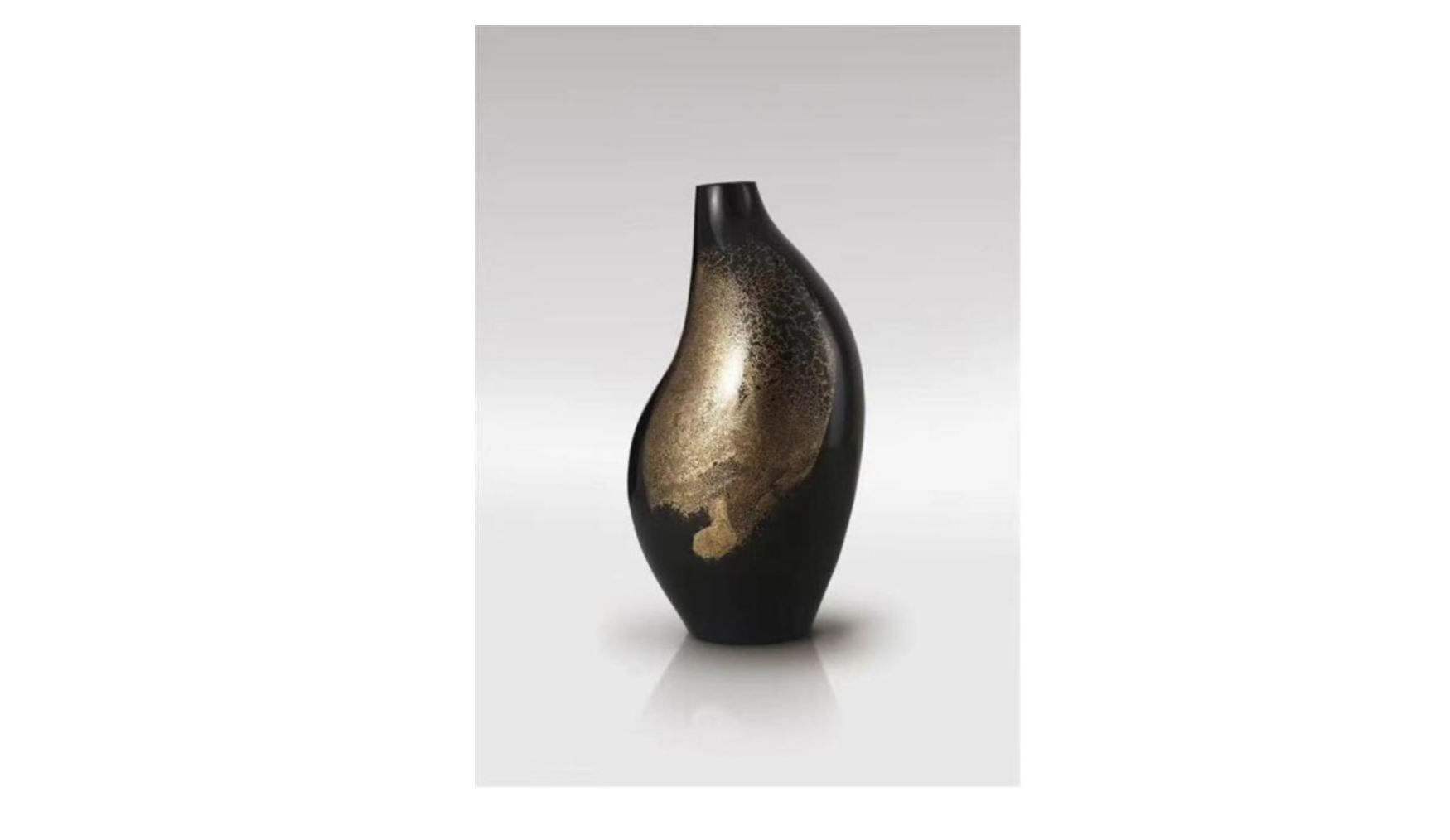
The purpose of this study is to explore the integration of MATLAB software and iterative algorithm techniques to enhance the design of decoration mechanisms in traditional lacquer art. MATLAB's computational power is harnessed to simulate and optimize the decorative process, particularly focusing on the lacquer crackle effect technique. This study is a qualitative research and quantitative research method, after experimentation, 100 sample techniques were collected. Taking the lacquer crackle effect technique decoration as an example, the optimal target parameter configuration is achieved. The study aims to present an innovative design method that merges traditional lacquer techniques with modern computational tools, highlighting the rich cultural heritage behind lacquer art while improving the efficiency and creativity of the design process.
The results of the research found that:
- the genetic algorithm technique could streamline the design process, enhance the quality of the decorative effects, and preserve the cultural heritage of lacquer art in a digital form.
2) Genetic algorithms evolve the most efficient configurations through repeated iterations, resulting in improved product design efficiency and enhanced overall aesthetics of the pattern.
3) The research results make an important contribution to the field of digital design and the preservation of traditional lacquer art, while also providing a new path for the future application of digital technology in the study of traditional art forms.
Downloads
Article Details

This work is licensed under a Creative Commons Attribution-NonCommercial-NoDerivatives 4.0 International License.
The author(s) is only responsible for data appearing in the submitted manuscript of Interdisciplinary social sciences and communication journal.Besides, this journal encourages and enables you to share data such as statements, contents, figures, etc. that support your research publication where appropriate, and enables you to interlink the data with proper citation.
References
Back, T., Fogel, D. B., & Michalewicz, Z. (Eds.). (1997). Handbook of Evolutionary Computation,Oxford University Press.
Duan, S. H., (2019). Research on Printmaking Art design Method Based on Real Coded Genetic Algorithm. Modern Electronic Technique. 13, 73-75.
Goldberg, D. E., (1989). Genetic Algorithms in Search, Optimization, and Machine Learning. Addison-Wesley Professional.
Hong, L., & Liu, X. Y., (2003). Computer-aided Design to Support Innovative Design of Exterior Styling Environment. Journal of Computer-Aided Design and Graphics. 10, 1258-1262.
Holland, J. H. (1975). Adaptation in Natural and Artificial Systems. University of Michigan Press.
Liu, T., & Liu, H., (2008). Innovative Design of Paper Cutting Patterns Based on Genetic Algorithm, Computer Engineering and Application, 44(12), 75-77.
Xu, Y., Zhao, H., & Chen, D. (2019). Applying Genetic Algorithm in Traditional Pattern Design. 2019 3rd International Conference on Education, E-learning and Management Technology (EEMT), 133-137.
Wang, J., Li, S., & Zhang, H. (2020). Integrating digital tools with traditional craftsmanship: Preservation and innovation in cultural heritage. Journal of Heritage Management, 12(2), 140-156.
Zhu, M., Lv, J. L., & Xiang, P. (Eds.). (2019). Application of Interactive Genetic Algorithm in The Innovative Design of Ethnic Patterns. Computer Engineering and Design, 40(11), 3342-3348.
