FACTORS INFLUENCING THE ORGANIZATIONAL PERFORMANCE OF MEMBERS OF THE GOLD TRADERS ASSOCIATION IN THAILAND
Article Sidebar
Main Article Content
Abstract
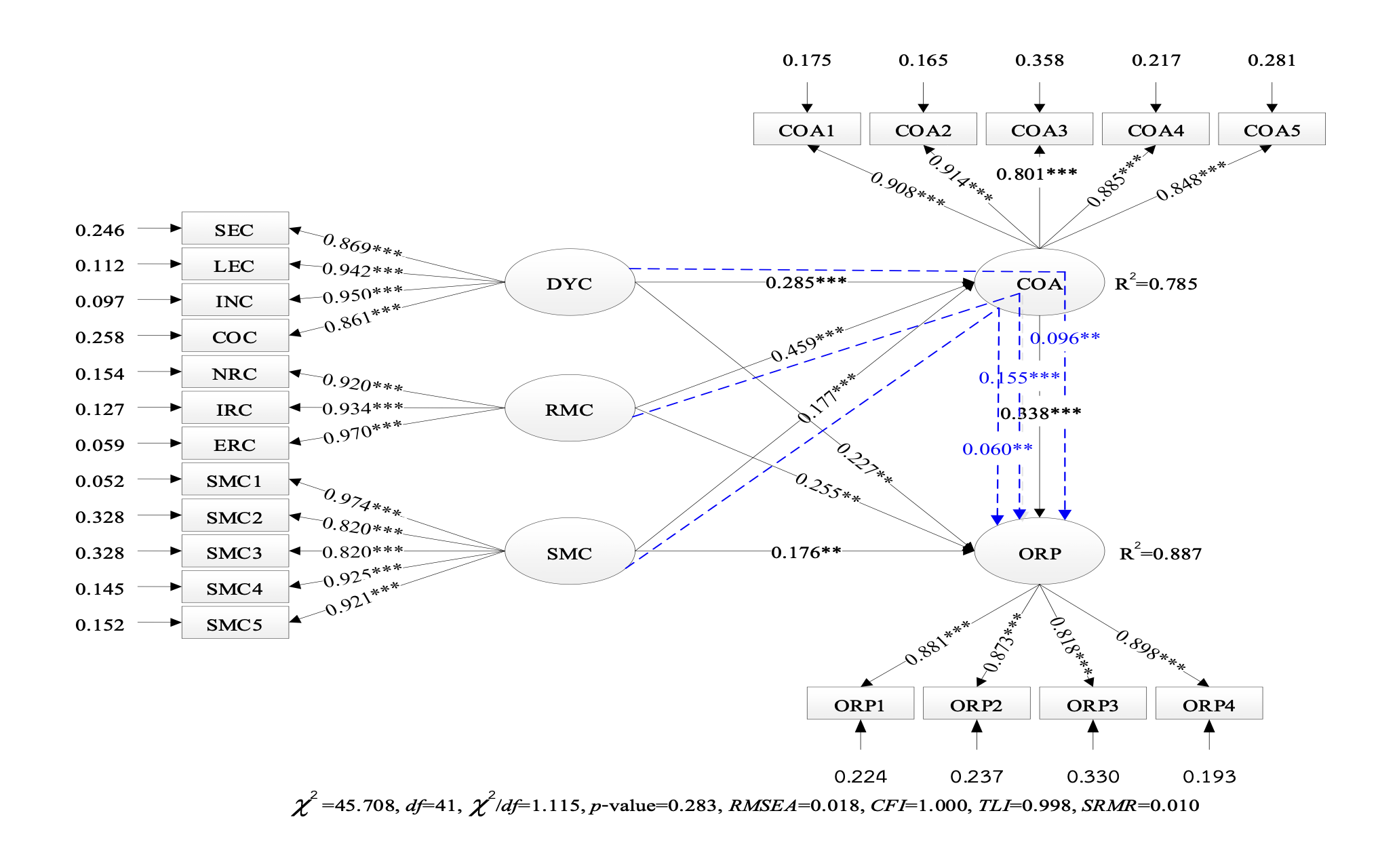
The purposes of this study were: 1) examines to the dynamic capability, risk management capability, and supplier management capability directly affecting the competitive advantage of the Gold Traders Association in Thailand 2) investigates the dynamic capability, risk management capability; supplier management capability, and the competitive advantage directly affecting the organizational performance of the Gold Traders Association in Thailand 3) studies the dynamic capability; risk management capability; and supplier management capability indirectly affecting the organizational performance through the competitive advantage of the Gold Traders Association in Thailand and 4)investigates the consistency of a causal relationship model influencing the organizational performance of the Gold Traders Association in Thailand with the empirical data. In this quantitative research, a questionnaire was used in the quantitative research to collect data from 358 representatives of the Gold Traders Association in Thailand using a multi-stage random sampling method. Statistics used in data analysis include frequency, percentage, mean, standard deviation and structural equation modeling analysis.
The results of the research found that:
- The dynamic capability, risk management capability, and supplier management capability exhibited positive direct influence on the competitive advantage.
- The dynamic capability, risk management capability, supplier management capability, and the competitive advantage exhibited positive direct influence on the organizational performance.
- The dynamic capability, risk management capability, and supplier management capability exhibited positive indirect influence on the organizational performance through the
competitive advantage.
- 4. The structural equation model was consistent with the empirical data. Chi-square was 708, the degree of freedom (df) = 41, the relative chi square = 1.115, the p-value = 0.283, the root mean square error of approximation (RMSEA) = 0.018, the comparative fit index (CFI) = 1.000, the Tucker-Lewis index (TLI) = 0.998, and the standardized root mean squared residual (SRMR) = 0.010.
Downloads
Article Details

This work is licensed under a Creative Commons Attribution-NonCommercial-NoDerivatives 4.0 International License.
The author(s) is only responsible for data appearing in the submitted manuscript of Interdisciplinary social sciences and communication journal.Besides, this journal encourages and enables you to share data such as statements, contents, figures, etc. that support your research publication where appropriate, and enables you to interlink the data with proper citation.
References
นิตยา โพธิ์ศรีจันทร์ และศิริวรรณ เพชรไพร. (2565). ผลกระทบของการประยุกต์ใช้ข้อมูลการบัญชีบริหารเชิงรุกที่มีต่อประสิทธิภาพการดําเนินงานของธุรกิจขนาดกลางและขนาดย่อม ในจังหวัดนครพนม. วารสารศิลปศาสตร์และวิทยาการจัดการ, 9(1), 19-30.
นิลุบล วิโรจน์ผดุงพงศ์ สวียา ปรารถนาดี และอนิรุธ พิพัฒน์ประภา. (2563). ปัจจัยเชิงสาเหตุของความสามารถการจัดการห่วงโซ่อุปทานด้านสิ่งแวดล้อมที่มีต่อผลการดำเนินงานอย่างยั่งยืนของอุตสาหกรรมโรงแรมในประเทศไทย. วารสารวิชาการบริหารธุรกิจสมาคมสถาบันอุดมศึกษาเอกชนแห่งประเทศไทย, 9(1), 154-173.
สมาคมค้าทองคำ. (2565). ดัชนีราคาทอง เดือน พ.ค. 65 ผู้ค้าเห็นตรงกับนักลงทุน กังวลนโยบายดอกเบี้ย FED กดดันราคาทอง. สืบค้นจาก https://www.goldtraders.or.th/ArticleView.aspx?gp= 1&id=1194
สมาคมค้าทองคำ.(2565b). รายชื่อสมาชิกสมาคมค้าทองคำ แบ่งตามรายจังหวัด. สืบค้นจาก https://www.goldtraders.or.th/MemberZones.aspx
Altincubuk, B. (2022). Jewerly sector within the persectives of transaction cost and network approaches: informality and economic adventage Ufuk Üniversitesi Sosyal Bilimler Enstitüsü Dergisi, 11(21), 57-69.
Baporikar, N. (2019). Factors Creating Competitive Advantage for Family-Owned Business. In J. M. Saiz-Alvarez (Ed.), Handbook of Research on Digital Marketing Innovations in Social Entrepreneurship and Solidarity Economics (pp. 47-62). Hershey, PA: IGI Global.
Barney, J. B. (1991). Firm resources and sustained competitive advantage. Journal of Management, 17(1), 99-120. doi:10.1177/014920639101700108
Best, J. W. (1982). Research in education (4 ed.). Prentice Hall.
Boucherf, K., & Medjoub, R. (2022). Gold Sellers in the Streets of Bachdjerrah: El Houma: Community Identity and Globalised Economic Territory. Youth and Globalization, 3(2), 332-358.
Correia, R. J., Dias, J. G., & Teixeira, M. S. (2020). Dynamic capabilities and competitive advantages as mediator variables between market orientation and business performance. Journal of Strategy and Management, 14(2), 187-206.
Hair, J. F., Babin, B. J., Anderson, R. E., & Black, W. C. (2019). Multivariate data analysis (8th ed.). India: Cengage.
Holma, A.-M., Østensen, M. W., Holmen, E., & de Boer, L. (2022). Market dialogue in public procurement: Buyer-supplier interfaces and relational abilities. Industrial Marketing Management, 104, 51-67. doi:https://doi.org/10.1016/j.indmarman.2022.04.004
INN News. (2021). Why gold is important to the economy (and us). Retrieved from https://www.innnews.co.th/finance/news_30219/
Joureih, M. (2019). Human Capital Development. In B. C. Thomas & L. J. Murphy (Eds.), Innovation and social capital in organizational ecosystems (pp. 132-150). Hershey, PA: IGI Global.
Li, D.-y., & Liu, J. (2014). Dynamic capabilities, environmental dynamism, and competitive advantage: Evidence from China. Journal of Business Research, 67(1), 2793-2799. doi:https://doi.org/10.1016/j.jbusres.2012.08.007
Li, S., & Chen, X. (2019). The role of supplier collaboration and risk management capabilities in managing product complexity. Operations Management Research, 12(3), 146-158.
Muna, N., Yasa, N., Ekawati, N., & Wibawa, I. (2022). A dynamic capability theory perspective: borderless media breakthrough to enhance SMEs performance. International Journal of Data and Network Science, 6(2), 363-374.
Park, M., & Singh, N. P. (2023). Predicting supply chain risks through big data analytics: role of risk alert tool in mitigating business disruption. Benchmarking: An International Journal, 30(5), 1457-1484. https://doi.org/10.1108/BIJ-03-2022-0169
Pavlou, P. A., & El Sawy, O. A. (2011). Understanding the elusive black box of dynamic capabilities. Decision Sciences, 42(1), 239-273.
Phangestu, J., Kountur, R., & Prameswari, D. A. (2020). The moderating effect of entrepreneurial leadership and competitive advantage on the relationship between business model innovation and startup performance. Journal of Business and Retail Management Research, 14(3), 53-61.
Prabowo, H., Sriwidadi, T., & Ikhsan, R. B. (2021). The Influence of Dynamic Capability on Sustainable Competitive Advantage: An Empirical Study of Small Businesses in Indonesia. The Journal of Asian Finance, Economics and Business, 8(6), 949-959.
Rejikumar, G., Fatih, C., Devi, M., Rahman, U. H., Das, S., Abotaleb, M., & Mishra, P. (2021). Structural analysis of Indian gold exports: perspectives for trade policy development. J. Math. Comput. Sci., 11(4), 4042-4066.
Saghiri, S. S., & Mirzabeiki, V. (2021). Buyer-led environmental supplier development: Can suppliers really help it? International Journal of Production Economics, 233, 107969. doi:https://doi.org/10.1016/j.ijpe.2020.107969
Sunargo, S. (2022). The Role of Entrepreneurship Orientation and Competitive Advantage as Strategy to Improve MSME Performance Post Covid-19 Pandemic in Batam City. Sustainability: Theory, Practice and Policy, 2(1), 44-59.
Teece, D. J., Pisano, G., & Shuen, A. (1997). Dynamic capabilities and strategic management. Strategic management Journal, 18(7), 509-533.
Thongchuay. (2021). What is gold? Retrieved from https://thongchuay.co/gold-stories/goldbar/ goldtoday-what-is-gold/6120
U-Tantada, S. (2019). Influential driving factors for corporate performance: A case of small and medium enterprises in Thailand. Doctor of Philosophy (Business Adminstration), Ramkhamhaeng University, Bangkok, Thailand.
Wang, L., Wang, P., & Zeng, X. (2021). The role of industrial digitization in modularized supply chain management. Paper presented at the 2021 10th International Conference on Software and Computer Applications (pp. 213-218).
Wang, M. W. C., Tan, C. L., & Wahid, N. A. (2020). Supplier management practice and service quality: critical review on mediating role of outsourcing service provider capabilities International Journal of Industrial Management, 7, 9-15.
Yamin, S., Gunasekaran, A., & Mavondo, F. T. (1999). Relationship between generic strategies, competitive advantage and organizational performance: an empirical analysis. Technovation, 19(8), 507-518. doi:https://doi.org/10.1016/S0166-4972(99)00024-3
Zheng, J., Khurram, M. U., & Chen, L. (2022). Can Green Innovation Affect ESG Ratings and Financial Performance? Evidence from Chinese GEM Listed Companies. Sustainability, 14(14), 8677.
