THE MODEL OF LEARNING AND DEVELOPMENT IN TOURISM GASTRONOMY ABOUT COOKING VACATION IN THAILAND
Article Sidebar
Main Article Content
Abstract
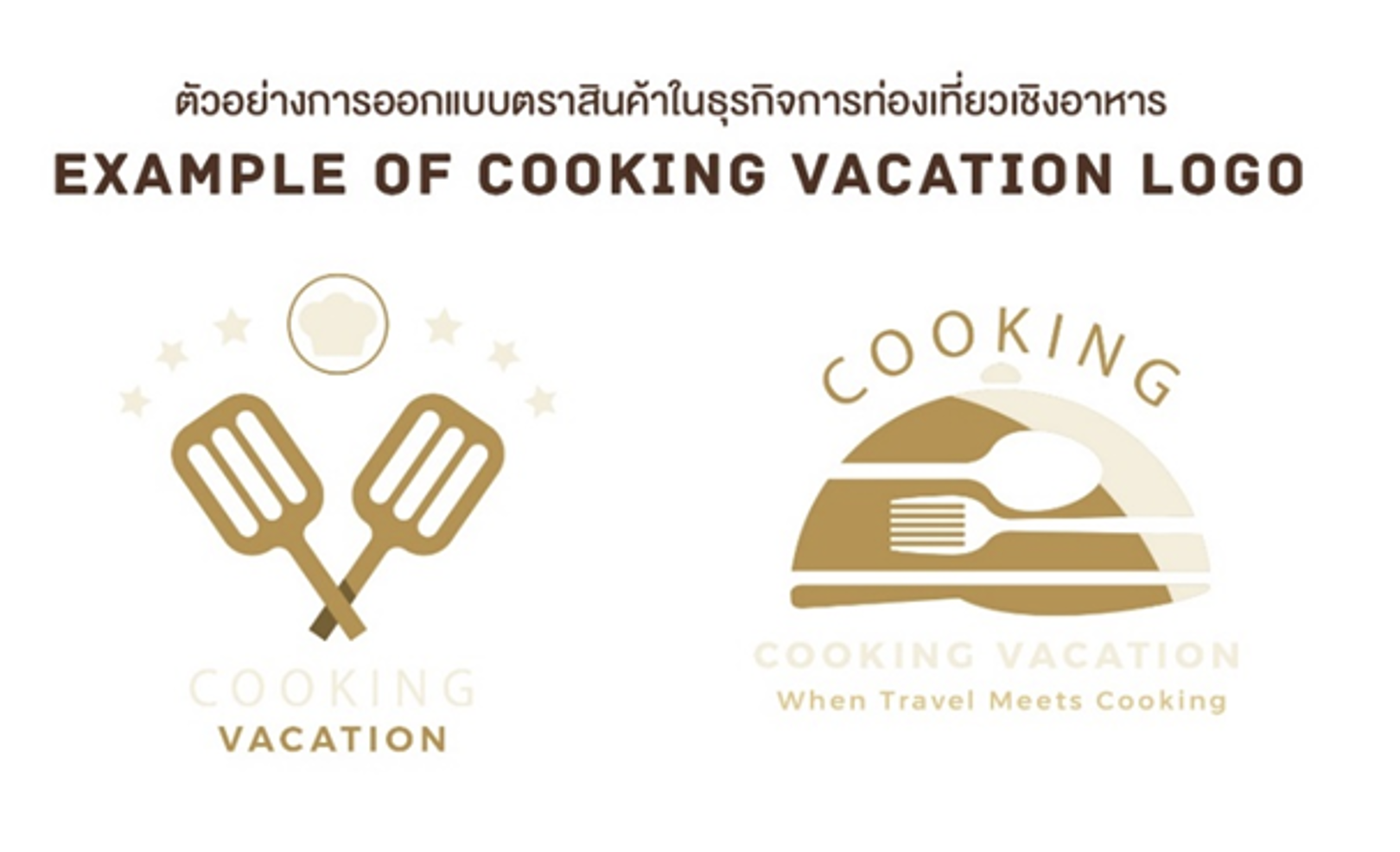
The objective of this research is to study and upgrade tourism gastronomy (cooking vacation) in Thailand in order to analyse affecting factors on effective capital management. The results obtained were then used for the development of strategies most suitable for cooking vacation and food service business marketing plans using an online questionnaire and in-depth online interviews. In this research, the research was divided into six steps.The results of the research found that: to study and collect information, and to create business development plans. Furthermore, case studies in Japan, Spain and Thailand found that the most important factor that attracted tourists to use the cooking vacation services included the uniqueness of the local area. The second step, Thai and foreign tourists were interviewed and it was found that they were aged 22-45, female, worked in the private sector and had a salary between 15,001-25,000 Baht per month. There were five processes that affected consumer decision-making, as follows: (1) target audience; (2) the duration of participation in an activity; (3) social value; (4) communication suitability skills; and (5) managing the store area. In the third step, three experts were interviewed and it was found that there were motivating factors for choosing restaurants for reviews which were generally on services. In the fourth step, the results were divided into two parts: (1) business model canvas; and (2) brand guidelines design. In the fifth step, three experts agreed with the business model and guidelines.
Downloads
Article Details

This work is licensed under a Creative Commons Attribution-NonCommercial-NoDerivatives 4.0 International License.
The author(s) is only responsible for data appearing in the submitted manuscript of Interdisciplinary social sciences and communication journal.Besides, this journal encourages and enables you to share data such as statements, contents, figures, etc. that support your research publication where appropriate, and enables you to interlink the data with proper citation.
References
เบญจมาภรณ์ ชำนาญฉา. (2561, มกราคม-มิถุนายน). การท่องเที่ยวเชิงอาหารศักยภาพและความได้เปรียบของประเทศไทย.
วารสารวิชาการ สมาคมสถาบันอุดมศึกษาเอกชนแห่งประเทศไทย, 24(1), 114. สืบค้นจาก apheit.bu.ac.th/jounal/social-vol24-1/08_วิชาการ_เบญจมาภรณ์%20ชำนาญฉา.pdf
ไทยรัฐออนไลน์. (2562). “ชิมช้อปใช้” เงินกำลังหมุนไป 8 วันใช้จ่ายสะพัดพันล้าน กรุงเทพฯช้อปสูงสุด. สืบค้นจาก https://www.thairath.co.th/news/business/1675605
กระทรวงการท่องเที่ยวและกีฬา. (2560). สถิติด้านการท่องเที่ยว ปี 2560 (Tourism Statistics 2017). สืบค้นจาก https://www.mots.go.th/old/more_news.php?cid=414&filename=index
การท่องเที่ยวแห่งประเทศไทย. (2017a). Food on the move. TAT Review, 3(1), 10-16.
การท่องเที่ยวแห่งประเทศไทย. (2017b). Food on the move. TAT Review, 3(1), 28.
บริษัท แบรนด์บุฟเฟต์ จำกัด. (2562). ส่องเทรนด์ธุรกิจร้านอาหารชั่วโมงนี้ยังน่าลงทุนอยู่หรือไม่? ร้านแบบไหนมาแรง.
สืบค้นจาก https://www.brandbuffet.in.th/2019/07/restaurant-business-overview-by-eic/
พรรณี สวนเพลง และ คณะ. (2559). การท่องเที่ยวเชิงอาหาร. รายงานภาวะเศรษฐกิจท่องเที่ยว,
(2), 38-45.
Andrys. (2019). 36 Great Brand Guidelines Examples. http://old.seattletimes.com/html/businesstechnology/2018979469_microsoftreaxxml.html
Athena H.N. Mak, Margaret Lumbers, Anita Eves, & Richard C.Y. Chang. (2012). Factors influencing tourfood consumption. International Journal of Hospitality Management, 31(3), 928-936.
Brown Tim. (2008). Design Thinking. Harvard business review. 86(141), 84-92. Cisco. (2019). Brand Centre.
(2019). Brand Centre. 2019. https://www.cisco.com/c/m/en_us/about/brand-center/copyright-
use/copyright-material-guidelines/interactive-brand-book.html#16
Erik Cohen. (1979). A Phenomenology of Tourist Experience. Sociology, 13(2), 179-201.
Herz, R.S., & Engen, T. (1996). Odor memory: Review and analysis. Psychonomic Bulletin and Review, 3(3), 300-313.
Kotler, P., & Armstrong, G. (1996). Principles of marketing (7th ed.). Prentice Hall International, London: Pearson Education.
Kotler, P., & Keller, K. L. (2006). Marketing Management (12th ed.). Upper Saddle
River: Prentice Hall.
Lorri Mealey. (2019). The Basics of Choosing a Restaurant Theme Concept. https://www.thebalancesmb .com /the-basics-of-choosing-a-restaurant-theme-2888693
UNWTO. (2012). Global Report on Food Tourism. https://www.e-unwto.org/doi/pdf/10.18111/9789284414819
