THE ENHANCEMENT OF MARITAL SATISFACTION THROUGH THE INTEGRATED COUPLE COUNSELING PROGRAM BASED ON STRATEGIC THEORY
Article Sidebar
Main Article Content
Abstract
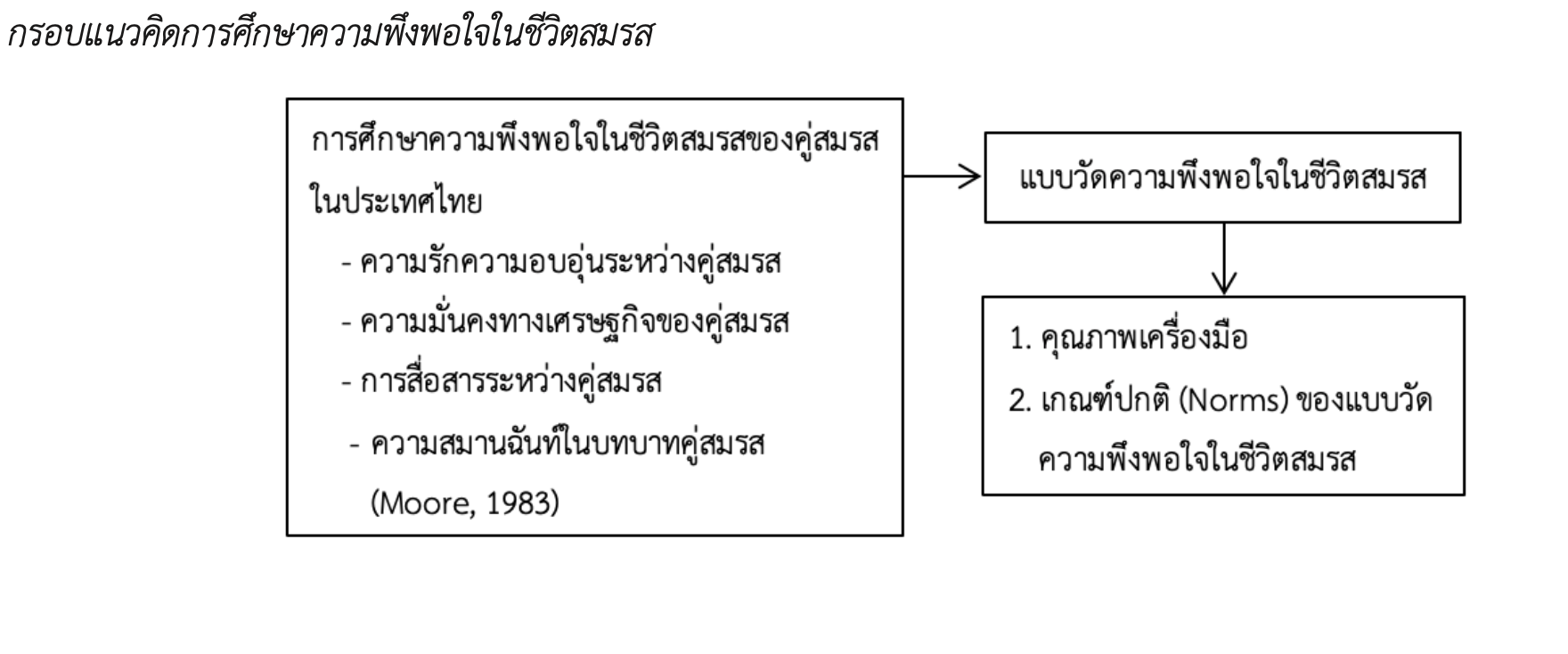
There were two phases of this research, First phase was developing a measure of marital satisfaction scale and determine the norms of the marital satisfaction measurement model. The second phase developed the integrated marriage counseling program based on strategic theory for the enhancing marital satisfaction and also studied the result of the program implemented. In this experimental research, the sample group used in the study were married couples who had registered their marriages, had been married for more than 4 years and both got the marital satisfaction score lower than norms at a moderate level, both had a marital satisfaction score of less than 141 (full score of 200), selected as the experimental group of 10 couples and control group of 10 couples. The tool used in this program was the marital satisfaction scale and integrated couple counseling program based on strategic theory. The data were analyzed by using Two-way repeated measures ANOVA.The results of the research were as follows: (1) The marital satisfaction scale developed by the researcher consisted of 40 items which reliability is .94(2) Norms of the marital satisfaction scale in the form of a normalized T-score, i.e. the lowest level of marital satisfaction, with a score of fewer than 109 points; a low level of 109-141 points; a moderate level of 141-171 points; a high level of 172-189 points; and the highest level of a score greater than or equal to 190 points.(3) The integrated marriage counseling program based on strategic theory was a total of 10 sessions, 60-90 minutes each time.(4) Couples who were counseled with the integrated marriage counseling program based on strategic theory had higher marital satisfaction than the control group statistically significant at .05. And(5) Couples who were counseled with the integrated marriage counseling program based on strategic theory had mean marital satisfaction for the post-trial period and the follow-up period was higher than the pre-trial period statistically significant at .05
Downloads
Article Details

This work is licensed under a Creative Commons Attribution-NonCommercial-NoDerivatives 4.0 International License.
The author(s) is only responsible for data appearing in the submitted manuscript of Interdisciplinary social sciences and communication journal.Besides, this journal encourages and enables you to share data such as statements, contents, figures, etc. that support your research publication where appropriate, and enables you to interlink the data with proper citation.
References
กรมการปกครอง กระทรวงมหาดไทย. (2563, 30 มิถุนายน). สถิติการสมรสและการหย่าร้างในรอบ 10 ปี ของประเทศไทย. http://themomentum.co/momentum-feature-divorce-not-fail.
กรมกิจการสตรีและสถาบันครอบครัว. (2559). นโยบายและยุทธศาสตร์การพัฒนาสถาบันครอบครัว พ.ศ. 2560-2564.กระทรวงการพัฒนาสังคมและความมั่นคงของมนุษย์.
กอบกูน พิชัยณรงค์. (2557). ความเท่าเทียมในบทบาททางเพศ การสื่อสารในครอบครัว และความพึงพอใจชีวิตสมรสของอาสาสมัครสาธารณสุขอำเภอลำลูกกา จังหวัดปทุมธานี. [วิทยานิพนธ์ปริญญามหาบัณฑิต ไม่ได้ตีพิมพ์]. มหาวิทยาลัยเกษตรศาสตร์.
ธิรดา สุวัณณะศรี. (2559). การศึกษาและพัฒนาความสุขในชีวิตสมรสด้วยรูปแบบการให้คำปรึกษาคู่สมรสแบบบูรณาการ. [วิทยานิพนธ์ปริญญาดุษฎีบัณฑิต ไม่ได้ตีพิมพ์]. มหาวิทยาลัยศรีนครินทรวิโรฒ.
นิศากร เจริญดี. (2561). การพัฒนามาตรวัดความสุขในการเรียนของนักเรียนอาชีวศึกษา. [วิทยานิพนธ์ปริญญาดุษฎีบัณฑิต ไม่ได้ ตีพิมพ์]. มหาวิทยาลัยบูรพา.
ผ่องพรรณ เกิดพิทักษ์. (2554). ทฤษฎีและแนวปฏิบัติในการให้การปรึกษาครอบครัว. โรงพิมพ์มหาวิทยาลัยสุโขทัยธรรมาธิราช.
เพ็ญนภา กุลนภาดล. (2560). การปรึกษาครอบครัว. (พิมพ์ครั้งที่ 2). แฮมคอมพิว ออฟเซท.
รพีพงค์ ยังวราสวัสดิ์. (2558). รูปแบบการให้การปรึกษาครอบครัวแบบบูรณาการเพื่อเสริมสร้างความสำเร็จในชีวิตสมรสของคู่สมรส. วารสารวิจัยทางการศึกษา, 10(1), 130-145.
ล้วน สายยศ และ อังคณา สายยศ. (2553). เทคนิคการวิจัยทางการศึกษา. (พิมพ์ครั้งที่ 11). สุวีริยาสาส์น.
วิไลวรรณ รังสร้อย. (2559). ความสัมพันธ์ระหว่างความซื่อสัตย์กับความพึงพอใจในชีวิตสมรสของบุคลากรมหาวิทยาลัยมหาจุฬาลงกรณ์ราชวิทยาลัย. [วิทยานิพนธ์ปริญญาดุษฎีบัณฑิต ไม่ได้ตีพิมพ์]. มหาวิทยาลัยมหาจุฬาลงกรณ์ราชวิทยาลัย.
สุวิมล ติรกานันท์. (2553). ระเบียบวิธีการวิจัยทางสังคมศาสตร์: แนวทางสู่การปฏิบัติ. โรงพิมพ์จุฬาลงกรณ์มหาวิทยาลัย.
อุมาพร ตรังคสมบัติ. (2556). คู่มือจิตบำบัดและการให้คำปรึกษาแนว Humanistic-Existential-Experiential. ซันต้าการพิมพ์.
Cronbach, L. J. (1990). Essentials of psychological testing (5th ed.). Harper Collins Publishers.
Corey, G. (2015). Theory and practice of counseling and psychotherapy (9th ed.). Calif: BrooksCole.
Goldenberg, L., & Goldenberg, H. (2008). Family therapy: An overview (7th ed.).Brooks/ Cole-Thomson Learning
Krejcie, R. V., & Morgan, D. W. (1970). Determining Sample Size for Research Activi – ties. Educational and Psychological Mea – surement, 30(2), 607-610.
Lebow, Richard Ned. (2003). The Tragic Vision of Politics. Cambridge: Cambridge University Press.
McNabb, D. E. (2008). Research Methods in Public Administration and Nonprofit Management: Quantitative and Qualitative Approaches. M.E. Sharpe.
Moore, D. (1983). Prepares Children and Marital Satisfaction During the Antepartum And Postpartum Periods. Nursing Research, 32(3), 73-79.
Tavakon, Nasrabadi, Moghadam, Salehiniya & Rezaei. (2017). The Factors Associated with Marital Satisfaction. Galen Medical Journal, 24(1), 197-207.
