SURVEYING ON CURRENT TEACHING SITUATION ON ELECTRONIC ORGAN FOR FIVE YEARS OLD STUDENT AT BEI AIGE INTERNATIONAL MUSIC
Article Sidebar
Main Article Content
บทคัดย่อ
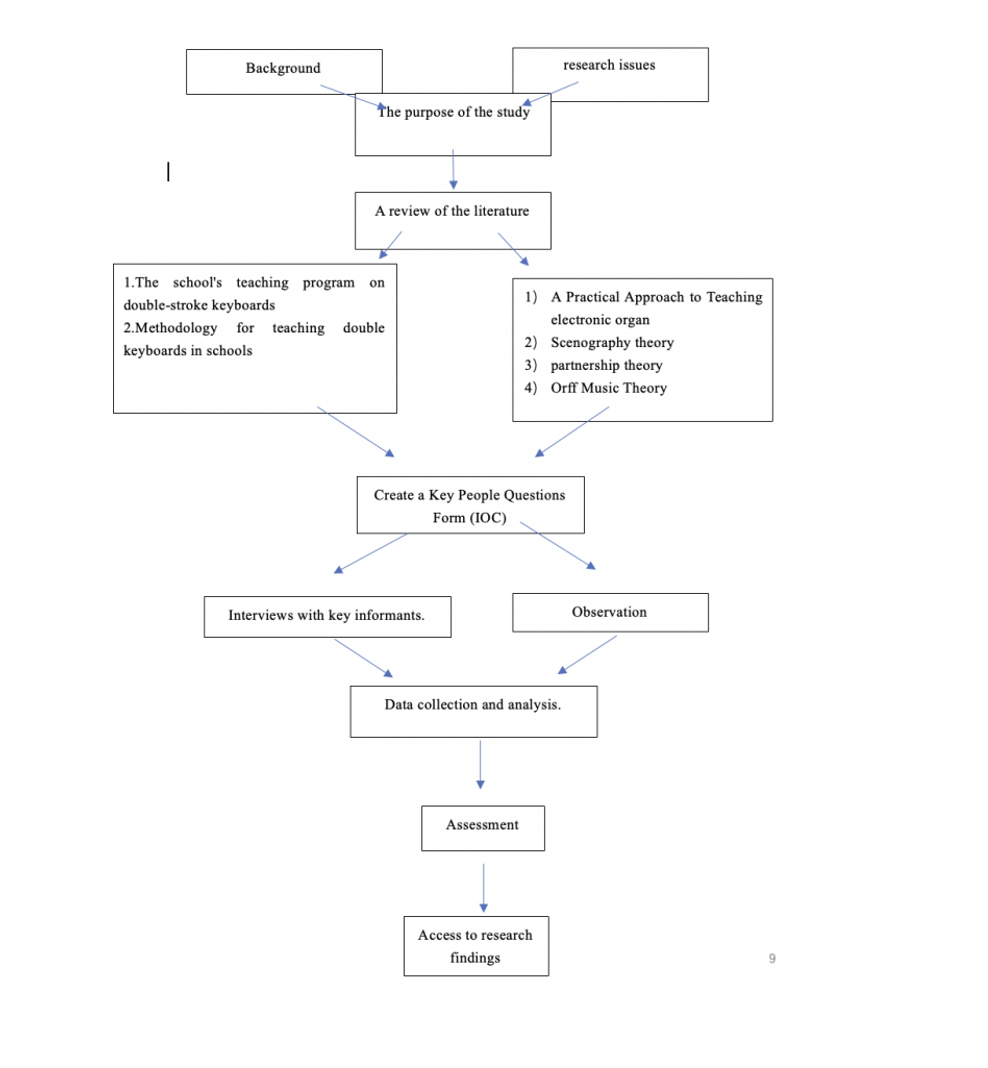
Introduction: Early childhood music education plays a crucial role in developing children’s musical abilities, creativity, and cognitive skills. However, electronic organ instruction for young learners is often characterized by an overemphasis on technical skills and examination-oriented learning, which may limit students’ interest and overall musical development. Objective: This study aims to investigate the current teaching situation of electronic organ instruction for five-year-old students at Bei Aige International Music Center and to analyze effective teaching practices as well as areas for improvement. Method: A qualitative research approach was employed, involving classroom observations of three teachers and semi-structured interviews with the teachers to examine teaching methods, classroom activities, and student learning behaviors. Results: The findings indicate that effective teaching practices include diversified instructional strategies, such as singing activities, rhythmic exercises, and music-based games, which enhance student engagement, participation, and musical understanding. Students demonstrated improvements in performance skills, concentration, and learning motivation. However, several challenges were identified, including an overemphasis on technical skills and examinations, limited parental involvement, and variations in teaching quality. Conclusion: The study suggests that electronic organ instruction for young learners should adopt more interactive, student-centered, and developmentally appropriate approaches. By integrating diversified teaching methods, strengthening parental involvement, and improving teacher quality, music educators can enhance both the effectiveness and sustainability of early childhood music education.
Downloads
Article Details

อนุญาตภายใต้เงื่อนไข Creative Commons Attribution-NonCommercial-NoDerivatives 4.0 International License.
** ข้อความ ข้อคิดเห็น หรือข้อค้นพบ ในวารสารสหวิทยาการสังคมศาสตร์และการสื่อสารเป็นของผู้เขียน ซึ่งจะต้องรับผิดชอบต่อผลทางกฎหมายใด ๆ ที่อาจเกิดขึ้นจากบทความและงานวิจัยนั้น ๆ โดยมิใช่ความรับผิดชอบของคณะนิเทศศาสตร์ มหาวิทยาลัยราชภัฏรำไพพรรณี **
เอกสารอ้างอิง
Chen, Y. (2022). Explorations on children's electronic organ teaching [Unpublished master’s thesis] China National Knowledge Infrastructure.
Feng, Y. (2020). An introduction to children's double keyboard teaching mode. Northern Music, 23(3), 154–156.
Hallam, S. (2010). The power of music: Its impact on the intellectual, social and personal development of children and young people. International Journal of Music Education, 28(3), 269–289.
Huang, J. (2018). The development status of double-keyed electronic piano in China. Voice of Yellow River,13(3), 65–66.
Jinlan, S., & Shi, X. (2016). Research on the development of electronic organ education in China.Music Education Research, 8(2), 45–50.
McPherson, G. E., & Welch, G. F. (Eds.). (2012). The Oxford handbook of music education. Oxford University Press.
Peng, Z. (2021). The teaching of domestic children's double-keyed electronic organ and the current situation of the thesis review. Voice of Yellow River, 18(3), 159–161.
Wang, S. (2018). An introduction to children's double keys teaching. Northern Music, 10(4), 211.
Zhang, X. (2022). Research on the current situation of children's electronic piano teaching in the context of "double reduction" policy [Unpublished master’s thesis]. Guangxi Normal University.
