THE STUDY ON THE INHERITANCE AND DEVELOPMENT OF HUNAN DAOZHOU DIAOZI OPERA
Article Sidebar
Main Article Content
บทคัดย่อ
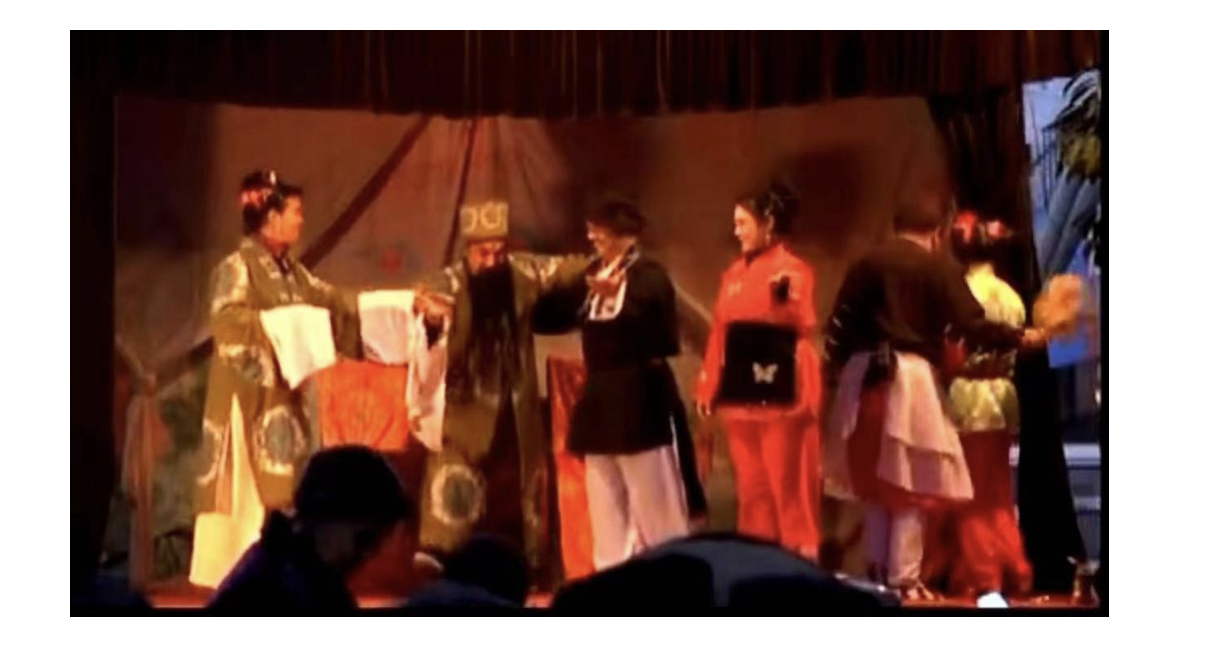
Introduction: The Hunan Daozhou Diaozi Opera is more than just a folk performance art; it is a cultural treasure that portrays the interaction of music, society, and cultural power in Chinese society. Objective: To study on the inheritance and development of Hunan Daozhou Diaozi Opera. Methods: The researcher used data from numerous secondary sources to assess and synthesize the study's findings. Documentary research data includes books, other documents, and written records. this investigation. The documentary research approach necessitated gathering information from books and articles that identified ten relevant sources, all of which were verified for trustworthiness by specialists. This paper investigates the historical evolution of Hunan melodic opera in China, its context in various periods of Chinese history, and suggests rules for maintaining and propagating the country's traditional folk music. Results: Chinese folk music is an integral part of China's rich traditional culture, the spiritual lifeline and inner core of the country, and the foundation for our long-term stability in the face of global cultural instability. This is because, according to Mei Wang (2020), our country's methods for integrating and preserving regional opera traditions are uncertain. We must constantly increase the processes for building and sustaining traditional opera culture, followed by the construction of systems to preserve it. This study is congruent with the findings of Juan Xue (2017), who discovered that the inheritance and development of Chinese regional opera is an important and rich cultural history, with practical implications that can effectively promote the inheritance and development of traditional styles. Conclusion: The study's findings reveal that Diaozi Dao opera is used to transmit the local community's identity, shared memories, and worldview. Music and performance not only reflect social and historical contexts but also serve as a forum for negotiating meaning between tradition and present change.
Downloads
Article Details

อนุญาตภายใต้เงื่อนไข Creative Commons Attribution-NonCommercial-NoDerivatives 4.0 International License.
** ข้อความ ข้อคิดเห็น หรือข้อค้นพบ ในวารสารสหวิทยาการสังคมศาสตร์และการสื่อสารเป็นของผู้เขียน ซึ่งจะต้องรับผิดชอบต่อผลทางกฎหมายใด ๆ ที่อาจเกิดขึ้นจากบทความและงานวิจัยนั้น ๆ โดยมิใช่ความรับผิดชอบของคณะนิเทศศาสตร์ มหาวิทยาลัยราชภัฏรำไพพรรณี **
เอกสารอ้างอิง
Fu, B. (2020). On the inheritance and development of traditional Chinese folk songs. Northern Music.
Li, F. (2014). The inheritance and development of Daozhou opera. Journal of the School of Arts
Luo, Q. (2018). The artistic characteristics of Daozhou opera. Philosophy and Humanities.
Luo, Q. (2018). The value and inheritance of Daozhou opera. Journal of the Music Department, School of Literature
Luo, Q. (2021). Research on the inheritance of Daozhou opera. Journal of Jiangxi University of Finance and Economics.
Ouyang, C. (2021). Research on the inheritance and protection of Daozhou opera from the perspective of intangible cultural heritage. Philosophy and Humanities.
Tang, F. (2016). Integration, development, and evolution: On the artistic characteristics and reform ideas of Daozhou opera. Journal of Hunan University of Science and Technology.
Tang, F., & Mo, D. (2017). On the new dynamic inheritance model of Daozhou opera in the postmodern context. Philosophy and Humanities.
Wang, M. (2020). Regional opera culture integration and protection mechanisms. Cultural Heritage Studies, 72(3), 33-43.
Wang, W. (2013). Introduction to intangible cultural heritage. Educational Science Press.
Xue, J. (2017). The inheritance and development of Chinese local opera. Traditional Arts Research, 9(1), 43-65
Zhao, A. (2022). On the inheritance and development of Chinese traditional music from the perspective of Marxist social science methodology. Marxism.
