ความพึงพอใจต่อการเรียนออนไลน์ผ่านแอปพลิเคชั่น Line และ Google Meet ของนักศึกษาหลักสูตรพยาบาลศาสตรบัณฑิต มหาวิทยาลัยกรุงเทพธนบุรี ในช่วงสถานการณ์การแพร่ระบาดของโรคโควิด 19
Article Sidebar
Main Article Content
บทคัดย่อ
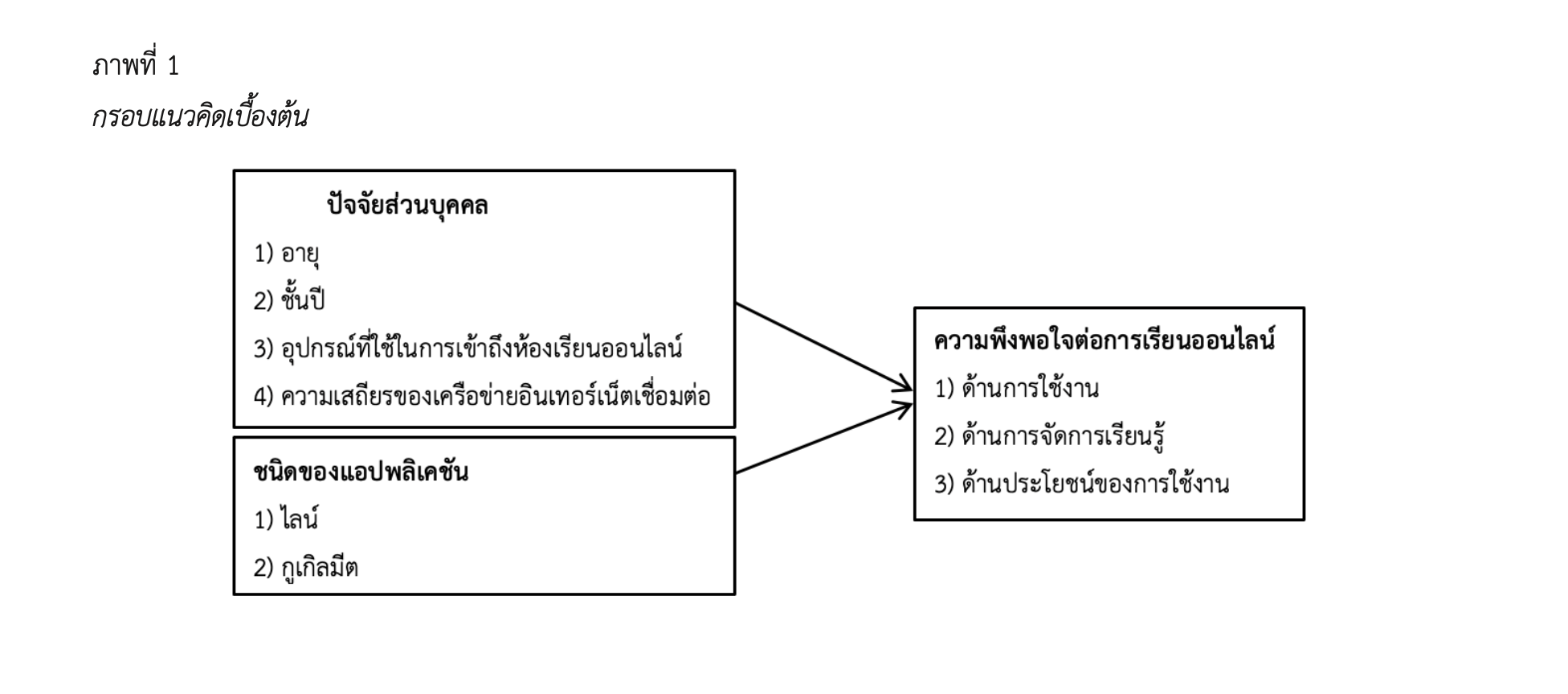
การวิจัยเชิงพรรณนาครั้งนี้เป็นการศึกษาความพึงพอใจของนักศึกษาต่อการเรียนออนไลน์ผ่านแอปพลิเคชันไลน์ (Line Application) และกูเกิลมีต (Google meet) ในช่วงสถานการณ์การแพร่ระบาดของโรคโควิด19 มีวัตถุประสงค์เพื่อ 1) ศึกษาความพึงพอใจในการเรียนออนไลน์ผ่านแอปพลิเคชันไลน์และกูเกิลมีต 2) ศึกษาปัจจัยส่วนบุคคลที่มีผลต่อความพึงพอใจต่อการเรียนออนไลน์ผ่านแอปพลิเคชันไลน์และกูเกิลมีต 3) เปรียบเทียบความพึงพอใจต่อการเรียนออนไลน์ระหว่างเรียนผ่านแอปพลิเคชันไลน์และเรียนผ่านกูเกิลมีต กลุ่มตัวอย่างคือนักศึกษาหลักสูตรพยาบาลศาสตรบัณฑิต มหาวิทยาลัยกรุงเทพธนบุรี ภาคการศึกษาที่ 2 ปีการศึกษา 2564 จำนวน 214 คน เก็บรวบรวมข้อมูลโดยใช้แบบสอบถามออนไลน์ วิเคราะห์ข้อมูลโดยใช้สถิติเชิงพรรณนาและทดสอบสมมติฐานโดยใช้ค่า t-test และ Oneway-ANOVA ผลการวิจัยพบว่า 1) ความพึงพอใจต่อการเรียนออนไลน์ผ่านแอปพลิเคชันไลน์อยู่ในระดับมาก (=3.55 SD=0.74) เช่นเดียวกับการเรียนผ่านกูเกิลมีต (=3.66 SD=0.78) 2) ปัจจัยส่วนบุคคลด้านอายุ ชั้นปี อุปกรณ์ที่ใช้ในการเข้าถึงห้องเรียนออนไลน์ และความเสถียรของเครือข่ายอินเทอร์เน็ตเพื่อเชื่อมต่อสัญญาณ ไม่มีผลต่อความพึงพอใจต่อการเรียนออนไลน์ผ่านแอปพลิเคชันไลน์และกูเกิลมีต 3) ค่าเฉลี่ยคะแนนความพึงพอใจต่อการเรียนออนไลน์ผ่านแอปพลิเคชันกูเกิลมีต สูงกว่า แอปพลิเคชันไลน์ อย่างมีนัยสำคัญที่ระดับ 0.05 เมื่อจำแนกรายด้านพบว่าด้านการใช้งานแตกต่างกันอย่างไม่มีนัยสำคัญทางสถิติ ส่วนด้านการจัดการเรียนรู้และด้านประโยชน์การใช้งานพบว่าแตกต่างกันอย่างมีนัยสำคัญที่ระดับ 0.05 ดังนั้น ผู้สอนควรมีการเตรียมผู้เรียนให้พร้อม ให้กำลังใจ ใช้กลวิธีในการสอนออนไลน์ที่หลากหลายที่นักศึกษามีความพึงพอใจ รวมถึงมีปฏิสัมพันธ์กับผู้เรียนในระหว่างการสอนอย่างต่อเนื่อง
Downloads
Article Details

อนุญาตภายใต้เงื่อนไข Creative Commons Attribution-NonCommercial-NoDerivatives 4.0 International License.
** ข้อความ ข้อคิดเห็น หรือข้อค้นพบ ในวารสารสหวิทยาการสังคมศาสตร์และการสื่อสารเป็นของผู้เขียน ซึ่งจะต้องรับผิดชอบต่อผลทางกฎหมายใด ๆ ที่อาจเกิดขึ้นจากบทความและงานวิจัยนั้น ๆ โดยมิใช่ความรับผิดชอบของคณะนิเทศศาสตร์ มหาวิทยาลัยราชภัฏรำไพพรรณี **
เอกสารอ้างอิง
ขวัญฤดี ฮวดหุ่น. (2560). อิทธิพลของแอปพลิเคชั่นไลน์ในการสื่อสารยุคปัจจุบัน. วารสารศิลปการจัดการ, 1(2), 75-88.
ธันยากร ช่วยทุกข์เพื่อน. (2564). การเปรียบเทียบความพึงพอใจในการใช้แอปพลิเคชัน Zoom และ Google Meet ในรายวิชานวัตกรรมการจัดการเรียนรู้: กรณีศึกษานักศึกษาหลักสูตรประกาศนียบัตรวิชาชีพครู มหาวิทยาลัยธุรกิจบัณฑิตย์. ใน ธนาธิป สุ่มอิ่ม (บ.ก.), การขับเคลื่อนคุณภาพการศึกษาไทย. การนำเสนอผลงานวิจัยระดับชาติเครือข่ายวิจัยสถาบันอุดมศึกษา วันที่ 5 -6 สิงหาคม 2564 (น.762 - 778). มหาวิทยาลัยศรีนครินทรวิโรฒ.
บุษบา ทาธง, ปริญดา ศรีธราพิพัฒน์, และ บุษกร แก้วเขียว. (2562). ผลของการจัดการเรียนการสอนโดยประยุกต์ใช้แอพพลิเคชั่นไลน์ต่อผลลัพธ์การเรียนรู้และความพึงพอใจของนักศึกษาพยาบาลศาสตรบัณฑิตในรายวิชาการพยาบาลบุคคลที่มีปัญหาสุขภาพ 1 วิทยาลัยพยาบาลบรมราชชนนี ชัยนาท. วารสารวิทยาลัยพยาบาลบรมราชชนนีอุตรดิตถ์, 11(1), 155-168.
พระราชกำหนดการบริหารราชการในสถานการณ์ฉุกเฉิน 2548. (2564, 16 เมษายน). ราชกิจจานุเบกษา. เล่ม 138 ตอนพิเศษ 82. หน้า 25.
เมทิกา พ่วงแสง. และ ทรงศิริ วิชิรานนท์. (2564). ความพึงพอใจที่มีต่อการจัดการเรียนการสอนออนไลน์ในสถานการณ์การแพร่ระบาดของโรค covid-19 ของนักศึกษามหาวิทยาลัยเทคโนโลยีราชมงคลพระนคร, วารสารบัณฑิตศึกษามหาวิทยาลัยราชภัฎธนบุรี, 1(1), 51-61.
วิทยา วาโย, อภิรดี เจริญนุกูล, ฉัตรสุดา กานกายันต์, และ จรรยา คนใหญ่. (2563). การเรียนการสอนแบบออนไลน์ภายใต้
สถานการณ์แพร่ระบาด ของไวรัส COVID-19: แนวคิดและการประยุกต์ใช้จัดการเรียนการสอน. วารสารศูนย์ อนามัยที่ 9, (14)34, 285-298.
สาวิตรี สิงหาด, สุฬดี กิตติวรเวช, และ อธิพงศ์ สุริยา. (2561). ผลสัมฤทธิ์และความพึงพอใจของนักศึกษาพยาบาลต่อการ จัดการเรียนการสอนผ่าน Google Classroom ในรายวิชาเทคโนโลยีสารสนเทศทางการพยาบาล. วารสาร มนุษย์ศาสตร์และสังคมศาสตร์, 9(2), 124-137.
สิริพร อินทสนธ์. (2563). โควิด-19: กับการเรียนการสอนออนไลน์กรณีศึกษารายวิชาการเขียนโปรแกรมเว็บ. วารสารวิทยาการจัดการปริทรรศน์, 22(2), 203-213.
เสถียร พูลผล และ ปฏิพล อรรณพบริบูรณ์. (2563). การสำรวจความคิดเห็นของนักศึกษาเภสัชศาสตร์ที่มีต่อการเรียนการ สอนออนไลน์ในช่วงโควิท 19 เพื่อออกแบบแนวทางการจัดการเรียนรู้รูปแบบใหม่ของคณะเภสัชศาสตร์มหาวิทยาลัยสยาม. การประชุมวิชาการ ครั้งที่ 15 ประจำปี 2563. สมาคมเครือข่ายการพัฒนาวิชาชีพอาจารย์และองค์กรระดับอุดมศึกษาแห่งประเทศไทย (ควอท.). กรุงเทพมหานคร: สำนักงานปลัดกระทรวงการอุดมศึกษาวิทยาศาสตร์วิจัยและนวัตกรรม.
อโรชา ทองลาว พัลลภ สุวรรณฤกษ์ สมเกียรติ ไทยปรีชา และ ศศิน เทียนดี. (2564). การศึกษาความพึงพอใจของนิสิตมหาวิทยาลัยเกษตรศาสตร์ วิทยาเขตกำแพงแสน ต่อการจัดการเรียนการสอนรูปแบบออนไลน์ ประจำภาคต้น ปีการศึกษา 2563. วารสารศิลปะศาสตร์และอุตสาหกรรมบริการ, 4(2), 617-632.
Mannong, Andi. (2020). The student’s eyesight: The effectiveness of learning-based applications on ELT in pandemic era. ETERNAL (English, Teaching, Learning, and Research Journal). 6.394. 10.24252/ Eternal.V62.2020.A14.
Setyawan, A., Aznam, N., Paidi, Citrawati, P., & Kusdianto. (2020). Effects of the Google Meet Assisted
Method of Learning on Building Student Knowledge and Learning Outcomes. Universal Journal of Educational Research, 8(9), 3924 - 3936. DOI: 10.13189/ujer.2020.0809017.
