การศึกษาและการออกแบบสื่อเพื่อการเรียนรู้สำหรับการผลิตรายการพอดแคสต์ในบริบทผู้ใช้ชาวไทย
Article Sidebar
Main Article Content
บทคัดย่อ
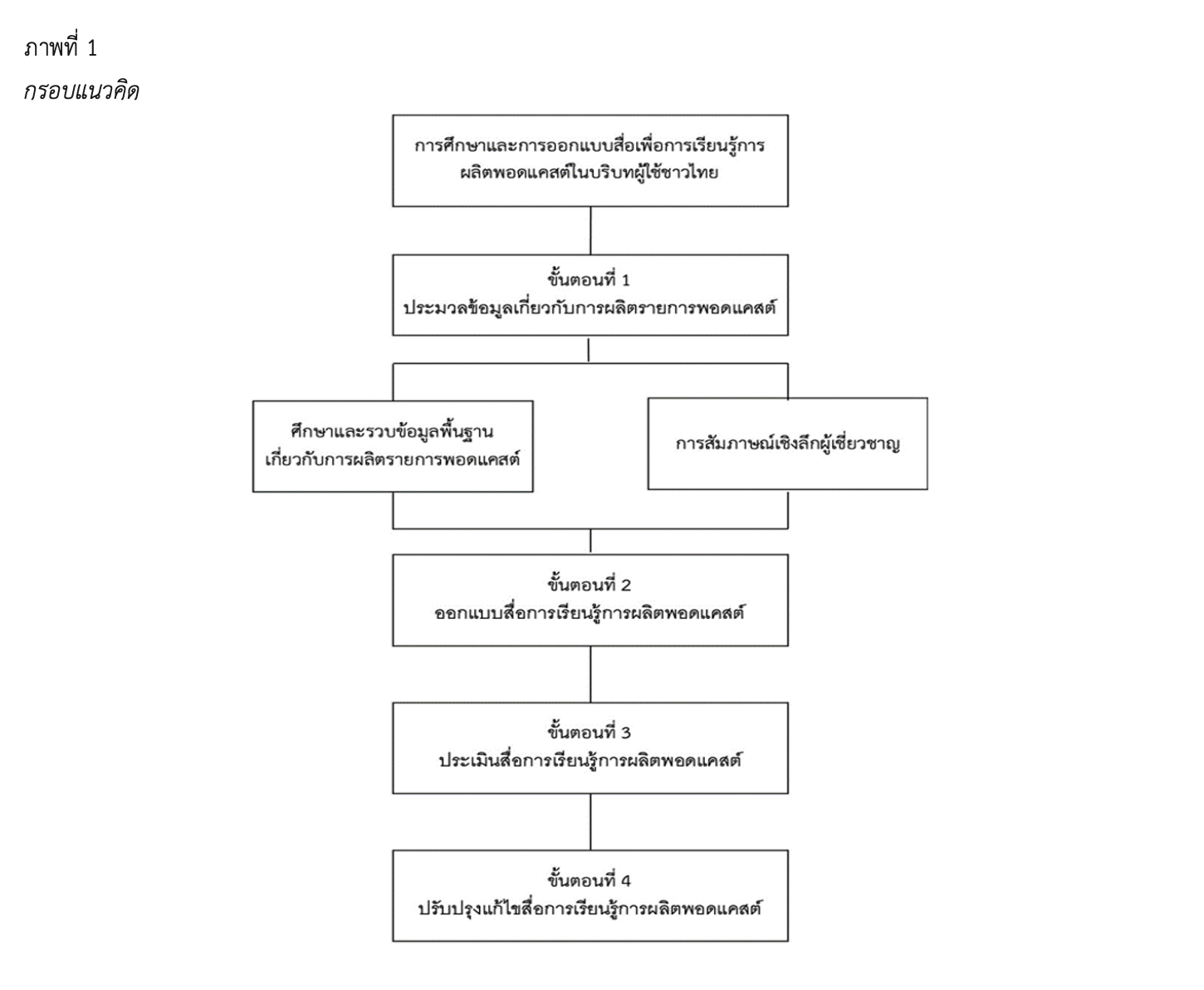
การศึกษาและการออกแบบสื่อเพื่อการเรียนรู้สำหรับการผลิตรายการพอดแคสต์ในบริบทผู้ใช้ชาวไทย มีวัตถุประสงค์เพื่อประมวลความรู้ที่เกี่ยวข้องกับการผลิตรายการพอดแคสต์ และเพื่อผลิตสื่อการเรียนรู้การผลิตรายการพอดแคสต์อินโฟกราฟิกส์ โดยมีผลที่คาดว่าจะได้รับคือ ได้ข้อมูลเกี่ยวกับการผลิตรายการพอดแคสต์ที่นำไปสู่สื่อการเรียนรู้การผลิตรายการพอดแคสต์ในรูปแบบอินโฟกราฟิกส์ ซึ่งในการวิจัยครั้งนี้ ผู้วิจัยใช้วิธีการวิจัยแบบการวิจัยและพัฒนา โดยแบ่งออกเป็น 4 ขั้นตอน ขั้นตอนที่ 1 เป็นขั้นตอนการประมวลข้อมูลเกี่ยวกับการผลิตรายการพอดแคสต์ โดยที่ผู้วิจัยได้ทำการศึกษาข้อมูลเกี่ยวกับการผลิตรายการพอดแคสต์จากแหล่งข้อมูล ทั้งหนังสือและวิทยานิพนธ์ที่เกี่ยวข้อง รวมถึงการสัมภาษณ์เชิงลึกผู้เชี่ยวชาญที่เกี่ยวข้องกับการผลิตพอดแคสต์จำนวน 4 ท่าน พบว่ามีประเด็นสำคัญแบ่งเป็น 3 ด้าน ได้แก่ ด้านเนื้อหา ด้านเทคนิคการผลิต และด้านธุรกิจ ต่อมาในขั้นตอนที่ 2 ผู้วิจัยได้ออกแบบและจัดทำสื่อการเรียนรู้การผลิตพอดแคสต์ต้นแบบ จำนวน 5 แบบ เพื่อนำไปประเมินสื่อการเรียนรู้ การผลิตพอดแคสต์ในขั้นตอนถัดไปในส่วนขั้นตอนที่ 3 ผู้วิจัยได้นำต้นแบบสื่อการเรียนรู้การผลิตพอดแคสต์ทั้ง 5 แบบ มาทำการประเมินโดยผู้ทรงคุณวุฒิทางวิชาการทั้งหมด 3 ท่าน เพื่อรับฟังข้อเสนอแนะสำหรับนำไปพัฒนาตัวต้นแบบที่สมบูรณ์ต่อไป ในขั้นตอนที่ 4 ผู้วิจัยนำข้อเสนอแนะมาพัฒนาสื่อการเรียนรู้ในการผลิตพอดแคสต์ โดยเริ่มจากประเด็นสิ่งที่ต้องคงไว้และสิ่งที่ต้องปรับปรุง หรือเสริมเข้าไปตามข้อเสนอแนะที่ได้รับมา เพื่อให้ได้สื่อการเรียนรู้เกี่ยวกับการผลิตรายการพอดแคสต์ที่มีคุณภาพในการสื่อสารตามวัตถุประสงค์ของงานวิจัย
Downloads
Article Details

อนุญาตภายใต้เงื่อนไข Creative Commons Attribution-NonCommercial-NoDerivatives 4.0 International License.
** ข้อความ ข้อคิดเห็น หรือข้อค้นพบ ในวารสารสหวิทยาการสังคมศาสตร์และการสื่อสารเป็นของผู้เขียน ซึ่งจะต้องรับผิดชอบต่อผลทางกฎหมายใด ๆ ที่อาจเกิดขึ้นจากบทความและงานวิจัยนั้น ๆ โดยมิใช่ความรับผิดชอบของคณะนิเทศศาสตร์ มหาวิทยาลัยราชภัฏรำไพพรรณี **
เอกสารอ้างอิง
Kent Wertime, I. F. (2551). Digi Marketing เปิดโลกนิวมีเดียร์และการตลาดดิจิทัล. เนชั่นบุ๊คส์.
Plejung. (2554, 12 กันยายน). อะไรคือ Infographic ? มีไว้ทำอะไร.http://www.pleplejung.com/2011/12
Wang Kai. (2013) Infographics & Data Visualizations. Design Media Publishing Limited
จงรัก เทศนา. (2557,13 ตุลาคม) อินโฟกราฟิกส์ (Inforgraphics. https://chachoengsao.cdd.go.th/wp.content/uploads/sites/9/2019/01/infographics_information.pdf
โตมร สุขปรีช. (2561,13 ตุลาคม). podcast 2018. http://bit.ly/2v3cbVv
ปวรรัตน์ ระเวง. (2560). การรู้เท่าทันสื่อดิจิทัลของผู้ฟังรายการพ็อดคาสท์. [วิทยานิพนธ์ปริญญามหาบัณฑิต ไม่ได้ตีพิมพ์] จุฬาลงกรณ์มหาวิทยาลัย.
ศิวัช จันทนาสุภาภรณ์. (2554). ทัศนคติที่มีต่อการเปิดรับสื่อออนไลน์บนเครือข่ายสังคมออนไลน์: กรณีศึกษานักศึกษามหาวิทยาลัยเทคโนโลยีราชมงคลธัญบุรี. [วิทยานิพนธ์ปริญญามหาบัณฑิต ไม่ได้ตีพิมพ์]. มหาวิทยาลัยเทคโนโลยีราชมงคลธัญบุรี
สุเทพ พานิชพันธุ์. (2541). ความพึงพอใจของเกษตรกรในการเข้าร่วมโครงการปรับโครงสร้างและระบบการผลิตการเกษตร จังหวัดอุบลราชธานี. [วิทยานิพนธ์ปริญญามหาบัณฑิต ไม่ได้ตีพิมพ์]. มหาวิทยาลัยแม่โจ้
อานวัฒน์ บุตรจันทร์. (2552). ผลของการสอนเสริมด้วยพอดคาสต์โดยใช้กลวิธีในการกำกับตนเอง ในรายวิชาการผลิตสื่ออิเล็กทรอนิกส์ เพื่อการศึกษาที่มีต่อผลสัมฤทธิ์ทางการเรียนและการกำกับตนเองของนิสิตระดับปริญญาบัณฑิต. [วิทยานิพนธ์ปริญญามหาบัณฑิต ไม่ได้ตีพิมพ์]. จุฬาลงกรณ์มหาวิทยาลัย.
อาศิรา พนาราม. (2557, 13 กันยายน). Infographic เทรนด์มาแรงในสังคม“เครือข่ายนิยม”. http://www.tcdc.or.th
อาลี ปรียากร. (2560). การศึกษาแนวทางการผลิตรายการกระจายเสียงเพื่อเผยแพร่ ผ่านรูปแบบรายการพอดแคสต์ในประเทศไทย. [วิทยานิพนธ์ปริญญามหาบัณฑิต ไม่ได้ตีพิมพ์]. สถาบันบัณฑิตพัฒนบริหารศาสตร
