
Urban infrastructure supporting motor sport event: potentials, problems, and limitations of Saensuk municipality, Chonburi province
Article Sidebar
Main Article Content
Abstract
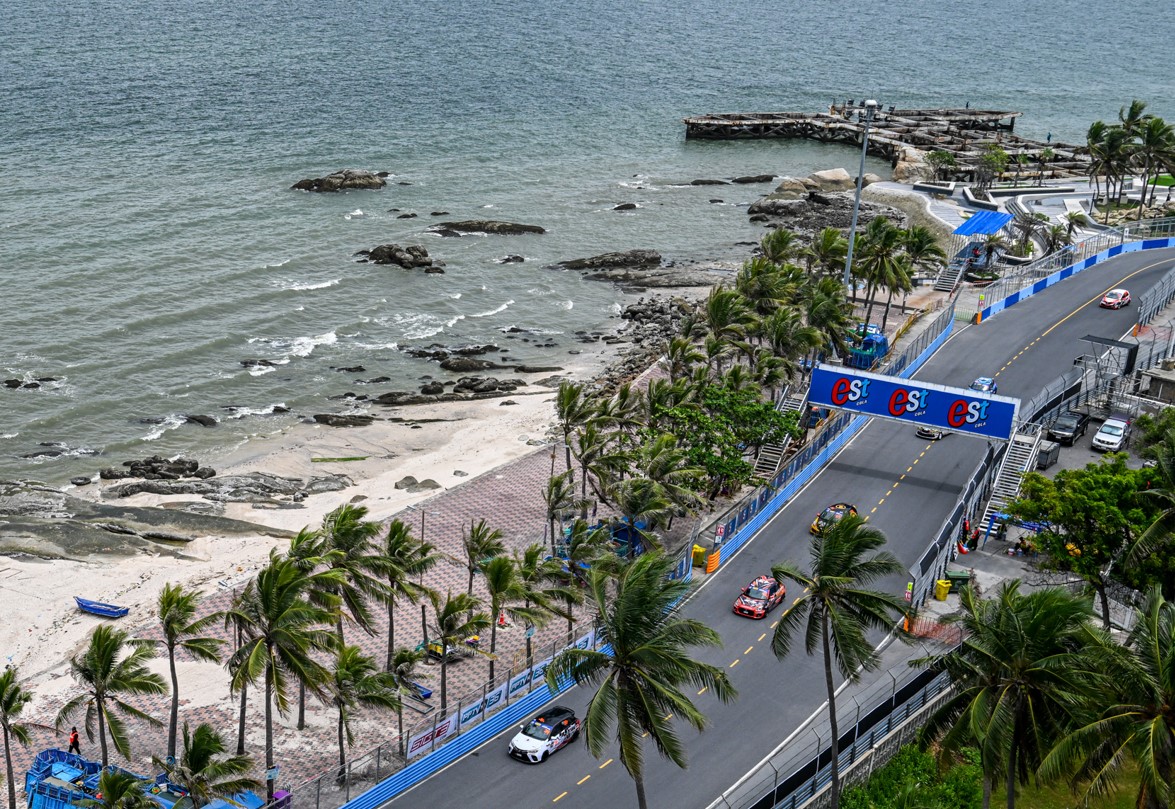
Sports tourism serves as a crucial mechanism for driving urban economies and enhancing city image. This research aims to examine the relationship between motorsport activities and urban infrastructure through the case study of the Bangsaen Street Circuit or Bangsaen Grand Prix at Saensuk Municipality, Chonburi Province. The circuit hosts an international street racing event that integrates sporting activities with public spaces in a coastal urban area. The research objectives include: (1) investigating the existing conditions of blue, grey, and green infrastructure in supporting motorsport activities, (2) analyzing the potential and challenges of utilizing each infrastructure type, and (3) proposing improvement guidelines for infrastructure to ensure sustainability.
The research employs a qualitative methodology through in-depth interviews with four stakeholder groups: local government agencies, event organizers, racing participants, and local tourism entrepreneurs. The findings reveal that grey infrastructure, such as roads and utilities, has been adequately improved to accommodate the event, though limitations remain in traffic management and community impacts. Green infrastructure functions as a buffer for noise and pollution while enhancing the city's tourism image, yet lacks a sustainable restoration system. Blue infrastructure, particularly Bangsaen Beach, reinforces the event's unique identity and tourism value but requires pollution control measures and post-event restoration protocols. Key recommendations include developing an integrated urban infrastructure master plan that allows flexible adaptation for special events, implementing digital technology in urban management, and promoting community participation to achieve sustainable development as a sport city.
Article Details

This work is licensed under a Creative Commons Attribution-NonCommercial-NoDerivatives 4.0 International License.
References
Alberti, M. (2008). Advances in urban ecology: Integrating humans and ecological processes in urban ecosystems. Springer.
Andersson, E., Barthel, S., Borgström, S., Colding, J., Elmqvist, T., Folke, C., & Gren, Å. (2014).
Reconnecting cities to the biosphere: Stewardship of green infrastructure and urban ecosystem services. Ambio, 43(4), 445–453.
Anholt, S. (2010). Places: Identity, image and reputation. Palgrave Macmillan.
Apex Circuit Design. (2016). Urban street circuit design for Bangsaen Thailand Speed Festival. United Kingdom: Apex Circuit Design Ltd.
Barnes, A. (2023a). City branding and urban identity: Reframing the narrative of place.
Routledge. Centre for Social and Environmental Innovation. (n.d.). The importance of interlinkages between blue-green-grey infrastructure in cities. Retrieved from https://data.opencity.in/dataset/
Coletta, C. (2025a). Motorsport urbanism: Cities, circuits and cultural economies. Springer.
Export–Import Bank of Thailand. (2018). Analysis report on the trend of sport tourism in
Thailand. Bangkok: EXIM Bank.
Global Economic Forum. (2025). Urban mobility and sport infrastructure in future cities. Geneva: World Economic Forum Publications.
Global Tourism Forum. (2025). The economic and tourism impact of Formula 1: Racing towards destination growth. Retrieved from https://live.worldtourismforum.net /news/the-economic-and-tourism-impact-of-formula-1-racing-towards-destination-growth
Kaushal, S. S., & Belt, K. T. (2012). The urban watershed continuum: Evolving spatial and
temporal dimensions. Urban Ecosystems, 15(2), 409–435. https://doi.org/10.1007 /s11252-012-0226-7
Kavaratzis, M., & Ashworth, G. J. (2005). City branding: An effective assertion of identity or a
transitory marketing trick? Tijdschrift voor Economische en Sociale Geografie, 96(5), 506–514.
Leopold, A. (2025a). Sustainable event design: Integrating motorsport with urban futures.
Routledge.
Li, F., Wang, R., Paulussen, J., & Liu, X. (2014). Comprehensive concept of green infrastructure for urban sustainable development. Urban Forestry & Urban Greening, 13(2), 244–255.
Li, F., Wang, R., et al. (2016). Urban ecological infrastructure: An integrated network for
ecosystem services and sustainable urban systems. Journal of Cleaner Production, 163(S12), S12–S18.
O'Donnell, E., Thorne, C., & Ahilan, S. (2017). The Blue–Green City approach to urban flood
resilience. Global Environmental Change, 39, 106–118.
Royal Automobile Association of Thailand under the Royal Patronage. (2022). Circuit standards and safety requirements for road racing events in Thailand. Bangkok, Thailand
Socco, A. (2018). Temporary urbanism and street circuit transformations: The case of Formula E and city adaptation. International Journal of Urban Design, 23(4), 355–372.
Wang, R., et al. (2014). Urban ecological infrastructure: An integrated network for ecosystem services and sustainable urban systems. Ecosystem Health and Sustainability, 1(1), 1–15.
Wongphat, C., Kasenitcha, A., & Penpak, N. (2023). Sports cities and the development of people’s quality of life.
Xu, J. (2019). Colour in urban places: A case study of Leicester City Football Club blue. Color Research and Application, 44(4), 613–621. https://doi.org/10.1002/col.22378
Zenker, S., & Braun, E. (2017). Questioning a “one size fits all” city brand: Developing a branded house strategy for place brand management. Journal of Place Management and Development, 10(3), 270–287.
Zölch, T., Maderspacher, J., Wamsler, C., & Pauleit, S. (2017). Using green infrastructure for urban climate-proofing: An evaluation of heat mitigation measures at the micro-scale. Urban Forestry & Urban Greening, 20, 305–316.
