
การออกแบบและปรับปรุงพื้นที่เรียนรู้ภูมิทัศน์ล้านนา เพื่อการอนุรักษ์และสืบสานภูมิปัญญาล้านนาอย่างยั่งยืน กรณี โฮงเฮียนสืบสานภูมิปัญญาล้านนา จังหวัดเชียงใหม่
Article Sidebar
Main Article Content
บทคัดย่อ
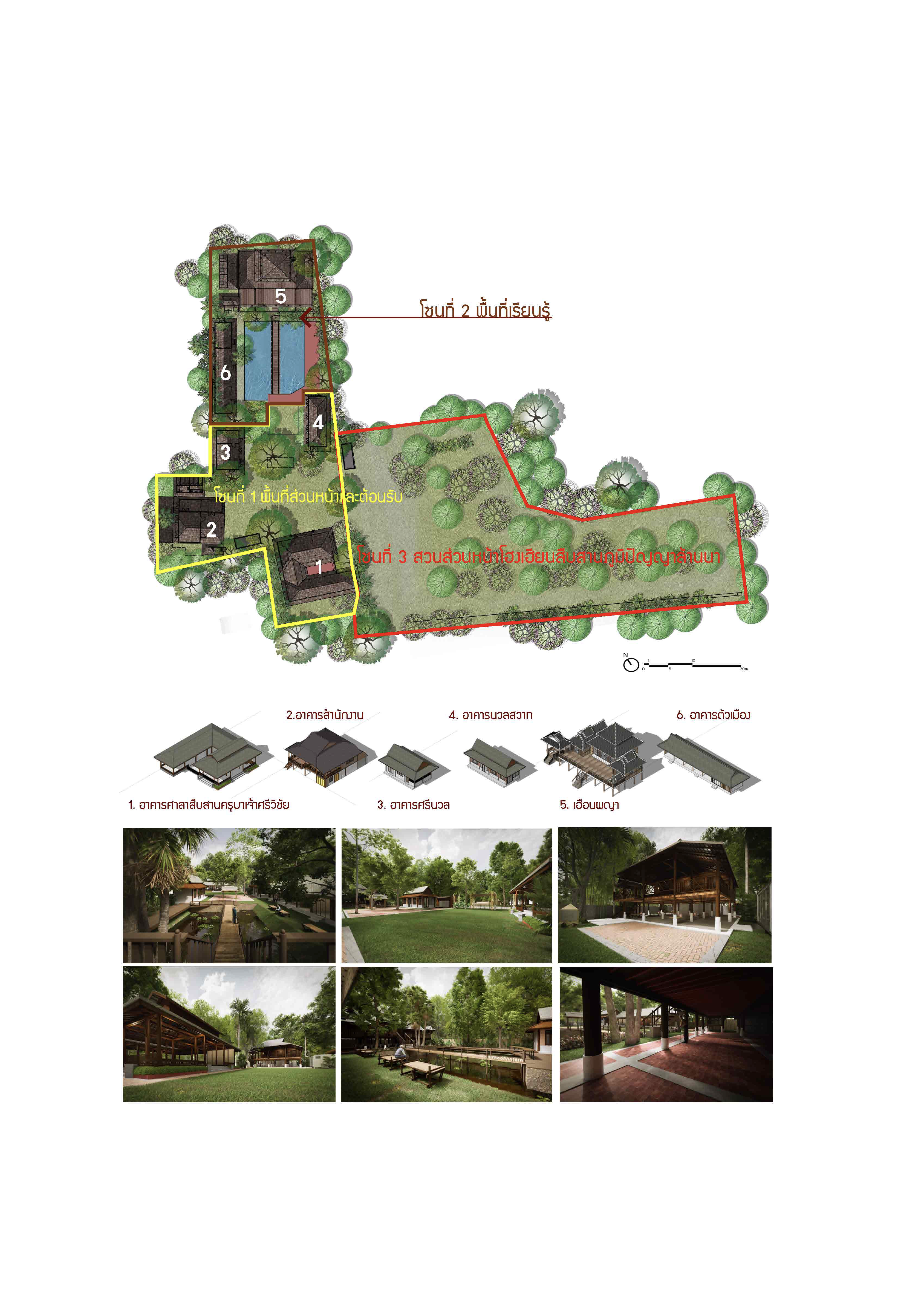
บทความนี้ เป็นการศึกษาแนวทางเพื่อการออกแบบและปรับปรุงสภาพแวดล้อมทางกายภาพ พื้นที่การเรียนรู้ กรณี โฮงเฮียนสืบสานภูมิปัญญาล้านนา ซึ่งเป็นพื้นที่ศูนย์กลางเชื่อมต่อเครือข่ายครูภูมิปัญญาล้านนารุ่นต่อรุ่น การบ่มเพาะเยาวชนคนรุ่นใหม่ ตลอดจนการอนุรักษ์และสืบสานประเพณีล้านนา อันเป็นเสมือนพื้นที่แห่งที่สาม ในการถ่ายทอดภูมิปัญญาล้านนาของครูภูมิปัญญาของเมือง ตลอดระยะเวลา 30 ปี (พ.ศ.2539-2569) และจากการศึกษา สำรวจ และถอดบทเรียนการทำงานด้านการอนุรักษ์และสืบสานภูมิปัญญาศิลปวัฒนธรรมล้านนาโดยการวิจัยแบบมีส่วนร่วม พบว่า ถึงแม้ว่าการเติบโตของเครือข่ายครูภูมิปัญญา และการสร้างการเรียนรู้ภูมิปัญญาล้านนา จะได้รับความสนใจอย่างต่อเนื่อง แต่การพัฒนาพื้นที่เชิงกายภาพนั้นกลับได้รับผลกระทบเพิ่มขึ้น ทั้งจากการพัฒนาและขยายตัวของพื้นที่โดยรอบ ปัญหาน้ำท่วม และและความเสื่อมโทรมของพื้นที่และสถาปัตยกรรมพื้นถิ่นตามกาลเวลา ทำให้การจัดกิจกรรมไม่สอดรับกับการเรียนรู้ของผู้เรียนและนักท่องเที่ยวที่สนใจ นอกจากนี้ จากการกิจกรรมประชุมเชิงปฏิบัติการอย่างมีส่วนร่วมของเครือข่ายครูภูมิปัญญาล้านนา สถาปนิก และนักศึกษา คณะศิลปกรรมและสถาปัตยกรรมศาสตร์ มหาวิทยาลัยเทคโนโลยีราชมงคลล้านนา ยังสามารถรวบรวมและวิเคราะห์ข้อมูลสถานการณ์ในปัจจุบันของพื้นที่ทางกายภาพ การใช้สอยในการเรียนรู้ และการดำเนินกิจกรรมต่าง ๆ เพื่อนำมาสู่แนวทางการปรับปรุงฟื้นฟูพื้นที่ ภายใต้แนวคิด “พื้นที่ภูมิทัศน์ล้านนา” ผ่านการวางผังสภาพแวดล้อม การปรับปรุงซ่อมแซมอาคาร ให้เกิดความเหมาะสมและสอดคล้องต่อการเรียนรู้ของคนทุกกลุ่ม ที่สะท้อนการใช้งานเชิงพื้นที่เผยแพร่องค์ความรู้ด้านศิลปวัฒนธรรมและประเพณีล้านนา เกิดเป็นสถานที่ต้นทุนทางสังคมในฐานะพื้นที่ที่สามที่ยึดโยงเครือข่ายด้านศิลปวัฒนธรรมล้านนา ที่มีคุณค่านำไปสู่การพึ่งตนเอง และการพัฒนาที่ยั่งยืน
Article Details

อนุญาตภายใต้เงื่อนไข Creative Commons Attribution-NonCommercial-NoDerivatives 4.0 International License.
เอกสารอ้างอิง
Amloy, A., Ruangwitthayanusorn, S., Wonglangka, W., Ounchanum, P., Siriphon, A. & Oranratmanee, R. (2022). Karn suksa phumitouch phunthin Lanna nai boribot chumchon kong nakwichakarn Thai nai prathedthai chuwng por-sor 2545-2564 (In Thai) [The study of Lanna vernacular landscape in the community context of Thai scholars in Thailand during 2002–2021]. Landscape Architecture Journal, 4(1), 62–81. https://doi.org/10 .14456/laj.2022.4
Chotporn, K. (2020). Attalak khong sathanthi lae kan mi suan ruam khong chumchon nai kan phatthana mueang (In Thai) [Place identity and community participation in urban development]. Journal of Social Sciences, Chiang Mai University, 26(2), 45–67.
Goffman, E. (1959). The presentation of self in everyday life. Anchor Books.
Jeffres, L. W., Bracken, C. C., Jian, G., & Casey, M. F. (2009). The Impact of Third Places onCommunity Quality of Life. Applied Research in Quality of Life, 4(4), 333–345.
Office of Natural Resources and Environmental Policy and Planning. (2018). Khu Mue Sathapataya kam thongthin changwat Chiang Mai lae changwat Lamphun (In Thai) [Local architecture manual of Chiang Mai and Lamphun provinces]. E-Book in Thai, S. Offset Graphic Design Limited Partnership.
Oldenburg, R. (1989). The great good place: cafes, coffee shops, community centers, beauty parlors, general stores, bars, hangouts, and how they get you through the day. Paragon House.
Phakdisukcharoen, K. (2011). Ong prakop thi chueam yong kan thang hok prakan khong phuen thi satharana baep Thai (In Thai) [The six interrelated components of Thai public space]. Silpakorn University.
Proshansky, H. M., Fabian, A. K., & Kaminoff, R. (1983). Place-identity: physical world socialization of the self. Journal of Environmental Psychology, 3(1), 57–83, https://doi.org/10.1016/ S0272-4944(83)80021-8
Punyathong, S. & Baengthid, P. (2025). The evolution and development of public spaces in Mueang Chiang Mai, Thailand. International Journal of Building Urban Interior and Landscape Technology (BUILT), 23(1), https://doi.org/10.56261/built.v23.259022
Thongdeelert, C. (1998). Withi Lanna withi phumpanya (In Thai). Lanna Wisdoms School.
Thongdeelert, C. (1999). Subsarn Lanna subtor lomhayjai phandin (In Thai). [Preserving Lanna heritage, continuing the breath of the land]. Lanna Wisdoms School.
Thong-suk, W. (2019). Khuang ban kap phuen thi satharana Lanna (In Thai) [Khuang Ban and Lanna public space]. Master’s thesis, Chiang Mai University.
Tuan, Y. F. (1977). Space and place: the perspective of experience. University of Minnesota Press.
