
โครงสร้างพื้นฐานเมืองเพื่อรองรับการจัดกีฬามอเตอร์สปอร์ต: ศักยภาพ ปัญหา และข้อจำกัดของเทศบาลเมืองแสนสุข จังหวัดชลบุรี
Article Sidebar
Main Article Content
บทคัดย่อ
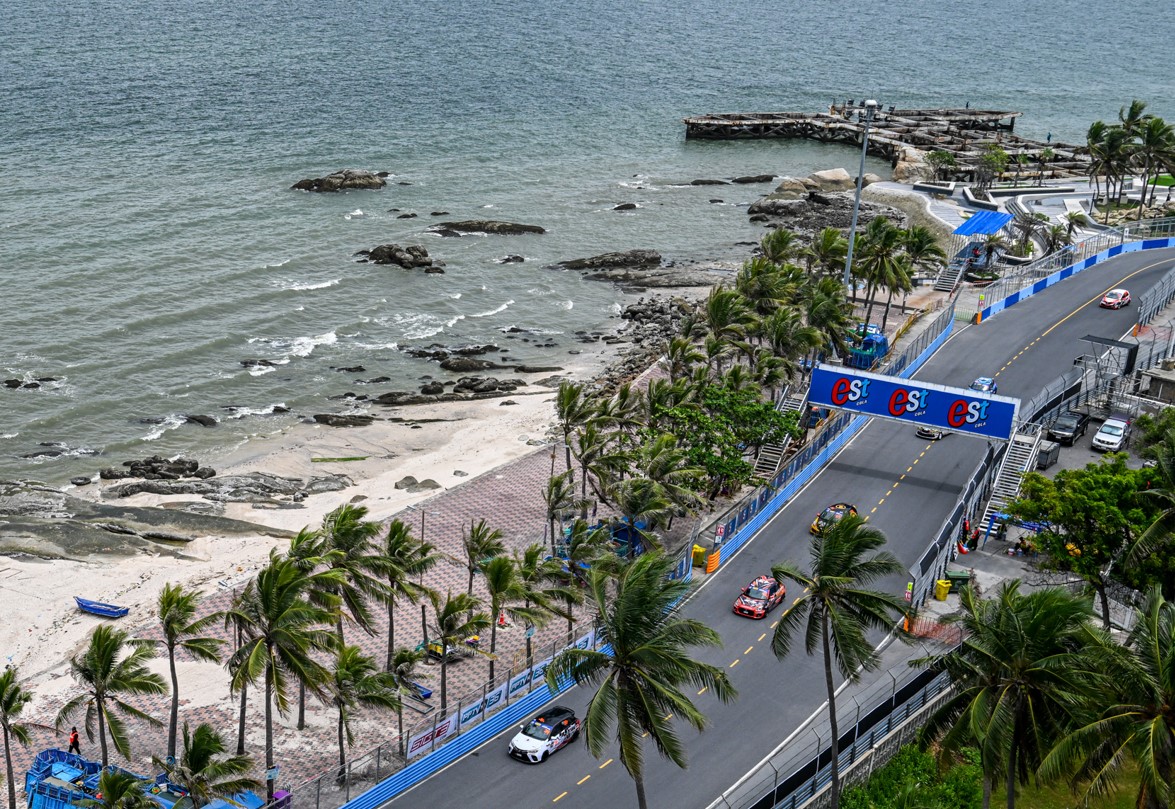
การท่องเที่ยวเชิงกีฬาเป็นกลไกสำคัญในการขับเคลื่อนเศรษฐกิจและสร้างภาพลักษณ์ของเมืองท่องเที่ยว งานวิจัยนี้มีวัตถุประสงค์เพื่อศึกษาความสัมพันธ์ระหว่างกิจกรรมมอเตอร์สปอร์ตกับโครงสร้างพื้นฐานของเมือง โดยใช้กรณีศึกษาการจัดการแข่งขัน บางแสน ไทยแลนด์ สปีด เฟสติวัล หรือ บางแสน กรังด์ปรีซ์ ณ เทศบาลเมืองแสนสุข จังหวัดชลบุรี ซึ่งเป็นการแข่งรถยนต์ทางเรียบระดับนานาชาติที่ผสมผสานกิจกรรมกีฬาเข้ากับพื้นที่สาธารณะในเขตเมืองชายฝั่ง วัตถุประสงค์การวิจัยประกอบด้วย (1) ศึกษาสภาพข้อเท็จจริงของโครงสร้างพื้นฐานสีน้ำเงิน สีเทา และสีเขียว ในการรองรับกิจกรรมมอเตอร์สปอร์ต (2) วิเคราะห์ศักยภาพและปัญหาของการใช้โครงสร้างพื้นฐานแต่ละประเภท และ (3) เสนอแนวทางปรับปรุงโครงสร้างพื้นฐานเพื่อสร้างความยั่งยืน
การวิจัยใช้วิธีการเชิงคุณภาพโดยการสัมภาษณ์เชิงลึกจากผู้มีส่วนเกี่ยวข้อง 4 กลุ่ม ได้แก่ หน่วยงานท้องถิ่น ผู้จัดการแข่งขัน ผู้เข้าร่วมแข่งขัน และผู้ประกอบการท่องเที่ยวในพื้นที่ ผลการวิจัยพบว่า โครงสร้างพื้นฐานสีเทา เช่น ถนนและระบบสาธารณูปโภค ได้รับการปรับปรุงให้รองรับกิจกรรมได้ดี แต่ยังมีข้อจำกัดด้านการจราจรและผลกระทบต่อชุมชน โครงสร้างพื้นฐานสีเขียวทำหน้าที่เป็นแนวกันชนทางเสียงและมลภาวะ ช่วยสร้างภาพลักษณ์เมืองท่องเที่ยว แต่ยังขาดระบบฟื้นฟูที่ยั่งยืน ส่วนโครงสร้างพื้นฐานสีน้ำเงิน โดยเฉพาะชายหาดบางแสน ช่วยเสริมเอกลักษณ์การแข่งขันและสร้างคุณค่าด้านการท่องเที่ยว แต่ต้องการมาตรการควบคุมมลภาวะและการฟื้นฟูหลังการแข่งขัน ข้อเสนอแนะสำคัญคือการจัดทำแผนแม่บทโครงสร้างพื้นฐานเมืองแบบบูรณาการที่ยืดหยุ่นต่อการปรับใช้ในกิจกรรมพิเศษ การใช้เทคโนโลยีดิจิทัลในการจัดการผังเมือง และการส่งเสริมการมีส่วนร่วมของชุมชน เพื่อพัฒนาเมืองกีฬาสู่ความยั่งยืน
Article Details

อนุญาตภายใต้เงื่อนไข Creative Commons Attribution-NonCommercial-NoDerivatives 4.0 International License.
เอกสารอ้างอิง
Alberti, M. (2008). Advances in urban ecology: Integrating humans and ecological processes in urban ecosystems. Springer.
Andersson, E., Barthel, S., Borgström, S., Colding, J., Elmqvist, T., Folke, C., & Gren, Å. (2014).
Reconnecting cities to the biosphere: Stewardship of green infrastructure and urban ecosystem services. Ambio, 43(4), 445–453.
Anholt, S. (2010). Places: Identity, image and reputation. Palgrave Macmillan.
Apex Circuit Design. (2016). Urban street circuit design for Bangsaen Thailand Speed Festival. United Kingdom: Apex Circuit Design Ltd.
Barnes, A. (2023a). City branding and urban identity: Reframing the narrative of place.
Routledge. Centre for Social and Environmental Innovation. (n.d.). The importance of interlinkages between blue-green-grey infrastructure in cities. Retrieved from https://data.opencity.in/dataset/
Coletta, C. (2025a). Motorsport urbanism: Cities, circuits and cultural economies. Springer.
Export–Import Bank of Thailand. (2018). Analysis report on the trend of sport tourism in
Thailand. Bangkok: EXIM Bank.
Global Economic Forum. (2025). Urban mobility and sport infrastructure in future cities. Geneva: World Economic Forum Publications.
Global Tourism Forum. (2025). The economic and tourism impact of Formula 1: Racing towards destination growth. Retrieved from https://live.worldtourismforum.net /news/the-economic-and-tourism-impact-of-formula-1-racing-towards-destination-growth
Kaushal, S. S., & Belt, K. T. (2012). The urban watershed continuum: Evolving spatial and
temporal dimensions. Urban Ecosystems, 15(2), 409–435. https://doi.org/10.1007 /s11252-012-0226-7
Kavaratzis, M., & Ashworth, G. J. (2005). City branding: An effective assertion of identity or a
transitory marketing trick? Tijdschrift voor Economische en Sociale Geografie, 96(5), 506–514.
Leopold, A. (2025a). Sustainable event design: Integrating motorsport with urban futures.
Routledge.
Li, F., Wang, R., Paulussen, J., & Liu, X. (2014). Comprehensive concept of green infrastructure for urban sustainable development. Urban Forestry & Urban Greening, 13(2), 244–255.
Li, F., Wang, R., et al. (2016). Urban ecological infrastructure: An integrated network for
ecosystem services and sustainable urban systems. Journal of Cleaner Production, 163(S12), S12–S18.
O'Donnell, E., Thorne, C., & Ahilan, S. (2017). The Blue–Green City approach to urban flood
resilience. Global Environmental Change, 39, 106–118.
Royal Automobile Association of Thailand under the Royal Patronage. (2022). Circuit standards and safety requirements for road racing events in Thailand. Bangkok, Thailand
Socco, A. (2018). Temporary urbanism and street circuit transformations: The case of Formula E and city adaptation. International Journal of Urban Design, 23(4), 355–372.
Wang, R., et al. (2014). Urban ecological infrastructure: An integrated network for ecosystem services and sustainable urban systems. Ecosystem Health and Sustainability, 1(1), 1–15.
Wongphat, C., Kasenitcha, A., & Penpak, N. (2023). Sports cities and the development of people’s quality of life.
Xu, J. (2019). Colour in urban places: A case study of Leicester City Football Club blue. Color Research and Application, 44(4), 613–621. https://doi.org/10.1002/col.22378
Zenker, S., & Braun, E. (2017). Questioning a “one size fits all” city brand: Developing a branded house strategy for place brand management. Journal of Place Management and Development, 10(3), 270–287.
Zölch, T., Maderspacher, J., Wamsler, C., & Pauleit, S. (2017). Using green infrastructure for urban climate-proofing: An evaluation of heat mitigation measures at the micro-scale. Urban Forestry & Urban Greening, 20, 305–316.
