
BALLET TECHNIQUES: A PRACTICAL APPROACH TO CULTIVATING THE BALLETIC BODY THROUGH HABITUS FORMATION Ballet Techniques: A Practical Approach to Cultivating the Balletic Body Through Habitus Formation
Article Sidebar
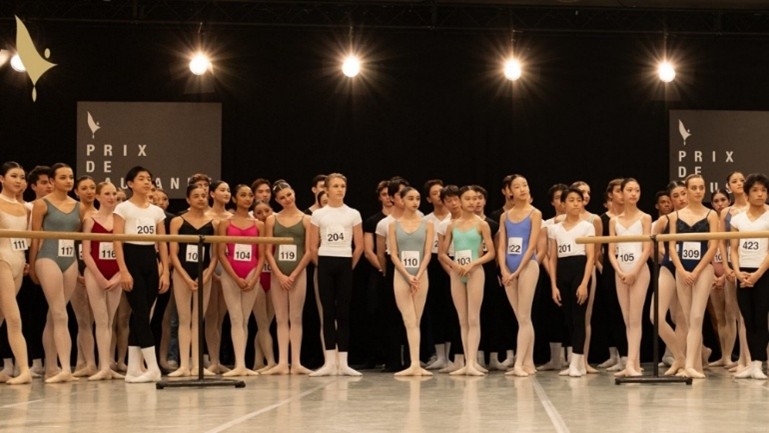
Main Article Content
Abstract
This article is part of the thesis “Ballet Technique: The Process of Embodying the Nature of a Balletic Body". The study aimed to explore practical approaches to cultivating the Balletic Body through Habitus formation. A qualitative research methodology was employed, drawing on academic literature on ballet techniques, the Balletic Body, and Habitus, as well as narrative interviews with three key informants, each with more than 30 years of experience in the ballet Field. All data were analyzed using analytic induction.
The findings revealed that cultivating the Balletic Body through Habitus formation consists of three interconnected dimensions: (1) Cultural Habitus, which fosters the internalization of ballet culture, aesthetics, courtly traditions, and cultural identity; (2) Practising Habitus, which develops an understanding of ballet-oriented ways of thinking, training methods, and discipline in bodily control; and (3) Stage Presence Habitus, which cultivates perceptual awareness, communication, emotional expression, and charisma. Furthermore, the findings indicate that these three dimensions contribute to the formation of learners’ personality and everyday life Habitus. The knowledge generated from this study can be applied to curriculum and instructional design, the development of training exercises, and specialized coaching practices to promote holistic learner development in terms of technique, aesthetics, and artistic expression.
Article Details

This work is licensed under a Creative Commons Attribution-NonCommercial-NoDerivatives 4.0 International License.
All authors must take public responsibility for the content of their paper. The WIPIT Journal Editors will not be taking any public responsibility for the content in the paper.
References
ขวัญแก้ว กิจเจริญ. (2565). พัฒนาการด้านการเรียนการสอนนาฏยศิลป์ตะวันตกในประเทศไทย. วารสารอารยธรรมศึกษา โขง-สารวิน, 13(1), 246–272.
ภัชภรชา แก้วพลอย และ ชุติมา มณีวัฒนา. (2569). ร่างกายบัลเลต์ : เทคนิค อำนาจ และการฝึกปฏิบัติ. วารสารศิลปกรรมศาสตร์วิชาการ วิจัย และงานสร้างสรรค์, 13(1), E278608 (1–14). https://doi.org/10.60101/faraa.2026.278608
Asavasemachai, T. (2025). Competing for creativity: How dance competitions shape aesthetics and industry trends. Parichart Journal, 38(3), 719–734. https://doi.org/10.55164/pactj.v38i3.273726
Bourdieu, P. (1977). Outline of a theory of practice (R. Nice, Trans.). Cambridge University Press.
Buas, R. (2025, January 20). How the Prix de Lausanne works [Photograph]. Pointe Magazine. https://pointemagazine.com/how-the-prix-de-lausanne-works/
ChatGPT. (2026). กรอบแนวคิดการวิจัย [AI-generated image]. OpenAI.
Early Dance Consort. (2017). French court dance [Illustration]. https://www.earlydanceconsort.com.au/EDCblog/author/fiona/page/4/
Foster, S. (2003). Dancing bodies. In J. C. Desmond (Ed.), Meaning in motion: New cultural studies of dance (3rd ed., pp. 235–256). Duke University Press.
Foster, S. (2011). Choreographing empathy: Kinesthesia in performance. Routledge.
Lambrinos, A. (2019). Building ballet: Developing dance and dancers in ballet [Doctoral dissertation, The University of Sydney]. Sydney Digital Theses.
Orlandi, A., Cross, E. S., & Calvo-Merino, B. (2020). Timing is everything: Dance aesthetics depend on the complexity of movement kinematics. Cognition, 205, Article 104446.
https://doi.org/10.1016/j.cognition.2020.104446
Royal Academy of Dance. (2020). Royal Academy of Dance examinations board specification. Royal Academy of Dance.
Royal Ballet and Opera.(2021, November 12). World ballet day 2021 [Video]. YouTube. https://www.youtube.com/watch?v=7ZboDD28qxU
