
Music Composition: Architecture of Songkhla Music Composition: Architecture of Songkhla
Article Sidebar
Main Article Content
Abstract
This creative research aims to study the residential architecture found in the old town community of Songkhla in the areas of Nang Ngam Road, Nakhon Nai Road, and Nakhon Nok Road at present, and to compose the song "Architecture of Songkhla". This research uses qualitative methods, including document study, field data collection, and interviews. The collected data are used to compose lyrics and melodies, which are then presented to the public.
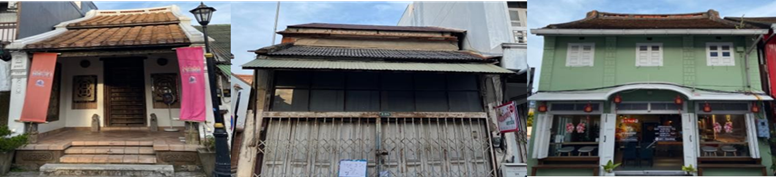
The result found that the residential architecture, which we can see nowadays in the old town community of Songkhla in the areas of Nang Ngam Road, Nakhon Nai Road, and Nakhon Nok Road, incorporates a mix of Thai, Chinese, and Western architectural styles; Thai houses, Thai style shophouses (commercial), Contemporary Thai shophouses, Traditional Chinese shophouses, Chinese style shophouses (commercial), Sino-European style shophouses, and Contemporary shophouses. These were the inspirations for the composition of the song "Architecture of Songkhla". The researcher composed lyrics that described the variety of architecture found in the old town community. The song "xīn yuānyāng húdié mèng" from the Taiwanese drama series "Justice Bao", 1993 edition, was used as the root melody to compose the melody “Architecture of Songkhla,” consisting of 2 parts with a change round by language accent. Part 1, first round, is a variable melody; the second round uses a Chinese accent to represent Chinese-style shophouses. Part 2, first round, uses the "repeating-contrasting-overlapping" technique; the second round uses a Western accent (Marching) to represent Western-style shophouses. The researcher designed the introduction with the melody "Hoon Kra Bok" (a puppet-playing song) and then played the song "Architecture of Songkhla"; there's an ending part that uses the root melody and the song "Shantou China". The performance uses a mixed string ensemble with a Thai dulcimer and rhythmic instruments according to the accent of each part. This composition reflects the esthetics of the architecture in the old town community of Songkhla through the perspective of Thai music in order to promote and disseminate the values of Songkhla’s old town to the public, which will be beneficial for tourism and the economy of Songkhla in the future.
Article Details

This work is licensed under a Creative Commons Attribution-NonCommercial-NoDerivatives 4.0 International License.
All authors must take public responsibility for the content of their paper. The WIPIT Journal Editors will not be taking any public responsibility for the content in the paper.
References
คณะกรรมการชุมชนย่านเมืองเก่า. (2564). แผนพัฒนาชุมชน ชุมชนย่านเมืองเก่า เทศบาลนครสงขลา ตำบลบ่อยาง อำเภอเมืองสงขลา จังหวัดสงขลา. เทศบาลนครสงขลา.https://www.songkhlacity.go.th/2020/files/com_content_community/2021-06_0607c44ba29a2e3.pdf
พิชิต ชัยเสรี. (2566). การประพันธ์เพลงไทย (พิมพ์ครั้งที่ 3). สำนักพิมพ์แห่งจุฬาลงกรณ์มหาวิทยาลัย.
วิภาดา เถาธรรมพิทักษ์. (2559). เพลง: วรรณกรรมเพื่อส่งเสริมการท่องเที่ยว. วารสารวิชาการนวัตกรรมสื่อสารสังคม, 4(1), 63–72.
ศรีสมร ศรีเบญจพลางกูร. (2544). ประวัติศาสตร์เมืองสงขลา (พิมพ์ครั้งที่ 2). สถาบันราชภัฏสงขลา.
ศรุตม์ เพชรสกุลวงศ์, และ นาถนเรศ อาคาสุวรรณ. (2554). รายงานการวิจัยการศึกษาสถาปัตยกรรมในเขตเมืองเก่าสงขลา ตำบลบ่อยาง อำเภอเมือง จังหวัดสงขลา เพื่อสะท้อนความเปลี่ยนแปลงวิถีชีวิตชุมชน. คณะมนุษยศาสตร์และสังคมศาสตร์ มหาวิทยาลัยราชภัฏสงขลา.
สมปอง ยอดมณี. (2535). คตินิยมการก่อสร้างที่ปรากฏในสถาปัตยกรรมจีน ในเขตอำเภอเมืองสงขลา จังหวัดสงขลา [วิทยานิพนธ์ปริญญามหาบัณฑิต, มหาวิทยาลัยศรีนครินทรวิโรฒ ภาคใต้].
สำนักงานเลขานุการของคณะกรรมการยุทธศาสตร์ชาติ. (2561). ยุทธศาสตร์ชาติ พ.ศ. 2561–2580 (ฉบับประกาศราชกิจจานุเบกษา). สำนักงานสภาพัฒนาการเศรษฐกิจและสังคมแห่งชาติ. http://nscr.nesdc.go.th/wp-content/uploads/2023/06/NS_PlanOct2018.pdf
อมรา ศรีสุชาติ. (2553). โบราณคดีและประวัติศาสตร์เมืองสงขลา. ใน ณัฐพล ณ สงขลา (บ.ก.), พงศาวดารเมืองสงขลา และโบราณคดีและประวัติศาสตร์เมืองสงขลา (พิมพ์ครั้งที่ 15, น. 120–185). พี. เพรส.
Mrloosen7. (2556, 17 มกราคม). เพลงประกอบละครเปาบุ้นจิ้น [วิดีโอ]. YouTube. https://youtu.be/dRqrE0pVej8
