
การออกแบบมาสคอตสามมิติจากสิ่งศักดิ์สิทธิ์พิทักษ์วัดไทย เพื่อส่งเสริมการท่องเที่ยวเชิงวัฒนธรรม
Article Sidebar
Main Article Content
Abstract
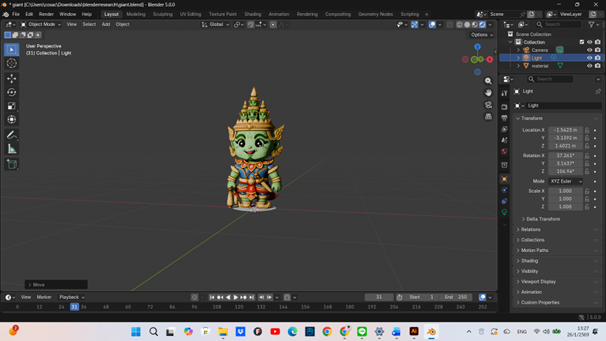
This research aims to study and design three-dimensional mascots derived from sacred guardian figures of Thai temples to promote cultural tourism. The focus is on creating characters that can effectively communicate cultural values and attract both Thai and international tourists. The study employs a mixed methods research approach, comprising qualitative research through document analysis, interviews with experts in Thai art and culture, and character designers, as well as quantitative research through surveys of tourists' and the general public's opinions on mascot design. The sample group consists of 400 tourists visiting temples in Bangkok and neighboring provinces. Research instruments include semi-structured interviews, questionnaires, and prototype mascot evaluations. The findings reveal that key components of successful mascot design from Thai temple guardian figures must include: 1) maintaining clear Thai cultural identity and symbolism, 2) adapting forms to be contemporary and acceptable to target audiences, 3) creating approachability and friendliness without diminishing sacredness, and 4) having distinctive stories and personalities. The developed mascot prototype received positive responses from tourists, with 87.5% agreeing that the mascot effectively communicates cultural values, and 92.3% expressing interest in purchasing related products. Additionally, the research found that mascots can serve as effective intermediaries in conveying knowledge about history and Buddhist beliefs to tourists, aligning with the concept of creative tourism that emphasizes participation and meaningful experiences. Developing mascots in three-dimensional format enhances potential for application across various digital media platforms, including mobile applications, games, augmented reality, and social media, thereby enabling broader reach to target audiences, particularly youth and international tourists seeking to learn about Thai culture through contemporary media. This research therefore significantly contributes to adding value to Thai cultural heritage and promoting sustainable tourism.
Article Details

This work is licensed under a Creative Commons Attribution-NonCommercial-NoDerivatives 4.0 International License.
All authors must take public responsibility for the content of their paper. The WIPIT Journal Editors will not be taking any public responsibility for the content in the paper.
References
ธีรวัฒน์ พจน์วิบูลศิริ. (2566). การสร้างสรรค์มาสคอตจากบริบททางวัฒนธรรมสู่การเพิ่มมูลค่า. DEC Journal: Art and Design, 2(1), 126–157.
นุชนารถ รัตนสุวงศ์ชัย. (2554). กลยุทธ์การพัฒนาการท่องเที่ยวเชิงวัฒนธรรม. วารสารมนุษยศาสตร์วิชาการ, 18(1), 31–50.
นิภัทร์ ปัญญวานันท์. (2562). การออกแบบโมเดลตัวละครและการสร้างสรรค์งานแอนิเมชัน 3 มิติ. วารสารนักบริหาร, 39(1), 67–81.
รัตนะ บัวสนธ์. (2559). การวิจัยแบบไร้กำแพงทางวิชาการ. วารสารราชพฤกษ์, 14(1), 1–5.
ศลิษา ธีรานนท์ และประกาศิต โสภณจรัสกุล. (2559). การท่องเที่ยวเชิงสร้างสรรค์: ทางเลือก ทางรอดของการท่องเที่ยวไทย. Pathumthani University Academic Journal, 8(2), 225–234.
Holt, D. B. (2004). How Brands Become Icons: The Principles of Cultural Branding. Harvard Business Press.
Occhi, D. J. (2018). Kumamon: Japan’s surprisingly cheeky mascot (1st ed.). Routledge.
