
The Soraphan Chant Tradition of Ban Hong Hee : An Exploration of Musical Aesthetics. An Analysis of the Musical Identity of Soraphan Chanting in Ban Hong Hee
Article Sidebar
Main Article Content
Abstract
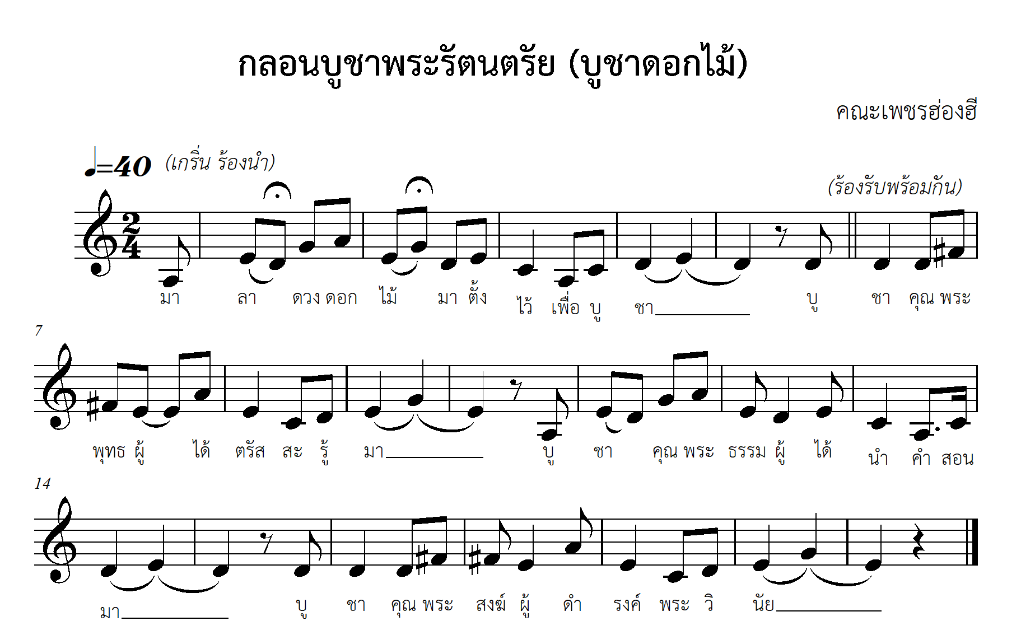
This qualitative research titled “The Soraphan Chant Tradition of Ban Hong Hee: An Exploration of Musical Aesthetics.” aims to study the vocal melodies of Isan Soraphanya as performed by the “Phet Hong Hee” group from Ban Hong Hee, Yang Talat Subdistrict, Yang Talat District, Kalasin Province. Field data were collected through interviews and direct observation of the group’s performances. The gathered data were then analyzed and synthesized to identify the musical characteristics of the tradition.
The Phet Honghee ensemble performs four distinct Sarapanya chant melodies: Ka Ten Kon, Lom Phat Chai Khao (Wind Blowing on the Hillside), Lom Phat Phrao (Wind Blowing through Coconut Trees), and Nok Khao Thong (Golden Dove). Each melody possesses unique characteristics that evoke different feelings and emotional tones, with variations in pitch usage, scale, melodic motion, and note patterns. The Ka Ten Kon and Nok Khao Thong melodies are based on the Dorian mode, a scale derived from the minor mode with a raised sixth degree, which adds a sense of brightness and emotional nuance. These melodies, while essentially melancholic, contain moments that suggest hope and light. The Lom Phat Chai Khao melody employs the natural minor scale and conveys a deeply sorrowful mood. It begins with a perfect fourth interval between the first and second notes and features prolonged phrasing and ornamentation (uean) that express longing and yearning—qualities referred to in Isan music as sok (sorrow). In contrast, the Lom Phat Phrao melody is set in the major scale and is considered an ancient form. It is characterized by minimal ornamentation, steady rhythm, and a unison opening. This melody conveys joy and liveliness and is commonly used for playful, non-tragic verse. It also spans an octave range, from the lowest to the highest note, contributing to its bright and vibrant character.
Article Details

This work is licensed under a Creative Commons Attribution-NonCommercial-NoDerivatives 4.0 International License.
All authors must take public responsibility for the content of their paper. The WIPIT Journal Editors will not be taking any public responsibility for the content in the paper.
References
คาน แก้ววิเชียร. (2544). นิยมสรภัญญ์ทันสมัย. คลังนานาธรรม.
ณัชชา พันธุ์เจริญ. (2551). สังคีตลักษณ์และการวิเคราะห์ (พิมพ์ครั้งที่ 4). เกศกะรัต.
เบญจทิพย์ เพชรสม, สุพรรณี เหลือบุญชู, และ ดุษฎี มีป้อม. (2566). การศึกษาทำนองเทศน์ผะเหวดในมิติทางดุริยางคศิลป์. วารสารวิชาการการบริหารการปกครองและนวัตกรรมท้องถิ่น สาขาวิชารัฐศาสตร์ มหาวิทยาลัยราชภัฏสุรินทร์, 7(3), 65-80
พระมหาโกวิน โกวิทชโย. (2566). การศึกษาภาษาในบทสวดสรภัญญะ: การผสมผสานระหว่างภาษาบาลีและภาษาถิ่น. วารสารวิชาการ ภาษาและวัฒนธรรม คณะมนุษยศาสตร์ มหาวิทยาลัยมหาจุฬาลงกรณ. ราชวิทยาลัย, 2(1), 36-41
พระพรหมคุณาภรณ์ (ป.อ. ปยุตฺโต). (2556). พจนานุกรมพุทธศาสน์ ฉบับประมวลศัพท์. มหาจุฬาลงกรณราชวิทยาลัย.
มัลลิกา มาภา, ดวงเด่น บุญปก, และ วาสนา นามพงศ์. (2554). การสวดสรภัญญะของจังหวัดนครพนม: ศึกษาตามแนวชาติพันธุ์วรรณนาแห่งการสื่อสาร. วารสารศรีนครินทรวิโรฒวิจัยและพัฒนา สาขามนุษยศาสตร์และสังคมศาสตร์, 3(6), 45-58.
รุจิรา วงศ์แก้ว. (2533). องค์ประกอบของสรภัญญ์: ศึกษาเฉพาะกรณีอำเภอเมือง จังหวัดมหาสารคาม[การศึกษาระดับปริญญามหาบัณฑิต ไม่ได้ตีพิมพ์]. มหาวิทยาลัยศรีนครินทรวิโรฒ มหาสารคาม.
วิชญ์ บุญรอด. (2564). ดนตรีพื้นบ้านอีสาน: อิทธิพลต่อการเปลี่ยนแปลงมนุษย์. วารสารวิชาการ คณะมนุษยศาสตร์และสังคมศาสตร์ มหาวิทยาลัยนครพนม, 11(1), 360-369.
วิสุทธิ์ บุษยกุล. (2513). คตินิยมอีสาน. โอเดียนสโตร์.
ศุภกร ไชยรงศรี และ มนัส แก้วบูชา. (2560). การจัดการภูมิปัญญาด้านวรรณกรรมพื้นบ้าน บทสวดสรภัญญะ บ้านค้อ ตำบลดอนเงิน อำเภอเชียงยืน จังหวัดมหาสารคาม. วารสารวิชาการ ศิลปกรรมบูรพา มหาวิทยาลัยบูรพา, 20(2), 135-152
