
The Evolution of Uba Dok Mai Tads Adornment on Headdresses in Thai Performing Arts: Khon and Lakorn" The Evolution of Uba Dok Mai Tads Adornment on Headdresses in Thai Performing Arts: Khon and Lakorn"
Article Sidebar
Main Article Content
Abstract
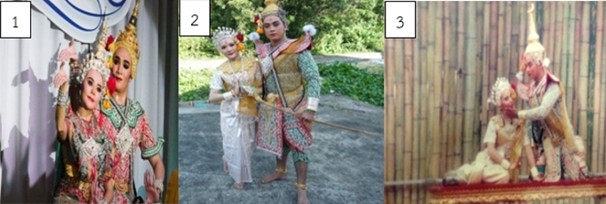
This article aims to study the forms and evolution of Uba Dok Mai Tads as adornments for headdresses in Thai performing arts, Khon and Lakorn across different eras. Uba Dok Mai Tads are crucial components that enhance the beauty of characters’ headdresses. Uba refers to flowers strung together for various forms of decoration, while Dok Mai Tads are artificial flowers attached above the temples, existing before ornamental flower jewelry. Originally, the term “Kranjeakjorn” referred to both Uba Dok Mai Tads. Historically, the adornment of Uba Dok Mai Tads lacked a clear standard and was exclusively restricted to royal theater. This changed when they began to be utilized in general performances from the reign of King Rama III, leading to the emergence of various forms six distinct styles during the era of the Fine Arts Department. This preferred usage continues to this day, with Uba Dok Mai Tads being adorned on the same side, which also reflects the gender differentiation of characters. Furthermore, the transition to lighter costumes in Khon and drama led to the introduction of diverse adornment styles for Uba Dok Mai Tads since the early Rattanakosin period. The study also explores the evolving presentation of Uba Dok Mai Tads through analysis based on the styles established by performance managers.
Article Details

This work is licensed under a Creative Commons Attribution-NonCommercial-NoDerivatives 4.0 International License.
All authors must take public responsibility for the content of their paper. The WIPIT Journal Editors will not be taking any public responsibility for the content in the paper.
References
บทความนี้มีวัตถุประสงค์ในการศึกษารูปแบบและวิวัฒนาการของอุบะ ดอกไม้ทัด ที่นำมาประดับศิราภรณ์ในการแสดงนาฏศิลป์ไทยโขน ละคร ตั้งแต่เริ่มปรากฏนำมาใช้ในละครหลวงและสืบทอดมาถึงปัจจุบันชุดที่ใช้
ในการแสดงโขน ละคร มาจากเครื่องต้นเครื่องทรงของพระมหากษัตริย์รวมถึงศิราภรณ์และอุบะ ดอกไม้ทัด
ในตำราทรงพระเครื่องต้นเรียกว่าดอกไม้ฟอง อุบะคือดอกไม้ที่ร้อยเป็นสายนำมาประกอบกันหลายสายประดับเพื่อให้เกิดความสวยงามมีหลายรูปแบบ แต่ที่นิยมคืออุบะแขกพวงหรือเต่ารั้ง อุบะที่นำมาใช้ในยุคแรกทำจากดอกไม้สด ดอกไม้ทัดใช้ดอกไม้หลายประเภท เช่น ดอกมะเขือ ดอกมะละกอ ดอกกุหลาบหรือร้อยเย็บแบบจากดอกไม้ ปัจจุบันมีทั้งดอกไม้สดและดอกไม้ประดิษฐ์ ดอกไม้ทัดปรากฏบนศิราภรณ์ก่อนดอกไม้เพชร แต่เดิมถือว่ากรรเจียกจรบนศิราภรณ์คืออุบะ ดอกไม้ทัด ในสมัยรัชกาลที่ 1 เคยเป็นของต้องห้ามใช้เฉพาะในละครหลวงเท่านั้น การประดับอุบะ ดอกไม้ทัดปรากฏภาพถ่ายในละครทั่วไปตั้งแต่สมัยรัชกาลที่ 3 ในอดีตใช้ดอกไม้สดและไม่มีรูปแบบที่ชัดเจน จากการศึกษาปรากฏ 6 รูปแบบ รูปแบบที่ได้รับความนิยมมาจนถึงปัจจุบันคือตัวพระประดับอุบะ ดอกไม้ทัดด้านขวา ตัวนางประดับอุบะ ดอกไม้ทัดด้านซ้าย และเป็นการแยกเพศสภาพตัวละคร ปัจจุบันนิยมแต่งกายยืนเครื่องอย่างโบราณทำให้มีการนำรูปแบบการประดับอุบะ ดอกไม้ทัดตามอย่างละครตั้งแต่ต้นกรุงรัตนโกสินทร์ และมีการคิดค้นรูปแบบการประดับอุบะ ดอกไม้ทัดโดยวิเคราะห์ตามรูปแบบและความต้องการของผู้จัดการแสดง
