
Phum-wat Patanasilpa: The Creative Suite of Bunditpatanasilpa Institute Core Values
Article Sidebar
Main Article Content
Abstract
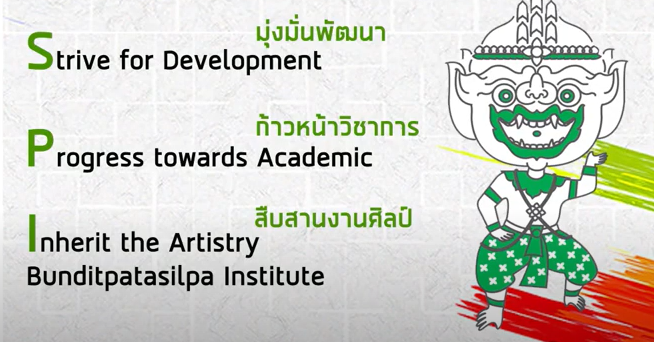
The purpose of this article is to present the creative suite of Bunditpatanasilpa Institute Core Value in which there are two pieces: 1) Nattasilapa Phirom (นาฏศิลปาภิรมย์) and 2) Phum Wat Patanasilpa (ภูมิวัฒน์พัฒนศิลป์). The lyrics were written based on the klon pat (กลอนแปด), traditional Thai formative poems in which there are particular types of rhymes: vowel, consonant, and intonation marks. The prominent rhyme form used is the consonant rhyme that creates various tones and musical dialects, and each piece has four formative units of lyrics. The process of creation employs Thai classical music composition in which there are two sections accompanied by nathap propkai song chan and the marching drum pattern used mostly in the “farang (ฝรั่ง)”[1] musical dialect. The melodies of the musical selection were inspired by the composer’s imagination with the traditional Thai music style. Noticeably, a group of notes used in the selection is based on the “pan-cha-mun (ปัญจมูล)” (Penta-centric basis) with two relevant modes based on Thai music keys (Do Re Mi-Sol La and Sol La Ti-Re Mi) to be realized into various instrumental paths in the ensemble to be recognized and performed easily.
[1] “Farang” is the musical dialect imitating the western musical style based on Thai classical music interpretation.
Article Details

This work is licensed under a Creative Commons Attribution-NonCommercial-NoDerivatives 4.0 International License.
All authors must take public responsibility for the content of their paper. The WIPIT Journal Editors will not be taking any public responsibility for the content in the paper.
References
ฉลองชัย ทัศนโกวิท. (2563). การสร้างสรรค์บทเพลงขับขานประสานเสียง “สร้างปัญญา ศรัทธาความดี”. วารสารมนุษยศาสตร์และสังคมศาสตร์ มหาวิทยาลัยราชภัฏสุราษฎร์ธานี, 12(2), 79-112.
https://e-journal.sru.ac.th/index.php/jhsc/article/view/1121
ณรงค์ชัย ปิฎกรัชต์. (2563). ทฤษฎีดนตรีเพื่อการวิจัยและสารัตถบท. สำนักพิมพ์มหาวิทยาลัยมหิดล.
นภดล จันทร์เพ็ญ. (2542). การใช้ภาษาไทย. ต้นอ้อ.
นาฏยา นวลคล้าย. (ม.ป.ป.). ค่านิยมการทำงานต่อความผูกพันองค์การของพนักงานตรวจสอบบัญชีกลุ่มเจเนอเรชันวาย ในเขตกรุงเทพมหานคร. (ม.ป.ท.)
บำรุง พาทยกุล และ วัชรมณฑ์ อรัณยะนาค. (2564). เพลงชุดภูมิวัฒน์พัฒนศิลป์: การสร้างสรรค์เพลงค่านิยมองค์กร สถาบันบัณฑิตพัฒนศิลป์ [เอกสารไม่ตีพิมพ์]. รายงานการวิจัยทุนสนับสนุนการสร้างสรรค์ ประจำปีงบประมาณ พ.ศ. 2564 สถาบันบัณฑิตพัฒนศิลป์.
พิชิต ชัยเสรี. (2559). สังคีตลักษณ์วิเคราะห์เพลงไทย. สำนักพิมพ์แห่งจุฬาลงกรณ์มหาวิทยาลัย.
ลักษณา สตะเวทิน. (2540). หลักการประชาสัมพันธ์. เฟื่องฟ้าพริ้นติ้ง.
ศุทธกานต์ มิตรกูล และ อนันต์ชัย คงจันทร์. (2559). เจนเนอเรชันวายในองค์กร: การศึกษาความสัมพันธ์ระหว่างความสอดคล้องของค่านิยมกับความผูกพันต่อองค์กร. วารสารวิทยาการจัดการ มหาวิทยาลัยสงขลานครินทร์, 33(1), 51-75. https://so03.tci-thaijo.org/index.php/jms_psu/article/view/61559
สถาบันบัณฑิตพัฒนศิลป์. (2562, 6 กันยายน). ค่านิยมองค์กร สถาบันบัณฑิตพัฒนศิลป์, YouTube. https://www.youtube.com/watch?v=GZYy3awAvDQ
สำราญ จูช่วย. (2551). แนวทางการประชาสัมพันธ์ตามคุณลักษณะของนักศึกษาวิทยาลัยราชพฤกษ์. วิทยาลัยราชพฤกษ์.
สุเชาวน์ พลอยชุม. (2534). สุนทรียศาสตร์ ปัญหาและทฤษฎีเกี่ยวกับความงามและศิลปะ. พิมพ์ครั้งที่ 2. มหามกุฏราชวิทยาลัย.
สุขอรุณ วงษ์ทิม. (2560). รูปแบบการฝึกอบรมทางจิตวิทยาเพื่อเสริมสร้างค่านิยมในองค์กร ของบุคลากร มหาวิทยาลัยสุโขทัยธรรมาธิราช. วารสารพยาบาลตำรวจ, 9(1), 1-12. https://he01.tci- thaijo.org/index.php/policenurse/article/view/82067
