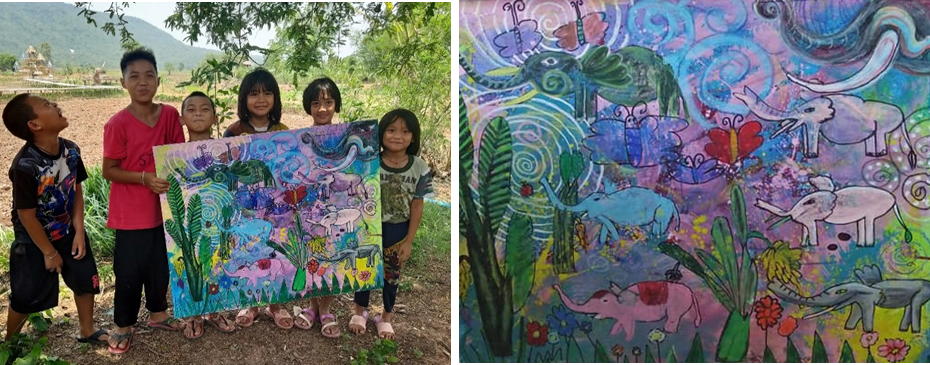
การมีส่วนร่วมเรียนรู้นิทานพญาช้าง และนางผมหอมกับการสร้างสรรค์ผลงานวาดภาพระบายสีของชุมชนบ้านหนองบัว อำเภอภูหลวง จังหวัดเลย
Article Sidebar
Main Article Content
บทคัดย่อ
บทความวิจัยนี้มีวัตถุประสงค์ เพื่อ 1) ศึกษานิทานพญาช้างและนางผมหอมพื้นที่อำเภอภูหลวง
จังหวัดเลย และ 2) ศึกษาการมีส่วนร่วมใช้นิทานพญาช้างและนางผมหอมสร้างสรรค์ผลงานวาดภาพระบายสีของชุมชนบ้านหนองบัว อำเภอภูหลวง จังหวัดเลย ใช้รูปแบบการวิจัยแบบผสมผสาน กลุ่มเป้าหมายที่ใช้ศึกษา จำนวน 45 คน ได้แก่ ปราชญ์ท้องถิ่น นักวัฒนธรรมตำบล นักวิชาการศิลปะ กลุ่มการจัดการท่องเที่ยวชุมชน เด็กและเยาวชน ใช้แบบสัมภาษณ์แบบกึ่งโครงสร้าง การสนทนากลุ่ม การประชุม แบบประเมินความพึงพอใจต่อการวาดภาพระบายสี และแบบประเมินการมีส่วนร่วมใช้นิทานพญาช้างและนางผมหอมวาดภาพระบายสี เป็นเครื่องมือเก็บรวบรวมข้อมูล วิเคราะห์ข้อมูลเชิงคุณภาพด้วยการวิเคราะห์เนื้อหา ส่วนข้อมูลเชิงปริมาณ วิเคราะห์หาค่าสถิติเชิงบรรยาย ได้แก่ ค่าเฉลี่ย และส่วนเบี่ยงเบนมาตรฐาน ผลการศึกษา พบว่า 1) นิทานพญาช้างและนางผมหอมเป็นวรรณกรรมแสดงธรรมที่สอดแทรกคำสอนและคติสอนใจเรื่องความกตัญญู ชาวบ้านเชื่อว่า “จิตวิญญาณของพญาช้างและนางผมหอมยังสถิตอยู่ในชุมชน” จึงได้สร้างศาลสำหรับการสักการะบูชา และจัดงานประจำปี และ 2) การมีส่วนร่วมใช้นิทานพญาช้างและนางผมหอมสร้างสรรค์ผลงานวาดภาพระบายสี มีขั้นตอนดังนี้ (1) การแลกเปลี่ยนเรียนรู้นิทานพญาช้างและนางผมหอมกับแนวคิดการวาดภาพระบายสี (2) การวางแผนการเรียนรู้และสร้างสรรค์ (3) การดำเนินกิจกรรมสร้างสรรค์ (4) การวิพากษ์วิจารณ์ (5) การประเมินความพึงพอใจในการสร้างสรรค์ พบว่า โดยภาพรวมอยู่ในระดับมากที่สุด (=4.71) และ (6) การประเมินการมีส่วนร่วมใช้นิทานพญาช้างและนางผมหอมสร้างสรรค์ พบว่า โดยภาพรวมอยู่ในระดับมากที่สุด (= 4.64)
Article Details

อนุญาตภายใต้เงื่อนไข Creative Commons Attribution-NonCommercial-NoDerivatives 4.0 International License.
เนื้อหาและข้อมูลที่ได้รับการเผยแพร่ในวารสารวิพิธพัฒนศิลป์ ถือเป็นข้อคิดเห็นและความรับผิดชอบของผู้แต่งเท่านั้น โดยกองบรรณาธิการวารสารไม่มีส่วนรับผิดชอบต่อเนื้อหาหรือข้อคิดเห็นใด ๆ ที่ปรากฏในบทความ
เอกสารอ้างอิง
เกสร สว่างวงศ์. (2531). การศึกษาเปรียบเทียบวรรณกรรมเรื่องนางผมหอมฉบับล้านนา อีสานและไทลื้อ [วิทยานิพนธ์ศิลปศาสตรมหาบัณฑิต, มหาวิทยาลัยศิลปากร]. https://sure.su.ac.th/xmlui/handle/123456789/1737?attempt=2&
เกษราภรณ์ สุพรรณฝ่าย. (2566). นิทานพื้นบ้าน. วารสารศิลปะและวัฒนธรรมลุ่มแม่น้ำมูล, 7 (ฉบับปฐมฤกษ์), 114–117.
คมกฤษณ์ วรเดชนัยนา, & ปฐม หงส์สุวรรณ. (2563). ช้างในวรรณกรรมนิทานอีสาน: การสร้างอัตลักษณ์สัตว์และความหมายทางวัฒนธรรม. วารสารสันติศึกษาปริทรรศน์ มจร, 8(1), 233–246.
ฐานชน จันทร์เรือง, & ภัทรธิรา ผลงาม. (2562). จากนิทานพื้นบ้านในจังหวัดเลยสู่ภาพยนตร์เชิงสร้างสรรค์. กระแสวัฒนธรรม, 21(40), 40–59.
ฐิตา ครุฑชื่น. (2567). การถ่ายทอดความงามของพืชพรรณผ่านจิตรกรรมสีน้ำ. วารสารวิพิธพัฒนศิลป์ บัณฑิตศึกษา, 4(2), 115–167.
ธัญญาลักษณ์ ใจเที่ยง. (2563). การมีส่วนร่วมของประชาชนในชุมชนเขตพระนคร กรุงเทพมหานครต่อการพัฒนาทักษะเยาวชนไทย 4.0. สถาบันพัฒนศิลป์.
นัยนา อรรจนาทร. (2566). คุณค่าและบทบาทของนิทานเรื่องพญาช้างนางผมหอมของบ้านหนองบัว อำเภอภูหลวง จังหวัดเลย. วารสารศรีล้านช้างปริทรรศน์, 9(1), 135–150.
พิมพ์ญาดา ธิติกุลธัญโรจน์. (2559). การตีความหมายใหม่ของนิทานจากภาวะสังคมปัจจุบัน [วิทยานิพนธ์ศิลปบัณฑิต, มหาวิทยาลัยศิลปากร]. https://sure.su.ac.th/xmlui/bitstream/handle/123456789/5622/fulltext.pdf?sequence=1&isAllowed=y
วรรณวิสา พัฒนศิลป์. (2567). ลายรดน้ำร่วมสมัยการเตรียมพื้นรักใสบนวัสดุพื้นถิ่น แรงบันดาลใจจากวิถีชีวิตชาวใต้. วารสารวิพิธพัฒนศิลป์ บัณฑิตศึกษา, 4(2), 104–119.
วรางคณา ทวีธรรม, & ปัญจรี ศรีโชค. (2565). การวิเคราะห์นิทานและสื่อพื้นบ้านจังหวัดเลย. วารสารวิจัยและพัฒนา มหาวิทยาลัยราชภัฏเลย, 17(60), 75–83.
วัชราภรณ์ ดิษฐป้าน. (2566). จาก “อีสป” ถึง “อีสัส”: นิทานกับการสร้างสรรค์วรรณกรรมแนวสาระบันเทิงชุดนิทานอีสัส. วารสารศิลปศาสตร์ มหาวิทยาลัยธรรมศาสตร์, 23(1), 31–68.
สุพัตรา ยอดสุรางค์. (2562). แนวคิดว่าด้วยการมีส่วนร่วมของประชาชนในการพัฒนาชุมชน. วารสารวิจัยและพัฒนา วไลยอลงกรณ์ ในพระบรมราชูปถัมภ์, 14(1), 122–132.
อรัญญา แสนสระ. (2561). นิทานพื้นบ้านกับการสืบสานภูมิปัญญาท้องถิ่น อำเภอเกษตรสมบูรณ์ จังหวัดชัยภูมิ [วิทยานิพนธ์ปรัชญาดุษฎีบัณฑิต, มหาวิทยาลัยบูรพา]. https://buuir.buu.ac.th/bitstream/1234567890/7538/1/Fulltext.pdf
ไทยโรจน์ พวงมณี, ณศิริ ศิริพริมา, & พชรมณ ใจงามดี. (2567). รูปแบบกิจกรรมศิลปะสำหรับการเสริมสร้างการรู้รักสามัคคีของกลุ่มการจัดการท่องเที่ยวโดยชุมชนบ้านหนองบัว อำเภอภูหลวง จังหวัดเลย. วารสารสังคมศาสตร์บูรณาการ มหาวิทยาลัยมหิดล, 11(1), 115–143.
Douglass, A., & Badham, M. (2022). Aesthetic systems of participatory painting: Playing with
paint, dialogic art, and the innovative collective. Public Art Dialogue, 12(1), 52–73. https://doi.org/10.1080/21502552.2021.1991572
Thrana, H. M., Gjeitnes, K., & Iversen, E. H. (2023). Painting workshop: A tool for improving communication and social interaction. European Social Work Research, 1(3), 312–328. https://doi.org/10.xxxx
