
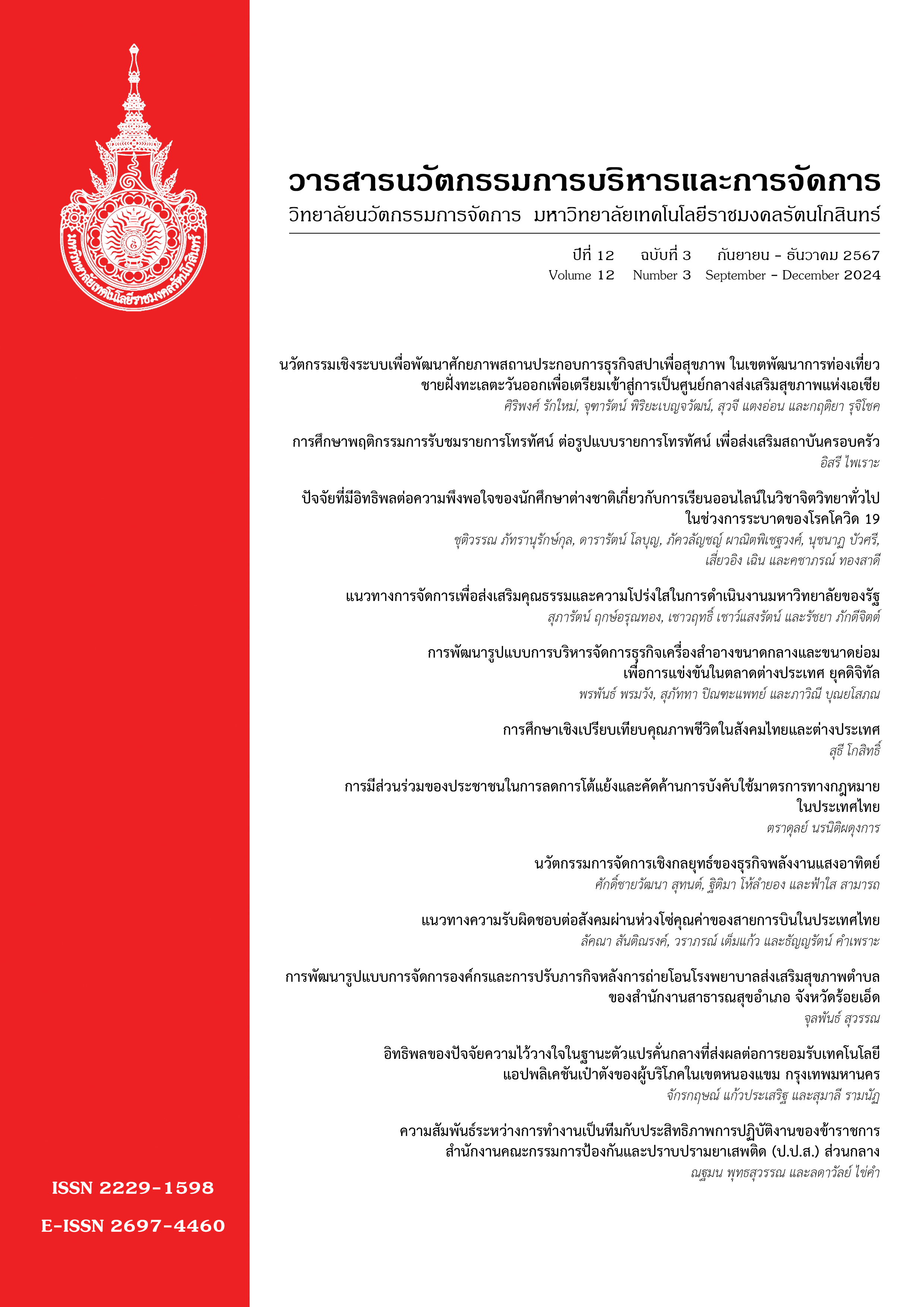
แนวทางความรับผิดชอบต่อสังคมผ่านห่วงโซ่คุณค่าของสายการบินในประเทศไทย
Article Sidebar
Main Article Content
บทคัดย่อ
บทความวิจัยนี้มีวัตถุประสงค์เพื่อศึกษาและนำเสนอแนวทางการดำเนินงานด้านความรับผิดชอบต่อสังคมผ่านห่วงโซ่คุณค่าของสายการบินในประเทศไทย เป็นการวิจัยเชิงคุณภาพ ดำเนินการเก็บรวบรวมข้อมูลจาก 2 แหล่ง ได้แก่ 1) ข้อมูลปฐมภูมิ ทำการสัมภาษณ์จากผู้ให้ข้อมูลสำคัญที่มีคุณสมบัติเป็นผู้บริหารระดับสูงของสายการบินที่มีบทบาทและมีส่วนร่วมในการขับเคลื่อนกำหนดนโยบายการดำเนินงานขององค์กร หรือรับผิดชอบเกี่ยวข้องกับการกำหนดนโยบายการการดำเนินงานด้านความรับผิดชอบต่อสังคมผ่านห่วงโซ่คุณค่าของสายการบิน จำนวน 3 ท่าน 2) ข้อมูลจากแหล่งทุติยภูมิ ประกอบด้วย ข้อมูลจากเอกสาร วารสาร เอกสารเผยแพร่ คู่มือ รายงานประจำปี สื่อสารสนเทศต่างๆ และงานวิจัยที่เกี่ยวข้อง
ผลการวิจัย พบว่า การดำเนินงานความรับผิดชอบทางสังคมผ่านห่วงโซ่คุณค่าของสายการบินนั้น มีทั้งหมด 4 มิติ คือ ด้านเศรษฐกิจ ด้านกฎหมาย ด้านคุณธรรมและจริยธรรม และด้านการกุศล โดยปรากฎผลการดำเนินงานด้านกฎหมายและข้อบังคับการกำกับดูแลมากกว่ามิติอื่นๆ ทั้งนี้ในด้านการกุศลนั้นสายการบินมีโครงการต่างๆ สนับสนุนต่อเนื่องเพื่อส่งเสริมภาพลักษณ์ขององค์กรและการตลาด นอกจากนี้สายการบินได้กำหนดนโยบายความรับผิดชอบต่อสังคมต่อการจัดการห่วงโซ่คุณค่า ส่งผลต่อความยั่งยืนของธุรกิจ อย่างไรก็ตามสายการบินยังต้องมีการลงทุนและใช้ระยะเวลาเพื่อสร้างเป็นวัฒนธรรมองค์กร ในส่วนระดับนโยบายด้านความรับผิดชอบต่อสังคมผ่านห่วงโซ่คุณค่าของสายการบินได้รับการบรรจุอยู่ในกระบวนการผลิต คือ เป็นการดำเนินความรับผิดชอบต่อสังคมที่อยู่ในกระบวนการหลักของธุรกิจที่ประกอบกิจการหากำไรอย่างมีความรับผิดชอบ ซึ่งต้องได้รับการสนับสนุนจากผู้นำขององค์กรจึงสามารถบรรลุเป้าหมายได้ แนวทางการดำเนินงานด้านความรับผิดชอบต่อสังคมผ่านห่วงโซ่คุณค่าของสายการบินของไทยให้ประสบความสำเร็จอย่างยั่งยืน คือการพัฒนาให้อยู่ในกระบวนการผลิตและอยู่ในวัฒนธรรมองค์กร รวมถึงการต่อยอดสร้างความร่วมมือกับผู้ที่เกี่ยวข้องและผู้มีส่วนได้ส่วนเสียต่อการดำเนินธุรกิจของสายการบินในทุกมิติอย่างเป็นรูปธรรม
Article Details

อนุญาตภายใต้เงื่อนไข Creative Commons Attribution-NonCommercial-NoDerivatives 4.0 International License.
ข้อความและบทความในวารสารนวัตกรรมการบริหารและการจัดการ เป็นแนวคิดของผู้เขียน ไม่ใช่ความคิดเห็นและความรับผิดชอบของคณะผู้จัดทำ บรรณาธิการ กองบรรณาธิการ วิทยาลัยนวัตกรรมการจัดการ และมหาวิทยาลัยเทคโนโลยีราชมงคลรัตนโกสินทร์
ข้อความ ข้อมูล เนื้อหา รูปภาพ ฯลฯ ที่ได้รับการีพิมพ์ในวารสารนวัตกรรมการบริหารและการจัดการ ถือเป็นลิขสิทธิ์ของวารสารนวัตกรรมการบริหารและการจัดการ หากบุคคลใดหรือหน่วยงานใดต้องการนำทั้งหมดหรือส่วนหนึ่งส่วนใดไปเผยแพร่ต่อหรือกระทำการใดๆ จะต้องได้รับอนุญาติเป็นลายลักษณ์อักษรจากวารสารนวัตกรรมการบริหารและการจัดการก่อนเท่านั้น
เอกสารอ้างอิง
ตลาดหลักทรัพย์แห่งประเทศไทย. (2566). “Sustainable Supply Chain.” Sustainable Capital Market Development. สืบค้น 25 กุมภาพันธ์ 2567ม จาก https://setsustainability.com/page/sustainable-supply-chain.
บริษัท การบินไทย จำกัด (มหาชน). (2566). แบบแสดงรายการข้อมูลประจำปี/รายงานประจำปี 2564 (แบบ 56-1 One Report). กรุงเทพฯ: บริษัท การบินไทย จำกัด (มหาชน).
พิมพ์พร ภู่ทองประเสริฐ. (2564). ความรับผิดชอบต่อสังคมขององค์กรธุรกิจเพื่อการพัฒนาที่ยั่งยืน ของบริษัทการบินไทย จำกัด (มหาชน). วารสารรังสิตบัณฑิตศึกษาในกลุ่มธุรกิจและสังคมศาสตร์, 7(1), 204-222.
สถาบันไทยพัฒน์. (2566). “6 ทิศทาง CSR ปี 2566.” สถาบันไทยพัฒน์. สืบค้น 25 กุมภาพันธ์ 2567, จาก https://www.thaicsr.com/2013/01/csr-sustainability-2556.html.
สถาบันพัฒนาธุรกิจอย่างยั่งยืน. (2566). ความรับผิดชอบต่อสังคม เพื่อความยั่งยืนขององค์กร. กรุงเทพฯ: ตลาดหลักทรัพย์แห่งประเทศไทย.
Barnes, David. (2001). Understanding Business: Processes. NY: Routledge.
Carroll, Archie. (2016). Carroll’s Pyramid of CSR: Taking Another Look. International Journal of Corporate Social Responsibility, 1, 3. DOI: 10.1186/s40991-016-0004-6.
Freeman, E. R., et al. (2010). Stakeholders Theory: The State of the Art. NY: Cambridge University Press.
Porter, M. E. (2008). The Five Competitive Forces That Shape Strategy. Harvard Business Review, January 1.
Porter, M. E. & Kramer, M. R. (2011). The Big Idea: Creating Shared Value. Harvard Business Review, January-February 2011.
REDD. (2014). Improve CSR in your value chain through collaboration. Network for Business Sustainability. from https://nbs.net/improve-csr-in-your-value-chain-through-collaboration/.
Steele, Paul. (2018). Future of the Airline Industry 2035. From https://www.iata.org/contentassets/086e8361b2f4423e88166845afdd2f03/iata-future-airline-industry.pdf.
