
ผลกระทบจากการท่องเที่ยวต่อลักษณะการตั้งถิ่นฐานและเรือนพื้นถิ่นลาหู่ดำ (แซแล) บ้านจ่าโบ่ จังหวัดแม่ฮ่องสอน
Article Sidebar
Main Article Content
บทคัดย่อ
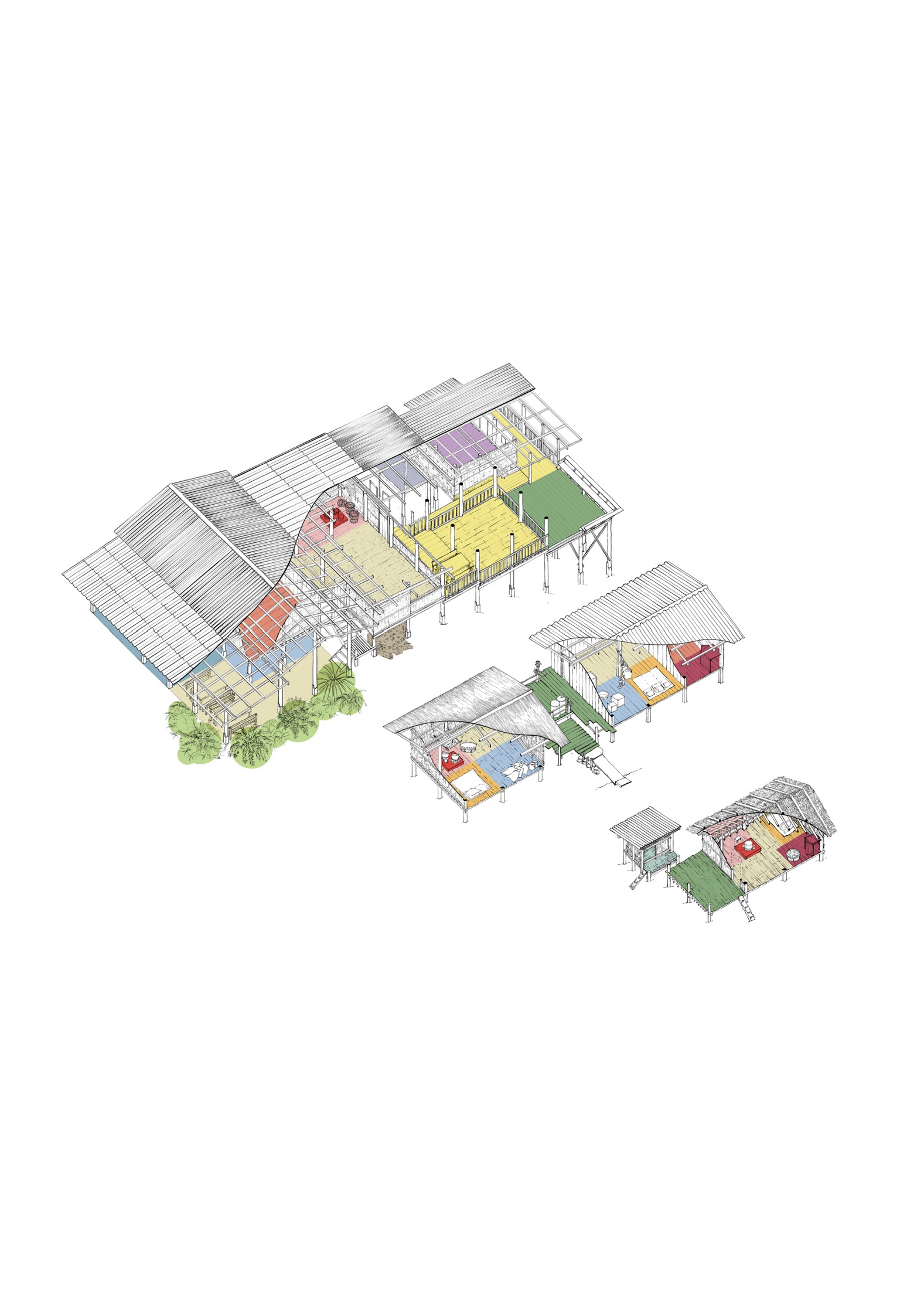
งานวิจัยนี้มีวัตถุประสงค์เพื่อศึกษาลักษณะการตั้งถิ่นฐานและรูปแบบเรือนพื้นถิ่นที่สะท้อนวิถีชีวิตและวัฒนธรรมของชาวลาหู่ดำ (แซแล) บ้านจ่าโบ่ จังหวัดแม่ฮ่องสอน และผลกระทบจากการท่องเที่ยวต่อลักษณะการตั้งถิ่นฐานและเรือนพื้นถิ่น โดยใช้ระเบียบวิธีวิจัยเชิงคุณภาพ ประกอบด้วยการศึกษาจากเอกสาร การลงสำรวจภาคสนาม การสังเกตการณ์แบบมีส่วนร่วมตามความเหมาะสม และการสัมภาษณ์แบบกึ่งมีโครงสร้าง การเก็บข้อมูลดำเนินการผ่านการสำรวจรังวัด ถ่ายภาพอย่างเป็นระบบ และจัดทำแบบสถาปัตยกรรม โดยกำหนดกรณีศึกษาเป็นเรือนดั้งเดิม เรือนพื้นถิ่นแบบพัฒนา และเรือนโฮมสเตย์ วิเคราะห์ลักษณะการใช้งานพื้นที่และโครงสร้างเรือน ผลการศึกษาพบว่า การตั้งถิ่นฐานและรูปแบบเรือนสะท้อนวิถีชีวิตและค่านิยมของชาวลาหู่ ทั้งในด้านความเชื่อจารีต ความสัมพันธ์เครือญาติ ความเรียบง่ายของรูปแบบเรือน ประเด็นที่ 1 ลักษณะการตั้งถิ่นฐานมีองค์ประกอบสำคัญทางวัฒนธรรม ได้แก่ ลานจะคึ บ้านแก่มู ประตูหัวบ้าน–ท้ายบ้าน ศาลหมู่บ้าน และพื้นที่ประกอบพิธีกรรม ประเด็นที่ 2 พื้นที่สำคัญในเรือนลาหู่ดำ ได้แก่ ชาน ครัว พื้นที่นอน และตู้ไหว้บู่บ่า ซึ่งเป็นศูนย์กลางทางจิตวิญญาณของเรือน อย่างไรก็ตามการท่องเที่ยวสร้างผลกระทบในระดับผังชุมชน เช่น ความหนาแน่นอาคาร รูปแบบการก่อสร้างและวัตถุประสงค์การใช้งานของอาคารเพื่อตอบรับการท่องเที่ยว ในระดับผังเรือน เช่น พื้นที่ครอบครัวน้อยลง พื้นที่รับแขกมากขึ้น ตลอดจนพื้นที่วิถีชีวิตเดิมบางอย่างหายไป และผลกระทบต่อทักษะภูมิปัญญาในการใช้วัสดุธรรมชาติสร้างเรือนที่ลดลง เปลี่ยนไปใช้วัสดุก่อสร้างในระบบอุตสาหกรรมมากขึ้น
Article Details

อนุญาตภายใต้เงื่อนไข Creative Commons Attribution-NonCommercial-NoDerivatives 4.0 International License.
เอกสารอ้างอิง
Ban Jabo Community Museum. (2025). Prawat khwam penma Ban Jabo. (In Thai) [History of Ban Jabo].
Department of Social Development and Welfare. (2003). Highland communities within 20 Provinces of Thailand, 2002. Department of Social Development and Welfare, Ministry of Social Development and Human Security.
Hoontrakul, U. (1999). Kan sueksa chatiphan witthaya thang borankhadi: Patchai kan tang thinthan khong klum chon bon phuen thi sung nai khet Amphoe Pang Mapha, Changwat Mae Hong Son. (In Thai) [An ethnoarchaeological study: Settlement factors of highland groups in Pang Mapha District, Mae Hong Son Province]. (Individual study report, Bachelor of Arts Program in Archaeology). Silpakorn University.
Jarasakon, L. (2014). Sathapattayakam phuenthin Lahu lae kan plianplaeng nai phuen thi phak nuea ton bon. (In Thai) [Vernacular architecture of Lahu and the Change in the upper Northern Areas]. (Master’s thesis). Chiang Mai University.
Jinwuth, W. (2015). Khati khwam chuea: Kaen lak nai kan anurak sathapattayakam ruean phuenthin klum chatiphan Lahu korani sueksa Doi Musoe Changwat Tak. (In Thai) [Traditional beliefs: the major influence on the preservation of the traditional ethnic groups' houses: the Lahu ethnic group, Doi Mesoe, Tak province]. NAJUA: Architecture, Design and Built Environment, 29, 177–189. https://so04.tci-thaijo.org/index.php/NAJUA-Arch/article/view/44231
Kaewthep, N., & Saicharoent, C. (2018). Changes of Lahu Vernacular House for Homestay Tourism in Amphur Muang and Mae Fah Luang, Chiang Rai. Built Environment Inquiry, 17(1), 23–42. https://so01.tci-thaijo.org/index.php/arch-kku/article/view/140716
Klaimaiboon, W. (2018). Homemade Stay: My Hometown. (In Thai) [Homemade stay: My hometown]. SuperGreen Publishing.
Ma, J. (2009). Local Knowledge Constructed by the State: Reinterpreting Myths and Imagining the Migration History of the Lahu in Yunnan, Southwest China. Asian Ethnology, 68(1), 111–129. http://www.jstor.org/stable/25614523
National Tourism Policy Committee. (2019). Thailand community-based tourism development criteria. (In Thai) [เกณฑ์การพัฒนาการท่องเที่ยวโดยชุมชนของประเทศไทย กุมภาพันธ์ 2562]. https://www.dasta.or.th_ /uploads /file/202312/_170166 7584_21236f7a8a2c019ecb53.pdf
Niemchai, S. (2022). Kan khapkhluan kan yokradap prasitthiphap kan hai borikan choeng sukkhaphap nai klum thurakit thi phak praphet homestay nai Prathet Thai. (In Thai) [Driving to improve the efficiency of the wellness service in homestay in Thailand]. (Doctoral dissertation). Silpakorn University.
Office of the Secretariat of the National Psychological Operations Committee. (1976). Chao khao phao Musoe. (In Thai) [The Musoe hill tribe]. Royal Thai Survey Department Printing House.
Oranratmanee, R. (2013). Rupbaep ban ruean khong klum chatiphan nai Usakhane. (In Thai) [House forms of ethnic groups in Southeast Asia]. (3rd ed.). Chiang Mai University Press.
Paasayawan, S. (2011). Politics of ethnic representation in tourist space: a case study of Lahu home stay at Yadoo Village. (Master's thesis). Chiang Mai University.
Praphanphong, N. (1914). Phra Ratcha Phongsawadan Phama Lem 9 Pho. So. 2457. (In Thai) [Burmese Royal Chronicles, Volume 9, 2457 BE.].
Srisawat, B. (2008). Sam sip chat nai Chiang Rai. (In Thai) [Thirty ethnic groups in Chiang Rai]. (3rd ed.). Sayam.
Suthitham, S. (1999). Sarakhadi chiwit chon klum noi bon doi sung: Musoe. (In Thai) [Life documentary of highland ethnic minorities: Musoe]. 2020 Word Media Co., Ltd.
Temiyaphan, W. (2016). Sathapattayakam phuenthin. (In Thai) [Vernacular architecture]. Triple Group Co., Ltd.
Tourism Service Development Bureau, Department of Tourism, Ministry of Tourism and Sports. (2015). Matthathan homestay Thai (Thailand Homestay Standard). (In Thai) [Thai homestay standard (Thailand Homestay Standard)]. Chulalongkorn University Printing House.
Walker, A. (1974). The Divisions of the Lahu People. Journal of the Siam Society, 62(2), 253–268. https://thesiamsociety.org/jss_publications/volume-62-2-1974/#article_list
