
การท่องเที่ยวเชิงวัฒนธรรมวัดผาลาด จังหวัดเชียงใหม่ ผ่านเทคโนโลยีความเป็นจริงเสริม
Article Sidebar
Main Article Content
บทคัดย่อ
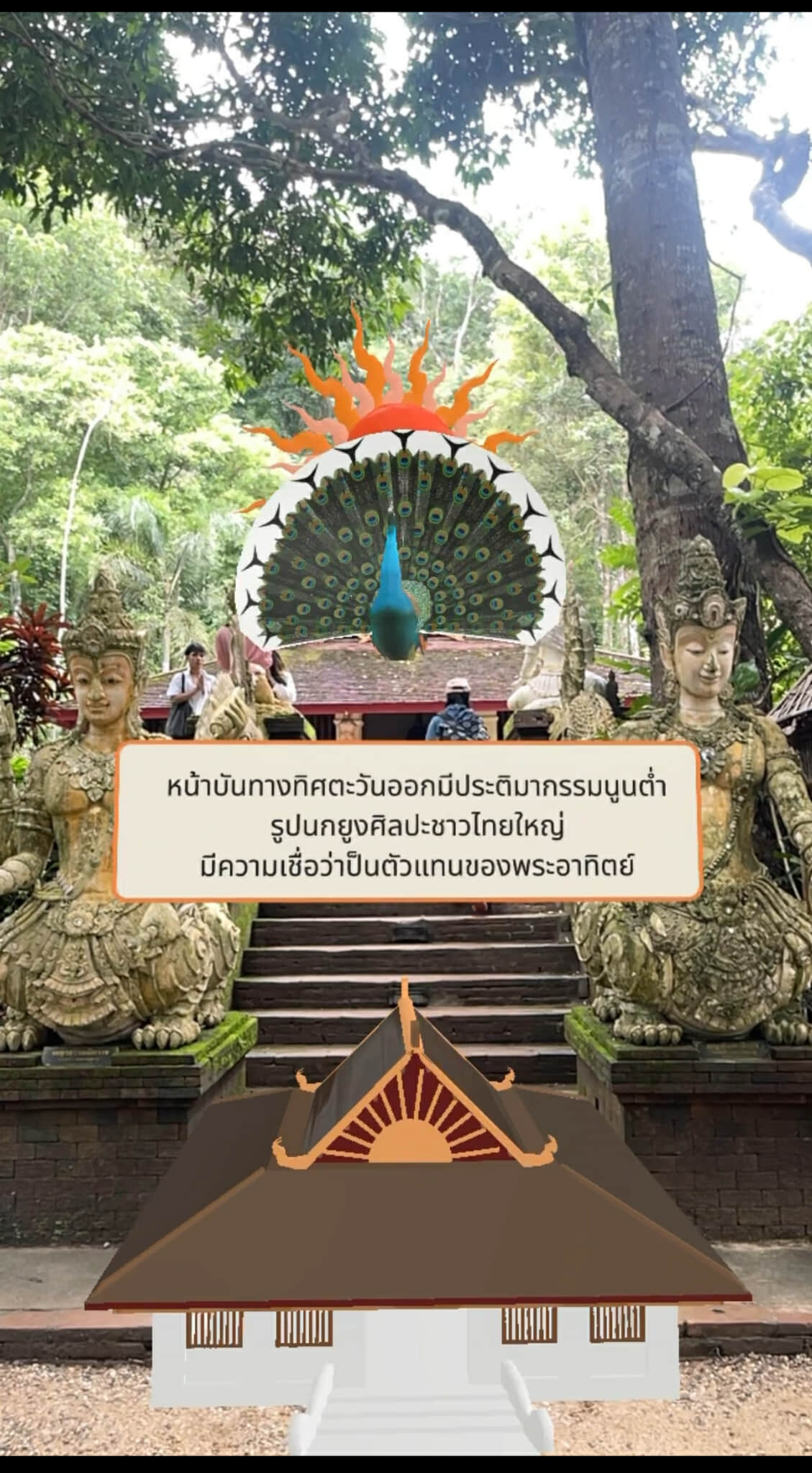
การท่องเที่ยววิถีใหม่หลังจากการระบาดของโควิด-19 โดยเฉพาะการท่องเที่ยวเชิงวัฒธรรมมีการนำเทคโนโลยีความเป็นจริงเสริม (Augmented Reality - AR) มาใช้เพื่อให้นักท่องเที่ยวสามารถรับข้อมูลวัฒนธรรมผ่านภาพเคลื่อนไหว 3 มิติ ทำให้ข้อมูลมีความทันสมัย น่าดึงดูดและสร้างประสบการณ์ที่น่าสนใจสำหรับนักท่องเที่ยวยุคใหม่ พร้อมอนุรักษ์มรดกทางวัฒนธรรมไทย โดยงานวิจัยนี้ศึกษาการพัฒนาเทคโนโลยีความเป็นจริงเสริม เพื่อส่งเสริมการท่องเที่ยวเชิงวัฒนธรรมของวัดผาลาด จังหวัดเชียงใหม่ ซึ่งมีวัตถุประสงค์เพื่อพัฒนาฟิลเตอร์ เป็นเทคโนโลยีความเป็นจริงเสริมในแพลตฟอร์มอินสตาแกรม โดยนำเสนอข้อมูลทางประวัติศาสตร์ และสถาปัตยกรรมของวัดผาลาด โดยเน้นการออกแบบเนื้อหา 3 มิติ เพื่อให้ผู้ใช้งานสามารถสำรวจและได้รับความรู้ของสถานที่สำคัญภายในวัด ได้แก่ หอพระเจ้าริมน้ำตก บ่อน้ำทิพย์ วิหาร และเจดีย์ ซึ่งได้รับการขึ้นทะเบียนอนุรักษ์จากกรมศิลปากร และประเมินผลรูปแบบการใช้งานกลุ่มตัวอย่าง ผลการวิจัย พบว่ากลุ่มนักท่องเที่ยววัยทำงาน ซึ่งเกิดระหว่างปี พ.ศ. 2523-2540 หรือที่เรียกว่ากลุ่มคนเจเนอเรชันวาย
มีความพึงพอใจในประสบการณ์การใช้ฟิลเตอร์ เทคโนโลยีความเป็นจริงเสริมอยู่ในระดับสูง โดยมีความ
พึงพอใจในด้านประสบการณ์ผู้ใช้งาน และระบบการใช้งานทั้งสองรวมเฉลี่ย 4.19 จากคะแนนเต็ม 5 รวมถึง ผลการเรียนรู้ก่อน และหลังใช้งานฟิลเตอร์ พบว่า ผู้ใช้งานมีความรู้ในข้อมูลสถาปัตยกรรมภายในวัดผาลาดเพิ่มขึ้นอย่างมีนัยสำคัญที่ระดับความเชื่อมั่นร้อยละ 95 นอกจากนี้ผลการศึกษาแสดงให้เห็นว่าประสบการณ์การใช้งาน มีความสัมพันธ์อย่างมีนัยสำคัญกับความชื่นชอบฟิลเตอร์ด้านแอนิเมชันในพื้นที่วิหาร และหอพระเจ้าริมน้ำตก นอกจากนี้ความชัดเจนของข้อความในระบบการใช้งาน มีความสัมพันธ์กับแอนิเมชันเช่นกัน สรุปได้ว่าเทคโนโลยีความเป็นจริงเสริมหรือฟิลเตอร์มีศักยภาพ ในการเสริมสร้างประสบการณ์ท่องเที่ยว
เชิงวัฒนธรรม รวมถึงสามารถใช้เป็นเครื่องมือในการสอดแทรกความรู้เชิงวัฒนธรรมของสถานที่ท่องเที่ยว
วัดผาลาด
Article Details

อนุญาตภายใต้เงื่อนไข Creative Commons Attribution-NonCommercial-NoDerivatives 4.0 International License.
เอกสารอ้างอิง
Brand matric research. (2018). Khrong kansueksa pharuetikam nakthongthiao chao Thai thi mi sakkayaphap nai kan chai chai: raingan chabapsombun. (In Thai) [A study project on the behavior of Thai tourists with potential spending: a complete report]. Retrieved January 21, 2024, from https://digital.library.tu.ac.th/tu_dc/fron tend/Info/item /dc:137612
Business Instagram. (2019). Khumue naenam doi la iat Instagram stories thi sanuksanan lae totop dai. (In Thai) [Detailed guide: create fun and interactive Instagram stories]. Retrieved January 20, 2024, from https://business.instagram.com
Dee-aim, T. et al. (2021). Thatsanakhati khong nakthongthiao chen wai kap watthanatham kan sel fi bon sue sangkhom onlai. (In Thai) [The Attitudes of Generation Y Tourists toward the Selfie Culture on Social Media]. Academic and Research Journal of Liberal Arts, 16(1), 147-162.
Digital Economy Promotion Agency. (2022). Digital platform phuea kan thongthiao baep new normal: su smart tourism. (In Thai) [Digital platform for new normal tourism: towards smart tourism]. Retrieved February 24, 2024, from https://www. depa.or.th/th/article-view/digital-platform-new-normal-smart-tourism
Fine Arts Department. (2001). Prakat Kromsinlapakon Rueang Khuen Thabian Lae Kamnot Khet Thidin Boransathan [Wat Pha Lat ChangwatChiang Mai Wat Ku Khao Rang ChangwatPhayao.] Ratchakitchanubeksa. (In Thai) [Announcement of the Fine Arts Department on the registration and designation of land boundaries for ancient monuments: Wat Pha Lat, Chiang Mai Province. Royal Gazette]. Retrieved January 21, 2024, from https://dl.parliament.go.th/handle/20.500.13072 /285505
Kasempholkoon, A. (2020). Thai cultural heritage into the modern world. Retrieved September 15, 2020, from https://www.timeshighereducat ion.com
Kirdsiri, K. & Buranaut, I. (2012). Sathapattayakam ho phra chan rim nam tok pha Lat Wat Pha Lat Sok Tha Kha Mi choeng Doi Su Thep Changwat Chiang Mai. (In Thai) [The architecture of Wat Pha Lat waterfall shrine, Chiang Mai]. NAJUA: Architecture, Design and Built Environment, 26, 301–301.
Kinko, I. (2023). Choosing the most appropriate platform to create social augmented reality. Tampere University of Applied Sciences. Retrieved September 15, 2020, from https://www.theseus.fi/bitstream/handle/10024/796293/Kinko_Irina.pdf?sequence=3
Limpinan, P. (2019). Promoting Maha sarakham tourism by using augmented reality. Journal of Technology Management Rajabhat Maha Sarakham University, 6(1), 8-16.
Pattaramoon, N. (2023). Phra ariya bukkhon see khan. (In Thai) [Four stages of enlight enment]. Retrieved February 22, 2024, from https://db.sac.or.th/inscr iptions/blog /detail/27133
Peerapan Wisanlaseth. (2010). International charters and standards related to urban conservation. Journal of Architectural Research and Planning, 7(1), 1-10
Pranoto, H. et al. (2023). Augmented reality navigation application to promote tourism to local state attraction "Lawang Sewu". Procedia Computer Science, 216, 757-764.
Rujirakul, K., & Krompho, S. (2023). Development of an augmented reality application for promoting tourism and products in Chokchai District, Nakhon Ratchasima. Journal of Information Science Research and Practice, 41(3), 15-31.
Suthep Municipality. (2011). Khomun thongthiao nai tambon Suthep Wat Pha Lat. (In Thai) [Tourist information in Suthep Subdistrict, Wat Pha Lat]. Retrieved February 25, 2024, from http://www.suthep.go.th/travel_view.php?cateid=1&id=36
Thailand Creative & Design Center. (2022). Theknoloyi samuean ching AR VR lae kan phatthana theknoloyi augmented reality. (In Thai) [AR/VR and technology development]. Retrieved January 21, 2024, from https://www.tcdcmaterial.com /th/article/te chnology-innovation/33740
