
จังหวะเมืองที่ยังหลงเหลือกับการสร้างความรู้สึกของสถานที่: กรณีศึกษาตลาดใต้ จังหวัดพิษณุโลก
Article Sidebar
Main Article Content
บทคัดย่อ
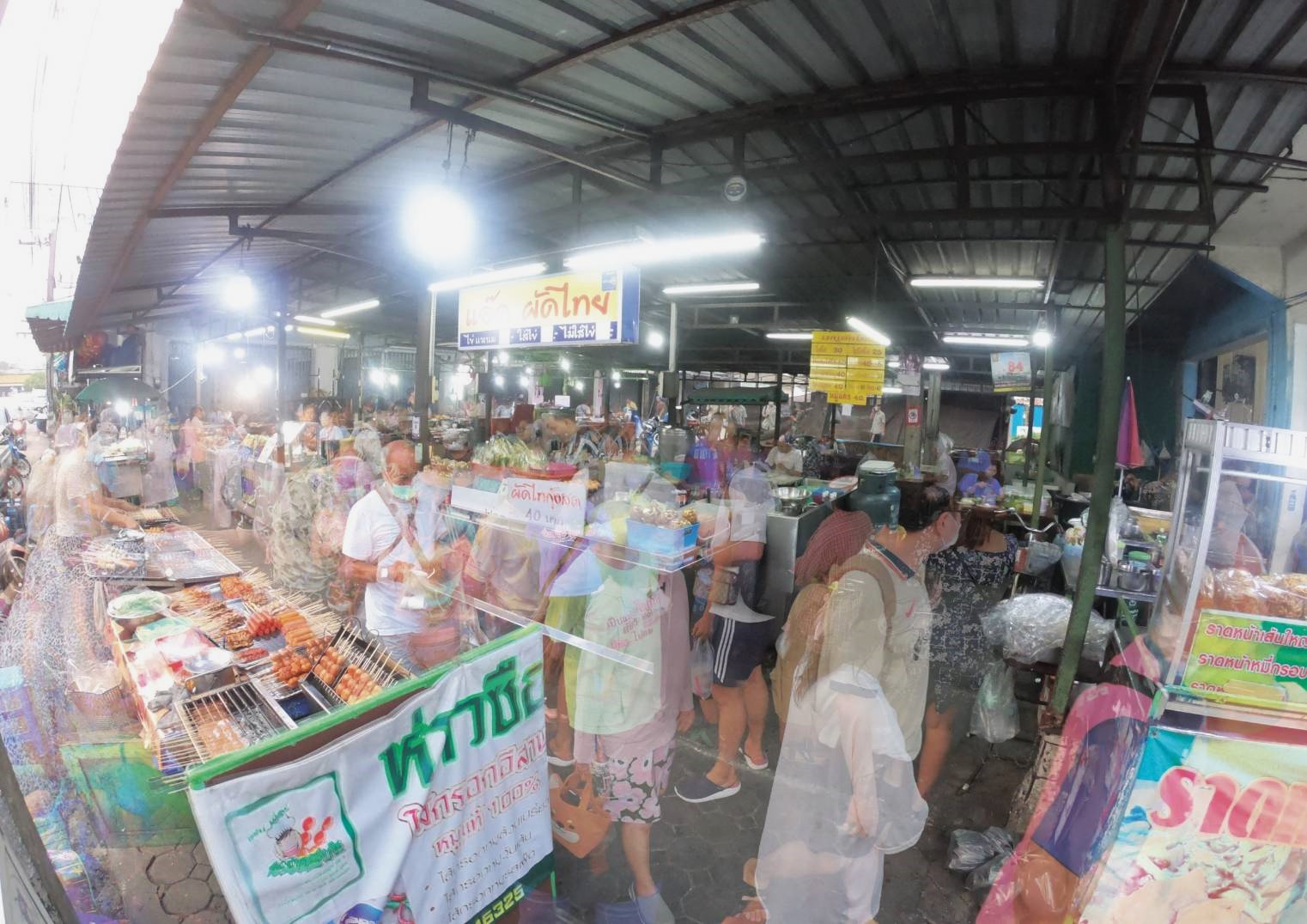
บทความนี้ มีวัตถุประสงค์เพื่อนำเสนอแนวความคิดทางเลือก ของการสร้างความรู้สึกของสถานที่ ที่มุ่งเน้นไปที่การวิเคราะห์วิถีชีวิตและกิจกรรมมากกว่าการวิเคราะห์องค์ประกอบทางกายภาพตามแนวความคิดหลักของการออกแบบและการสร้างสภาพแวดล้อมเมือง โดยนำเสนอว่า หลักการสร้างความรู้สึกของสถานที่ที่หนึ่ง อาจจะไม่ได้อาศัยองค์ประกอบทางกายภาพที่โดดเด่น วัตถุสัญลักษณ์ หรือสภาพแวดล้อมที่ถูกจัดตั้งขึ้นโดยนักออกแบบเสมอไป แต่ความรู้สึกของสถานที่ อาจจะเกิดขึ้นโดยกิจกรรมเก่าแก่ในชีวิตประจำวันที่คงอยู่ในพื้นที่มานาน และถูกปฏิบัติสืบต่อกันผ่านรุ่นสู่รุ่น บทความนี้วิพากษ์คุณค่าและหน้าที่ของกิจกรรมเหล่านั้นผ่านแนวความคิด “จังหวะเมืองที่ยังหลงเหลือ” โดยศึกษาคุณค่าและหน้าที่ของกิจกรรมเหล่านั้นจากชุมชนชาวไทยเชื้อสายจีนที่อยู่ในเขตเมือง ผ่านสามวิธีวิจัยเชิงคุณภาพ ได้แก่ การเดินสัมภาษณ์ การวิเคราะห์จังหวะ และการสัมภาษณ์โดยใช้รูปภาพ โดยผลของการวิจัย พบว่า จังหวะของเมืองที่ยังหลงเหลือมีความโดดเด่นด้านการสร้างสภาพแวดล้อมเมืองที่มีชีวิตและส่งต่อประวัติศาสตร์ที่หลากหลายของพื้นที่ คุณค่าเหล่านั้น ทำให้กลายเป็นภาพจำของพื้นที่ในการรับรู้และจดจำของผู้คนมากกว่าหมุดหมายทางกายภาพที่ถูกสร้างขึ้นวัตถุประสงค์ของงานวิจัยนี้ คือ การเติมเต็มองค์ความรู้ด้านการออกแบบสภาพแวดล้อมเมืองที่เหมาะสมกับบริบทและประวัติศาสตร์ของเมืองไทยที่ความโดดเด่นเชื่อมโยงกับกิจกรรมชั่วคราวบนพื้นที่สาธารณะ
Article Details

อนุญาตภายใต้เงื่อนไข Creative Commons Attribution-NonCommercial-NoDerivatives 4.0 International License.
เอกสารอ้างอิง
Alexander, C. (1979). The timeless way of building. New York: Oxford University Press.
Askew, M. (1993). The making of modern Bangkok: state, market and people in the shaping of the Thai metropolis. Bangkok: Thailand Development Research Institute Foundation.
Askew, M. (1996). The rise of Moradok and the decline of the yarn heritage and cultural construction in urban Thailand. Journal of Social Issues in Southeast Asia, 11(2), 183-210.
Askew, M. (2002). Bangkok : place, practice and representation. London: Routledge.
Bentley, I., et al (1985). Responsive environments: a manual for designers. London: Architectural Press.
Berger, J. (1980). Another way of telling. Journal of Social Reconstruction, 1, 57-75.
Boonjubun, C. (2017). Conflicts over streets: the eviction of Bangkok street vendors. Cities, 70, 22-31.
Brodkey, L. (1987). Writing ethnographic narratives. Written Communication, 4(1), 25-50.
Buckley, L. (2014). Photography and photo-elicitation after colonialism. Cultural Anthropology, 29(4), 720-743.
Carmona, M., et al (2003). Public places, urban spaces : the dimensions of urban design. Boston: Architectural Press.
Chaimanee, A. (2023). The historical traces of residual rhythms in maintaining the Identity, authenticity and sense of place in a contemporary city: the Sino-Thai urban livelihoods in Thai cities. (Doctoral dissertation). London: University College London.
Cheunsuwimol, B. (2000). The familay system and social realtionship of Sino-Thais in Bo-Be community Chulalongkorn University. Bangkok: Chulalonkorn. https://digiverse. chula.ac.th/Info/item/dc:13713
Chiozzi, P. (1989). Photography and anthropological research: three case studies. In Flaes, R. B. (Ed.), Eyes Across the water (pp 43-50). Amsterdam: Het Spinhuis.
Chirapiwat, T. (2005). Street configurations and commercial and mixed-use land-use patterns: a morphological study of the northeastern region of Bangkok to evaluate recent transportation and land-use plans (Doctoral dissertation). Michigan: University of Michigan.
Conzen, M. R. G. (1965). Book review: the city in geography : an inaugural lecture by E. Jones, London school of economics and political science, 1962. Urban Studies, 2, 31-109.
Cullen, G. (1961). The concise townscape. New York: Routledge/Architectural Press.
Davis, H. (2012). Living over the store : architecture and local urban life. London : Routledge.
Harper, D. (2002). Talking about pictures: a case for photo elicitation. Visual Studies, 17(1), 13-26.
Hayden, D. (1995). The power of place : urban landscapes as public history. Massachusetts: MIT Press.
Jacobs, J. (1961). The death and life of great American cities. New York: Random Houses.
King, R. & Boonanan, N. (2018). Informality as heritage, heritage and identity in contem- porary Thailand: memory, place and power. R. King. Singapore: NUS Press.
King, R. (2009). Bangkok space, and conditions of possibility. Environment and Planning D: Society and Space, 26(2), 315-337.
King, R. (2011). Reading Bangkok. Singapore: NUS Press.
Kusenbach, M. (2003). Street phenomenology: the go-along as ethnographic research tool. Ethnography, 4(3), 455-485.
Ladsena, C. (2010). Physical structure and element of Talat Phlu old commercial districts. [Master's thesis, Chulalongkorn University]. https://digital.car.chula. ac.th/chulaetd/71613/
Lefebvre, H. (1991). The production of space. Cambridge: Blackwell.
Lynch, K. (1960). The image of the city. Cambridge: MIT Press.
Lynch, K. (1981). A theory of good city form. Cambridge: MIT Press.
Mateo-Babiano (2012). Public life in Bangkok's urban spaces. Habitat International, 36(4), 452-461.
Montgomery, J. (1998). Making a city: urbanity, vitality and urban design. Journal of Urban Design, 3(1), 93-116.
Navapan, N. (2014). Absolute monarchy and the development of Bangkok's urban spaces. Planning Perspectives, 29(1), 1-24.
Nirathorn, N. (2006). Fighting poverty from the street: a survey of street food vendors in Bangkok. Bangkok: International Labour Office.
Oranratmanee, R. and V. Sachakul (2014). Streets as public spaces in Southeast Asia: case studies of Thai pedestrian streets. Journal of Urban Design, 19(2), 211-229.
Pakitnontrakan, C. (2003). Preserve or destroy history? Silapa-Watthanatham (pp 8-15). Bangkok: Matichon. https://www.silpa-mag.com/history/article_10191
Potjanalawan, P. (2014). The role of Sino-Thai in the production of urban space in Thailand in the 1950s. Journal of Architectural/Planning Research and Studies (JARS), 11(1), 37-54.
Punter, J. (1991). Participation in the design of urban space. Landscape Design, 200, 24-27.
Relph, E. C. (1976). Place and placelessness. London: Pion.
Ricklefs, M. C., et al. (2012). A new history of Southeast Asia, Houndmills, Basingstoke, Hampshire. New York: Palgrave Macmillan.
Rimmer, P. J. & Dick, H. W. (2009). The city in Southeast Asia: patterns, processes, and policy. Singapore: NUS Press.
Skinner, G. W. (1957). Chinese society in Thailand: an analytical history. Ithaca: Cornell University Press.
Skinner, G. W. (1958). Chinese assimilation and Thai politics. The Journal of Asian Studies, 16(2), 237-250.
Van Roy, E. (2017). Siamese melting pot: ethnic minorities in the making of Bangkok. Singapore: ISEAS–Yusof Ishak Institute.
Wunderlich, F. (2010). The aesthetics of place-temporality in everyday urban space: the case of Fitzroy Square, Geographies of Rhythm. T. Edensor (pp. 45-56). New York: Ashgate Publishing.
Wunderlich, F. (2013). Place-temporality and urban place-rhythms in urban analysis and design: an aesthetic akin to music. Journal of Urban Design, 18(3), 383-408.
Wunderlich, F. (2014). Place-temporality and rhythmicity: a new aesthetic and methodological foundation for urban design theory and practice. In Carmona, M. (Ed.). Explorations in urban design: an urban design research primer (pp. 60-73). United Kingdom: Routledge.
Yin, R. K. (2014). Case study research: design and methods. Thousand Oaks: Gage Publications. Inc.
