
แนวทางการออกแบบวัสดุก่อผนังทางสถาปัตยกรรมโดยใช้ไมซีเลียม
Article Sidebar
Main Article Content
บทคัดย่อ
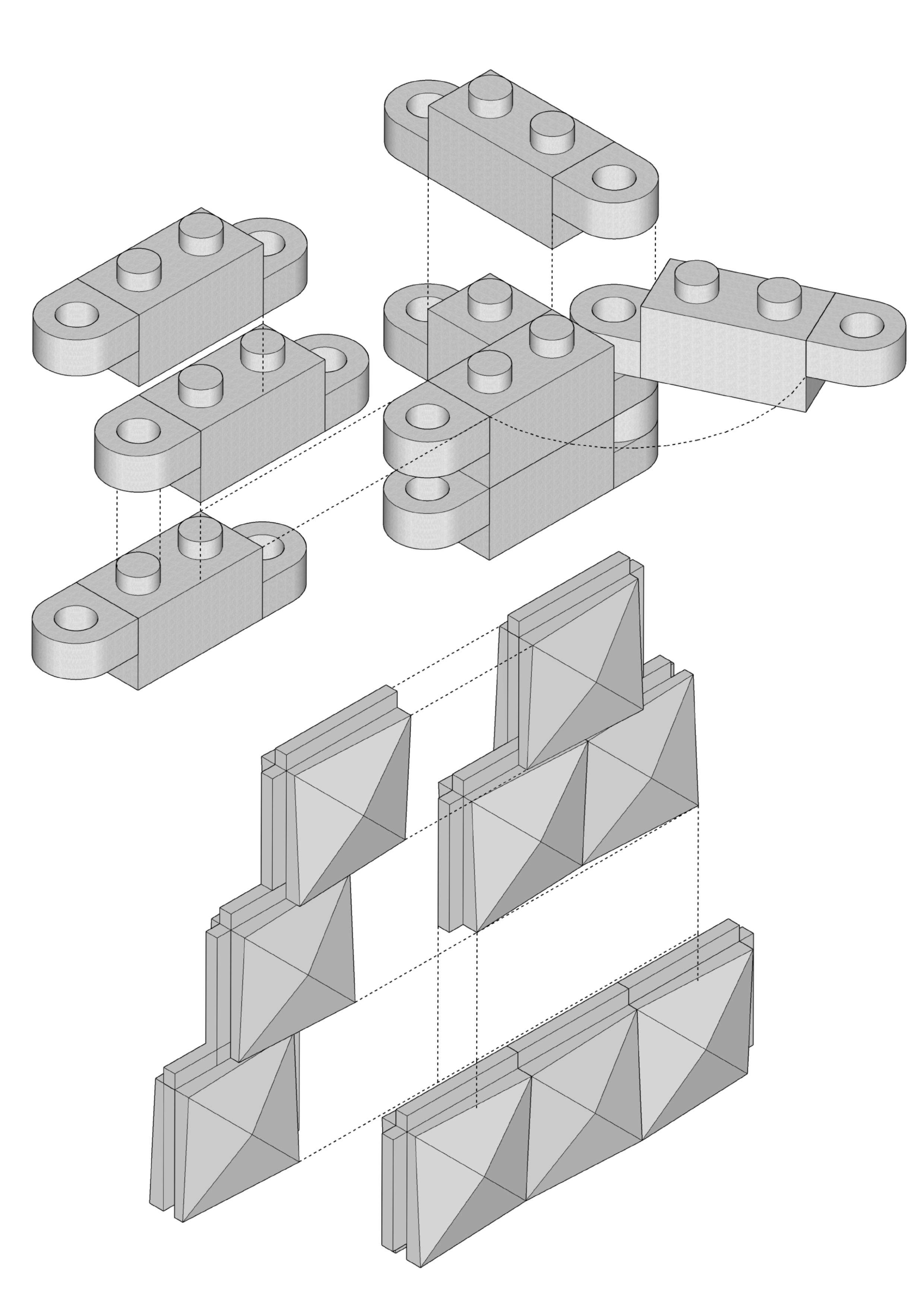
การศึกษาเกี่ยวกับการออกแบบวัสดุก่อสร้างด้วยไมซีเลียม (เส้นใยเชื้อรา) มุ่งเน้นการพัฒนาแนวทางสร้างวัสดุที่ยั่งยืนและเป็นมิตรกับสิ่งแวดล้อม โดยนำเสนอคุณสมบัติพิเศษของไมซีเลียม เช่น น้ำหนักเบา ความยืดหยุ่น และการเจริญเติบโตตามธรรมชาติ ซึ่งข้อจำกัดสำคัญของไมซีเลียม คือ ความสามารถในการรับแรงอัดที่ต่ำ เพื่อแก้ปัญหาดังกล่าว การออกแบบวัสดุจึงแบ่งออกเป็น 2 รูปแบบหลัก ได้แก่ (1) บล็อคแบบมีเดือยและช่องเสียบเดือย และ (2) บล็อคสี่เหลี่ยมจัตุรัสที่มีร่องและลิ้น ซึ่งช่วยให้สามารถประกอบวัสดุได้ทั้งในแนวตั้งและแนวนอนโดยไม่ต้องใช้ซีเมนต์ ผลการศึกษา พบว่า บล็อคไมซีเลียมขนาดเล็กมีความหนาแน่นน้อยกว่าและน้ำหนักเบากว่า แต่สามารถรับแรงดัดได้มากกว่า ทำให้เหมาะสำหรับการออกแบบโครงสร้างที่ต้องการความยืดหยุ่นและการเสริมความแข็งแรงด้วยวัสดุอื่น ๆ เช่น ไม้ไผ่ สามารถพัฒนาต่อยอดในการสร้างผนังทรงโค้งหรือเส้นรูปผนังโค้งสวยงามและมีอิสระในการออกแบบมากขึ้น ในขณะที่บล็อคขนาดใหญ่มีน้ำหนักมากกว่าและสามารถรับแรงอัดได้ดี แต่มีความสามารถในการรับแรงบิดได้น้อยกว่า จึงเหมาะสำหรับการนำมาพัฒนาใช้ในวัสดุก่อที่ต้องการความมั่นคงและความแข็งแรง มีความหนาและใช้การตกแต่งเพื่อความสวยงามที่พื้นผิวแทน นอกจากนี้ การออกแบบแม่พิมพ์ยังมีผลกระทบต่อคุณสมบัติเชิงกายภาพและการออกแบบของไมซีเลียม พบว่า การใช้แม่พิมพ์ที่ซับซ้อนเกินไปอาจทำให้ชิ้นงานเสียหาย ดังนั้นการออกแบบที่เรียบง่ายจึงช่วยเพิ่มความแข็งแรงในด้านการรับแรงดัดของไมซีเลียม และการเลือกใช้วัสดุที่เหมาะสม เช่น อะคริลิคใสหรือวัสดุทดแทนอะคริลิคใส จะช่วยลดต้นทุนในการผลิตและปรับปรุงกระบวนการผลิตได้ รวมถึงการนำเสนอแนวทางใหม่ในการพัฒนาวัสดุก่อสร้างที่ยั่งยืนจากไมซีเลียมสำหรับอนาคตต่อไป
Article Details

อนุญาตภายใต้เงื่อนไข Creative Commons Attribution-NonCommercial-NoDerivatives 4.0 International License.
เอกสารอ้างอิง
Aiduang, W. et al. (2022a). Amazing fungi for eco-friendly composite materials: a comprehensive review. Journal of Fungi, 8(8), 842-870.
Aiduang, W. et al. (2022b). Mechanical, physical, and chemical properties of mycelium-based composites produced from various lignocellulosic residues and fungal species. Journal of Fungi, 8(11), 1125-1146.
Attias, N. et al. (2019). Implementing bio-design tools to develop mycelium-based products. The Design Journal, 22, 1647-1657.
Bahrami, A. & Rashid, P. S. M. (2023). A state-of-the-art review on axial compressive behavior of concrete-filled steel tubes incorporating steel fiber and GFRP jacketing. Buildings, 13(3), 729-765.
Chitiat, P., Charoennetkun, C. & Anusiri, M. (2013). It muan bao phasom fang khao phuea pen chanuan kaan khwam ron. (In Thai) [Lightweight bricks mixed with rice husks for thermal insulation]. In Damnet, S. (Ed.). Proceeding, The 10th KU KPS National Conference. (pp. 1414-1421). Bangkok: Kasetsart University.
Chongphonsit, O. & Yamkam, C. (2013). Kansueksa sombat khong it muan bao thi mi suanphasom khong khi lueai lae phaktopchawa. (In Thai) [A case study: properties of lightweight brick mixed with sawdust and water hyacinth] (Master’s thesis). Bangkok: Rajamangala University of Technology Phra Nakhon.
Chusit, P. & Nilat, N. (2018). Rai ngan wichai kan phatthana phalittaphan phaen yipsam praphet thon fai phasom senyai chak bai ton khaophot sam rap chai nai akhan prayat phalangngan. (In Thai) [Research report on the development of fire-resistant composite gypsum sheets reinforced with cornstalk fiber for energy-efficient building]. Bangkok: Rajamangala University of Technology Phra Nakhon.
Costigan, A. & Pavia, S. (2009). Compressive, flexural and bond strength of brick/lime mortar masonry. Rome, Proceeding, The International Conference on Protection of Historic Constructions (PROHITEC09) (pp. 1609-1615). Leiden: University of Leiden.
Dorlo, N. (2009). Watsadu muan bao thi chai nai ngan utsahakam kosang. (In Thai) [Lightweight materials used in the construction industry]. Princess of Naradhiwas University Journal, 1(3), 48-62.
Elsacker, E. et al. (2019). Mechanical, physical and chemical characterisation of mycelium-based composites with different types of lignocellulosic substrates. PLoS One, 14(7), 1-20.
Fisher, A. (2010). Industrial-strength fungus. Retrieved May 7, 2024, from https://time.com/archive/6596915/industrial-strength-fungus/
Ghazvinian, A. & Gursoy, B., (2022). Mycelium-based composite graded materials: assessing the effects of time and substrate mixture on mechanical properties. Biomimetics, 7(2), 48-62.
Hoeven, D. V. D. (2020). Mycelium as a construction material. Retrieved May 7, 2024, from https://www.biobasedpress.eu/2020/04/mycelium-as-a-construction-material/
Inthabut, N. (2018). Nawattakam it blok prasan tanthan khwam ron chak fang khao lae thao klaep. (In Thai) [Innovative heat-resistant interlocking bricks made from rice straw and rice husk ash]. Nonthaburi: The Rajamangala University of Technology Suvarnabhumi Research Promotion Fund 2019.
Jain, U., Jain, M. & Mandaokar, S. (2018). Comparative study of AAC blocks and clay bricks and costing. International Journal of Research in Engineering, Science and Management, 1(9), 539-543.
Jiranukul, P. et al., (2024). Comparative evaluation of mechanical and physical properties of mycelium composite boards made from lentinus sajor-caju with various ratios of corn husk and sawdust. Journal of Fungi, 10(9), 634-653.
Klinkhachon, T. et al. (2022). Phon khong watsadu poz zo lan thao klaep to sombat khong it muan bao. (In Thai) [The effect of rice husk ash pozzolan on the properties of lightweight bricks]. Journal of Science and Science Education, 5(2), 182-190.
Lachheb, M., Youssef, N. & Younsi, Z. (2023). A comprehensive review of the improvement of the thermal and mechanical properties of unfired clay bricks by incorporating waste materials. Buildings, 13(9), 2314-2343.
Mostafa, M. & Uddin, N. (2015). Effect of banana fibers on the compressive and flexural strength of compressed earth blocks. Buildings, 5(1), 282-296.
Nonthasen, P. et al. (2022). Kan phatthana khonkrit muan bao doi mi suanphasom chak fang khao lae maiphai. (In Thai) [Development of lightweight concrete with components from rice husks and bamboo]. Journal of Science and Technology, Rajabhat Maha Sarakham University, 7(1), 23-42.
Pattavong, N. (2011). Phanang phai nok samrap ban diao thi mo som kap prathet khet ron rhuen. (In Thai) [External walls for detached homes that are suitable for tropical countries] (Master’s thesis). Bangkok: Chulalongkorn University.
Phonphuak, N. (2018). Rai ngan wichai chabap sombun nawattakam watsadu kosang thi pen mit kap sing waed lom kan phalit it mon doi chai watsadu chiwa muan phuea khwam yangyuen khong watsadu kosang. (In Thai) [Complete research report: innovation in eco-friendly building materials: the production of traditional bricks using biomass materials for the sustainability of building materials]. Maha Sarakham: Thailand Research Fund 2018.
Rigobello, A., Colmo, C. & Ayres, P. (2022). Effect of Composition Strategies on Mycelium-Based Composites Flexural Behaviour. Biomimetics, 7(2), 53-62.
Rotsin, K. (2010). Korani sueksa panha naeo thang kan kaekhai kan taekrao khong phanang it muan bao. (In Thai) [A case study of a crack problem and remedies in light-weight brick walls]. Journal of Industrial Technology, 6(1), 28-32.
Teeraphantuvat, T. et al. (2024). Improving the physical and mechanical properties of mycelium-based green composites using paper waste. Polymers, 16(2), 262-280.
Voutetaki, M. E. & Mpalaskas, A. C. (2024). Natural fiber-reinforced mycelium composite for innovative and sustainable construction materials. Fibers, 12(7), 57-86.
WBCSD. (2002). The cement sustainability initiative: our agenda for action report. Geneva: World Business Council for Sustainable Development.
Wei, H., Wu, T. & Yang, X. (2020). Properties of lightweight aggregate concrete reinforced with carbon and/or polypropylene fibers. Materials, 13(3), 640-660.
Xu, T. & Garrecht, H. (2024). Effects of mixing techniques and material compositions on the compressive strength and thermal conductivity of ultra-lightweight foam concrete. Materials, 17(11), 2640-2569.
Yang, L., Park, D. & Qin, Z. (2021). Material function of mycelium-based bio-composite: a review. Frontiers in Materials, 8, https://doi.org/10.3389/fmats.2021.737377.
