
Factors Influencing The Institutional Reputation of Universities in Thailand
Article Sidebar
Main Article Content
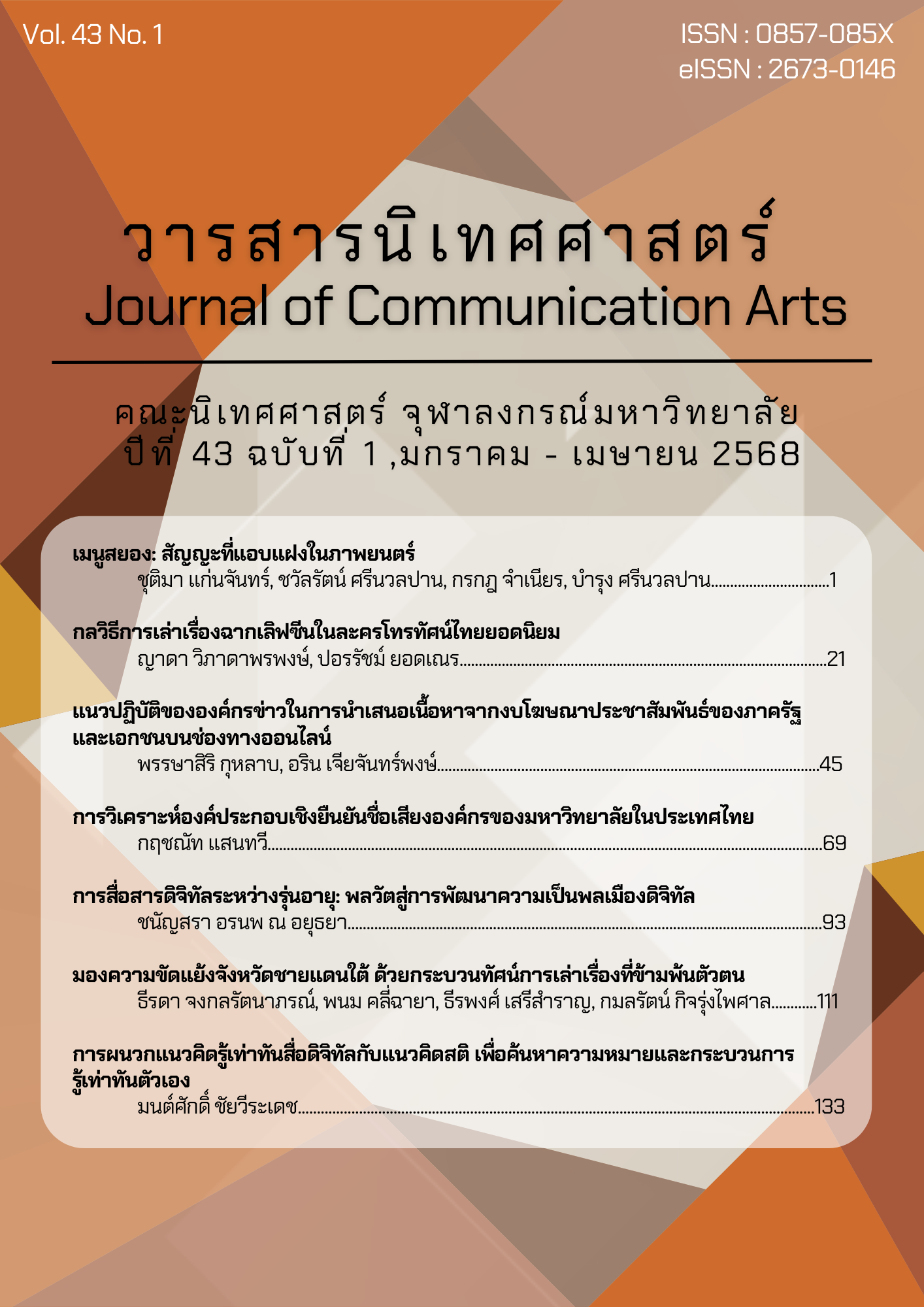
Abstract
This research aims to investigate the organizational reputation attributes of universities in Thailand and to analyze the confirmatory factors analysis of organizational reputation attributes of Thai universities. This quantitative research study utilized a closed-ended questionnaire to collect data from university students aged 18 and above across nine provinces in Thailand: Chiang Mai, Chiang Rai, Phitsanulok, Chonburi, Ubon Ratchathani, Nakhon Ratchasima, Songkhla, and Phuket. Each province contributed a sample size of 44-45 participants, resulting in a total sample of 400 respondents. The study aimed to investigate the organizational reputation attributes of Thai universities as perceived by these students. The research findings revealed that the overall level of appreciation, respect, trust, and admiration for universities among students was very high (Mean = 4.48, SD = 0.40). The highest mean score was found in the governance dimension (Mean = 4.54, SD = 0.56), indicating a very high level of satisfaction in this area. The confirmatory factor analysis model demonstrated a moderate or acceptable level of fit to the data, as indicated by the following fit indices: χ² = 1834.97, df = 928, p < .001, RMSEA = .049 (90% CI [0.046, 0.052]), CFI = .98, and SRMR = .048. The most significant indicator of institutional reputation among Thai universities was leadership, accounting for 84% of the perceived reputation. Citizenship followed closely at 80%, and workplace came in third at 78%.
Article Details

This work is licensed under a Creative Commons Attribution-NonCommercial-NoDerivatives 4.0 International License.
References
กฤชณัท แสนทวี และรุ่งนภา พิตรปรีชา. (2556). ปัจจัยที่มีอิทธิพลต่อชื่อเสียงองค์กรและการจัดการชื่อเสียงองค์กรธุรกิจในประเทศไทย. วารสารนิเทศศาสตร์, 31(4), 1-12.
กฤชณัท แสนทวี และประมา ศาสตระรุจิ. (2559). ปัจจัยที่มีอิทธิพลต่อชื่อเสียงองค์กรของมหาวิทยาลัยในกรุงเทพมหานคร. วารสารวิชาการมหาวิทยาลัยราชภัฏกาญจนบุรี, 5(2), 33-39.
นงค์ลักษณ์ โชติวิทยธานินทร์, อรุณี หงษ์ศิริวัฒน์ และพันธ์ศักดิ์ พลสารัมย์. (2560). การปฏิบัติที่เป็นเลิศด้านการจัดการชื่อเสียงของสถาบันอุดมศึกษาที่มีชื่อเสียงระดับโลก. วารสารวิทยาลัยดุสิตธานี, 11(2), 236-253.
พระธีรวัฒน์ อั้นเต้ง. (2565). แนวทางในการพัฒนาการอุดมศึกษาของไทยตามหลักการประกันคุณภาพการศึกษาระดับอุดมศึกษา. Journal of Buddhist Innovation and Management, 6(4), 224-235.
ศูนย์พัฒนาธุรกิจเพื่อความยั่งยืน. (ม.ป.ป.). บรรษัทภิบาลหรือการกำกับดูแลกิจการ. ตลาดหลักทรัพย์แห่งประเทศไทย. วันที่เข้าถึงข้อมูล 30 มีนาคม 2565 แหล่งที่มา https://setsustainability.com/page/corporate-governance.
สถาบันจัดอันดับด้านการศึกษา. (ม.ป.ป.). การจัดอันดับมหาวิทยาลัยคืออะไร มีสำนักไหนบ้าง?. วันที่เข้าถึงข้อมูล 30 มีนาคม 2565 แหล่งที่มา https://www.thaitopu.com/content/57
สายันต์ โสธะโร. (2559). การศึกษาปัจจัยที่มีผลต่อการตัดสินใจเลือกเข้าศึกษาต่อระดับปริญญาตรีในคณะวิทยาศาสตร์ มหาวิทยาลัย
ศรีนครินทรวิโรฒ: โดยการวิเคราะห์องค์ประกอบร่วม. วารสารวิทยาศาสตร์ มศว, 32(2), 257-275.
สุภมาส อังสุโชติ, สมถวิล วิจิตรวรรณา, และรัชนีกูล ภิญโญภานุวัฒน์. (2552). สถิติวิเคราะห์สำหรับการวิจัยทางสังคมศาสตร์และพฤติกรรมศาสตร์: เทคนิคการใช้โปรแกรม LISREL (พิมพ์ครั้งที่ 2). เจริญดีมั่นคงการพิมพ์. กรุงเทพฯ.
สำนักข่าวการศึกษาไทย. (2565, 25 มีนาคม). อว.เผยข้อมูลผู้เรียนรวม ปีการศึกษา 2565 ภาคการศึกษาที่ 1 มีทั้งสิ้น 1,307,622 คน “ม.เกษตรฯ” จำนวนมากสุด. ข่าวการศึกษาไทย. วันที่เข้าถึงข้อมูล 30 มีนาคม 2565 แหล่งที่มา https://thaiedunews.net/rank/
อติพร เกิดเรือง, ไชยวัฒน์ ค้ำชู และชัยพัฒน์ พันธุ์วัฒนสกุล. (2564). แนวทางการส่งเสริมการเรียนรู้ในศตวรรษที่ 21 ของสถาบันอุดมศึกษาไทย. วารสาร มจร อุบลปริทรรศน์, 6(1), 781-790.
Barnett, M. L., Jermier, J. M., & Lafferty, B. A. (2006). Corporate Reputation: The definitional landscape. Unpublished manuscript, University of South Florida, US.
Telci, E. and Kantur, D., (2014). University Reputation: Scale Development and Validation. Journal Review of Social, Economic and Administrative Studies, 28(2), 49-74.
Kaushal, V., Jaiswal, D., Kant, R., & Ali, N. (2022). Determinants of university reputation: conceptual model and empirical investigation in an emerging higher education market. International Journal of Emerging Markets, 17(6), 1361-1383.
Ma, A.-h. S. (2021). Assessing the Effects of University Reputation and City Image onInternational Student Destination Choice: Evidence from a Flagship University in Taipei. Education and Urban Society, 54(10), 1-18.
P´erez, J. P., & Torres, E. M. (2017). Evaluation of the organizational image of a university in a higher education institution. Contaduria y Administracion, 62(1), 123–140.
Pitpreecha, R. (2014). Indicator for Measuring University Reputation in Thailand. ASBBS Annual Conference: Las Vegas, 21(1), 600-609.
Telci, E., & Kantur, D. (2014). University reputation: Scale development and validation. Journal of Social, Economic and Administrative Studies, 28(2), 49-74.
Saleem, S. S., Moosa, K., Imam, A., & Khan, R. A. (2017). Service quality and student satisfaction: the moderating role of university culture, reputation and price in education sector of pakistan. Iranian Journal of Management Studies, 10(1), 237–258.
Smaiziene, I., & Jucevicius, R. (2009). Corporate reputation: Multidisciplinary richness and search for a relevant definition. Inzinerine Ekonomika-Engineering Economics, 2(April), 91-101.
Zyryanova, V. A., Goncharova, N. A. and Orlova T. S. (2020). Developing a Model of Strategic University Reputation Management in the Digitalization Period in Education. Advances in Social Science, Education and Humanities Research, 437, 726-732.
