
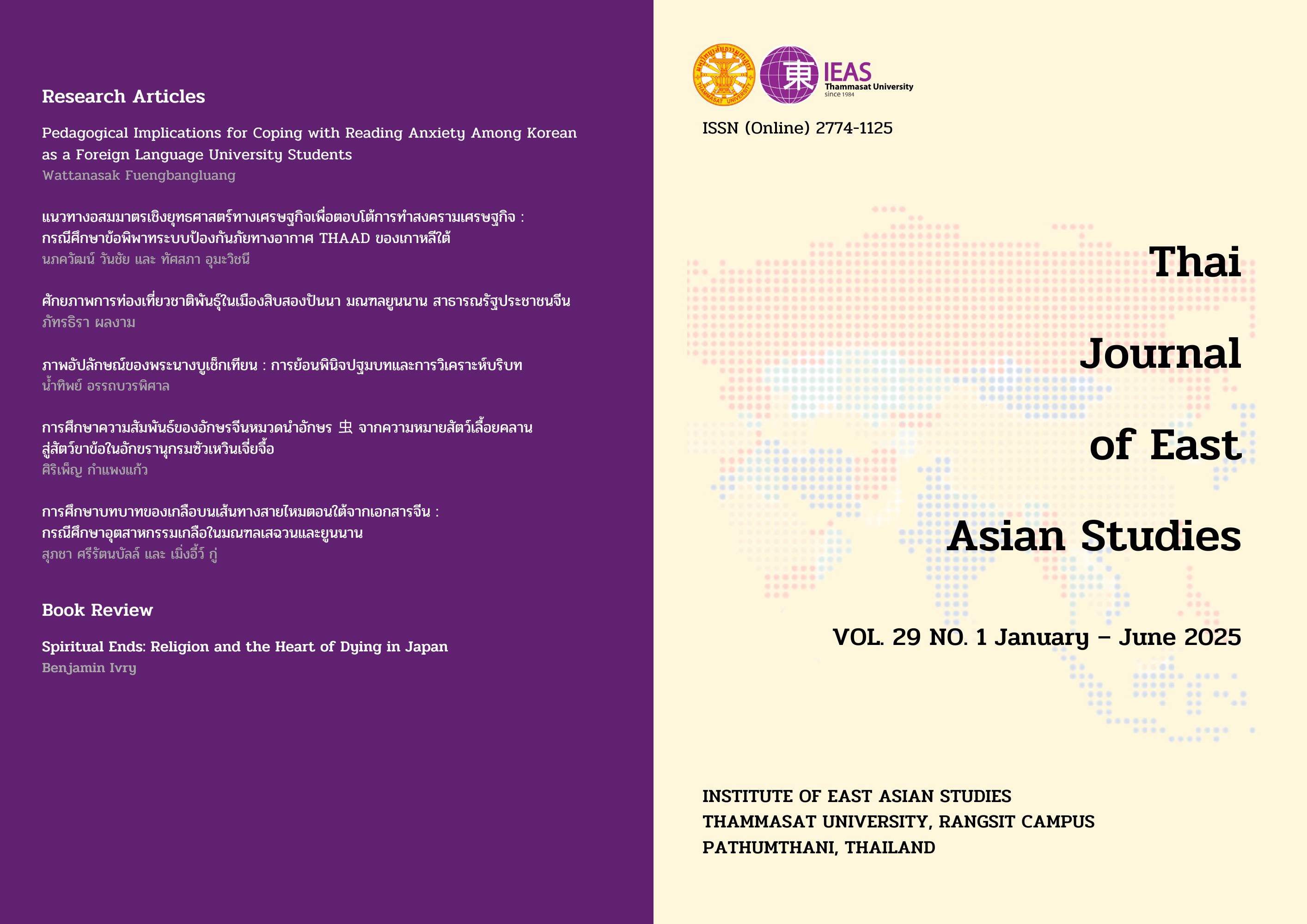
แนวทางอสมมาตรเชิงยุทธศาสตร์ทางเศรษฐกิจเพื่อตอบโต้การทำสงครามเศรษฐกิจ : กรณีศึกษาข้อพิพาทระบบป้องกันภัยทางอากาศ THAAD ของเกาหลีใต้
คำสำคัญ:
นโยบายเศรษฐกิจระหว่างประเทศ, ความมั่นคง, ระบบป้องกันภัยทางอากาศในบรรยากาศชั้นสูงบทคัดย่อ
งานวิจัยเชิงคุณภาพนี้ศึกษายุทธศาสตร์เชิงอสมมาตรของเกาหลีใต้ในการจัดการข้อพิพาททางเศรษฐกิจผ่านกรณีข้อพิพาทที่เกี่ยวข้องกับระบบป้องกันภัยทางอากาศในบรรยากาศชั้นสูง (THAAD) โดยใช้กรอบแนวคิดสงครามเศรษฐกิจ มีวัตถุประสงค์ คือ (1) ศึกษามาตรการการคว่ำบาตรทางเศรษฐกิจของจีนต่อเกาหลีใต้ และ (2) การรับมือมาตรการคว่ำบาตรทางเศรษฐกิจของเกาหลีใต้จากจีนผลการศึกษาพบว่า การทำสงครามเศรษฐกิจของจีนต่อเกาหลีใต้ จีนเลือกภาคอุตสาหกรรมของเกาหลีใต้ที่เสียเปรียบในแง่ของการพึ่งพาฐานอุปสงค์ของจีนจากจำนวนประชากร อำนาจรัฐ และสื่อ โดยเฉพาะอย่างยิ่งการอาศัย “ปัจจัยภายใน” เป็นเครื่องมือในการทำสงครามเศรษฐกิจ อันเป็นผลมาจากความมั่นคงทางภูมิรัฐศาสตร์ และการรับมือของเกาหลีใต้ จากการทำสงครามเศรษฐกิจของจีนอาศัยแนวทางอสมมาตรเชิงยุทธศาสตร์ทางเศรษฐกิจ ไม่ใช่ในเชิงเกมผลเป็นศูนย์ (Zero Sum Game) แต่เป็นการลดการพึ่งพาเศรษฐกิจจีนโดยเน้นยุทธศาสตร์มากกว่าความเบ็ดเสร็จ โดยขยายการลงทุนมายังเอเชียตะวันออกเฉียงใต้ การใช้ความเชี่ยวชาญทางอุตสาหกรรม และทิศทางนโยบายการต่างประเทศสอดคล้องกับความมั่นคงทางเศรษฐกิจของเกาหลีใต้
Downloads
เอกสารอ้างอิง
ปริญญา นวลเปียน. (2563). ทฤษฎีความขัดแย้งแบบอสมมาตร: การพิจารณาเกี่ยวกับกลยุทธ์และผลลัพธ์. รัฐศาสตร์พิจาร, 7(1), 1-15.
เสกสรร อานันทศิริเกียรติ. (2567, 5 มกราคม). ยุทธศาสตร์อินโด-แปซิฟิกของเกาหลีใต้: นัยต่อภูมิภาคเอเชียตะวันออกเฉียงใต้และไทย. ศูนย์ศึกษาการต่างประเทศ. https://isc.mfa.go.th/en/content/ยุทธศาสตร์อินโด-แปซิฟิกของเกาหลีใต้
Borowiec, S. (2023, June 22). THAAD missile system agitates South Korea-China ties. Nikkei Asia. https://asia.nikkei.com/Politics/International-relations/THAAD-missile-system-agitates-South-Korea-China-ties
Chang, C. E. (2019). China’s Punitive Playbook: A Case Study on Post-THAAD Sanctions. American Intelligence Journal, 36(2), 61–73.
Choi, J., & Kim, H.-g. (2016). Sade bushu zhengyi yu zhongguo duihan jingji baofu de kenengxing yanjiu [Research on THAAD dispute and China’s possible economic retaliation toward Korea]. China Watching (Chinese Version), 14, 1–3.
Cramer, M. (2022). South Korean Public Diplomacy: A Case Study of China and THAAD. Student Repository. https://hdl.handle.net/1887/3454971
Debates, R. (2019, May 29). Sino-South Korean Relations: Towards improvement?. Observer Research Foundation. https://www.orfonline.org/expert-speak/sino-south-korean-relations-towards-improvement-51427
Doshi, R. (2021). The Long Game: China’s Grand Strategy to Displace American Order. Oxford University Press.
Førland, T. E. (1993). The History of Economic Warfare: International Law, Effectiveness, Strategies. Journal of Peace Research, 30(2), 151–162.
Global Times. (2022, March 21). South Korea’s Lotte’s reported exit from China shows foreign business should embrace the changes and trends in Chinese economy: experts. https://www.globaltimes.cn/page/202203/1256442.shtml
Glosserman, B. (2023, February 14). China’s economic coercion isn’t as scary as it sounds. The Japan Time. https://tinyurl.com/msvj68vu
He, B., Hundt, D., & Simonell, D. (2023, May 5). South Korea pushes back against Chinese economic coercion. East Asia Forum. https://eastasiaforum.org/2023/05/05/south-korea-pushes-back-against-chinese-e
Hyeogn, C. D., & Gyu, L. D. (2023). How Should South Korea Respond to China’s Pressure?. The Asan Institute for Policy Studies. https://en.asaninst.org/contents/how-should-south-korea-respond-to-chinas-pressure/
Ide, B., & Huang, J. (2017, March 10). South Korean Businesses in China Feel Backlash Over Seoul Missile Deployment. VOA. https://www.voanews.com/a/chinese-fallout-over-thaad-deployment-spreads/3759762.html
Jang-won, B. (2017). China’s THAAD retaliation may cost Korea’s GDP $14.76bn: private study. Pulse. https://pulse.mk.co.kr/news/english/7738480
Kim, H., & Lee, J. (2021). The Economic Costs of Diplomatic Conflict: Evidence from the South Korea–China THAAD Dispute. Korean Economic Review, 37, 225-262.
Klein, M. C., & Pettis, M. (2020). Trade Wars Are Class Wars: How Rising Inequality Distorts the Global Economy and Threatens International Peace. Yale University Press.
Kong, W. N. (2021). Economic Effect and Resolution Idea of the THAAD Political Conflict on South Korea’s Exports to China. The Chinese Economy, 55(2), 88–110.
Lim, D. J. (2019, December 28). Chinese Economic Coercion during the THAAD Dispute. The Asan Forum. https://theasanforum.org/chinese-economic-coercion-during-the-thaad-dispute/
Mamchii, O. (2023, December 22). South Korea Relations With China Over the Years. Best Diplomats. https://bestdiplomats.org/south-korea-relations-with-china/
Song, H. (2021). The China-South Korea Relationship after the Terminal High Altitude Area Defense (THAAD) Controversy: Diplomacy, Security, Economy, and Public Opinion Areas. Georgetown University.
Taillard, M. (2018). Economics and Modern Warfare The Invisible Fist of the Market. Palgrave Macmillan Books.
Tias, A. (2021). South Korea and Chinese Conflict over THAAD: How it started and the way it ended. Review of International Relations, 2(2), 80-90.
Yang, F. W. T. (2019). Asymmetrical Interdependence and Sanction: China’s Economic Retaliation over South Korea’s THAAD Deployment. Issues & Studies, 55(4). https://doi.org/10.1142/S1013251119400083
ดาวน์โหลด
เผยแพร่แล้ว
รูปแบบการอ้างอิง
ฉบับ
ประเภทบทความ
สัญญาอนุญาต
ลิขสิทธิ์ (c) 2025 Thai Journal of East Asian Studies

อนุญาตภายใต้เงื่อนไข Creative Commons Attribution-NonCommercial-NoDerivatives 4.0 International License.


