
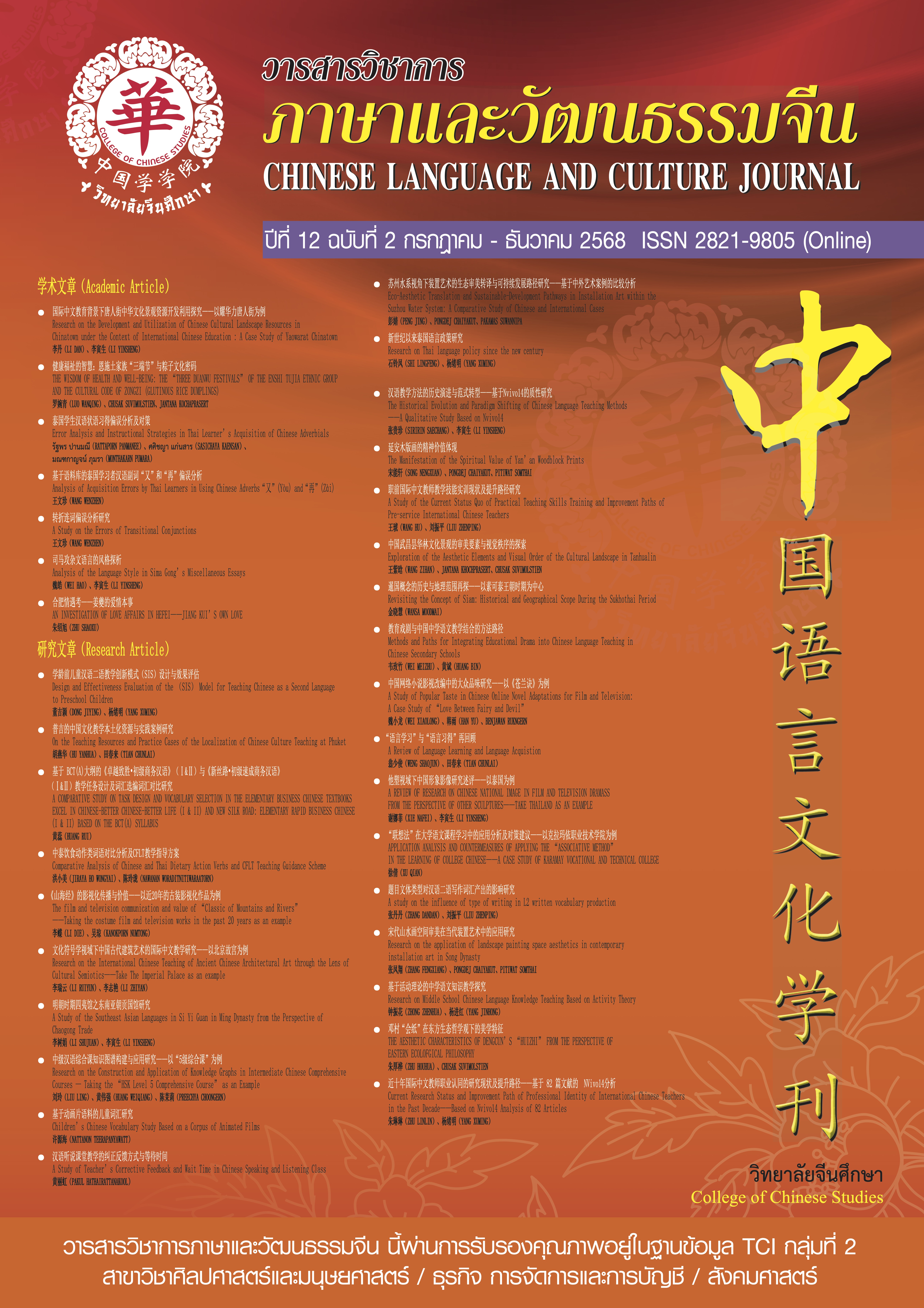
The film and television communication and value of "Classic of Mountains and Rivers"——Taking the costume film and television works in the past 20 years as an example
Keywords:
Classic of Mountains and Rivers, The value of film and television communication, Ancient MythologyAbstract
This study aims to clarify two research objectives by analyzing the film and television adaptations of the Classic of Mountains and Rivers over the past 20 years: 1. To explore the inheritance of the cultural value of the Classic of Mountains and Rivers in film and television works; 2. To analyze the dissemination and cultural value of the film and television adaptations of the Classic of Mountains and Rivers. Through a systematic analysis of the character presentation, dissemination overview, and mythical creature images in film and television adaptations of the Classic of Mountains and Rivers, the study finds that the Classic of Mountains and Rivers, with its rich mythological elements and narrative resources, provides important materials and inspiration for modern film and television creation, and has a profound influence on film and television dissemination. Its film and television adaptations not only help to inherit and revitalize the spiritual connotation of ancient mythology in the contemporary context, but also enhance the domestic and international dissemination effectiveness of traditional Chinese mythological culture through film and television media, which is of positive significance for promoting the modern dissemination of traditional culture.
References
艾君. 谈谈《山海经》的历史和社会价值[J]. 工会博览, 2021(35): 38-41.
常保青, 陈海燕. 《山海经之再见怪兽》: 中国文化经典的多维重构与符号杂糅[J]. 电影文学, 2023(05): 158-162.
陈柏寒, 刘英杰. 基于《山海经》中神话故事的叙事性插画创作[J]. 艺术与设计(理论), 2022, 2(06): 54–56.
鄂冠男, 康佳翌. 符号嬗变与文化新生:《山海经》神兽形象在电影中的跨媒介叙事[J]. 电影文学, 2025(13): 94–99.
韩明勇, 王镜鸣. 《山海经》中异兽形象在动画角色中的传承与应用探究[J]. 青年文学家, 2021(21): 126-127.
韩明勇, 李冉. 《山海经》影视化过程中的困厄与突围[J]. 北方文学, 2020(18): 120–121.
何胜莉. 网络时代的异兽形象建构[J]. 神话研究集刊, 2022(01): 252–268.
黄嘉琦. 神话叙事视角下《山海经》与《尚书》对比研究[J]. 今古文创, 2025(19): 54–56.
新华社. 习近平在第十三届全国人民代表大会第一次会议上的讲话[OL]. (2018-03-20). http://www.81.cn/jwtt/jlj/7978804_2.html
梁科, 邢琳琳. 浅析近20年“山海经”文化产业之发展:以图书、影视、游戏为例[J]. 楚雄师范学院学报, 2020, 35(05): 92–101.
李冉, 韩明勇. 《山海经》影视化过程中的困厄与突围[J]. 北方文学, 2020(18): 120–121.
李文婷. 《花千骨》的秘密全藏在《山海经》里[J]. 课外阅读, 2016(02): 40–41.
刘欣, 许宁. 网络自制剧《灵魂摆渡》的新人文精神及其反思[J]. 南方文学评论, 2022(00): 52-63.
刘英杰, 陈柏寒. 基于《山海经》中神话故事的叙事性插画创作[J]. 艺术与设计(理论), 2022, 2(06): 54–56.
路佳煜. 从《山海经》走出的"异兽"——浅析自媒体账号"嘉了个玲"对《山海经》异兽形象的再现与传播 [J]. 视听, 2022(05): 135-137.
周如菁, 董岳. 透视媒介融合时代游戏改编电视剧的现状——以《轩辕剑之天之痕》为例[J]. 西部广播电视, 2013(05): 63–65.
司马迁. 史记·五帝本纪[M]. 石家庄:河北少年儿童出版社, 2023.
施畅, 汤君妍. 仙侠世界:《仙剑奇侠传》的跨媒介叙事及其精神价值[J]. 贵州大学学报(艺术版), 2024(01): 66–72.
宋毅铮. “上古神话”的跨媒介叙事研究——以《山海经》为例[J]. 喜剧世界, 2024(01): 65–67.
王晨航, 杨帆. 探讨传统文化在网络仙侠小说中的运用与意义——以《香蜜沉沉烬如霜》为例[J]. 名作欣赏, 2020(23): 54–56.
王华丽. 《山海经》绘图流变及其当代表达[J]. 名家名作, 2022(02): 184–186.
王茜. 浅析《山海经》异兽形象国内影视传播现状[J]. 新闻传播, 2023(23): 36–38.
翁潇鹏. 人工智能图像生成技术下《山海经》异兽形象的文创产品设计研究[D]. 浙江工商大学, 2024.
吴月玲. 电视剧《长相思》:引发古装剧精品化的思考[N]. 中国艺术报, 2024-00-00(002).
徐海梅, 于素香. 《山海经》中的元素在银幕上的呈现探究[J]. 电影研究, 2024(04): 48–50.
杨潼潼, 张勤, 岳怡欣. 《山海经》神话图像的具象抽象与数字人文重构[J]. 复旦学报(社会科学版), 2025, 67(04): 68–81.
袁珂. 山海经校注[M]. 上海:上海古籍出版社, 1985.
元宵. 《山海经》中神话英雄的崇高叙事分析[J]. 遵义师范学院学报, 2022, 24(05): 83–86.
于玲. 文学叙事中的时间哲学: 古代神话《山海经》与当代科幻《三体》之对照[J]. 嘉应文学, 2025(01): 28–30.
张勤, 岳怡欣, 杨潼潼. 《山海经》神话图像的具象抽象与数字人文重构[J]. 复旦学报(社会科学版), 2025, 67(04): 68–81.
张慧玲. 《山海经》瑞兽符号在陶瓷绘画中的应用研究与创作[D]. 桂林理工大学, 2023.
张昆, 冯立群, 余昌钰等. 机器人柔性手腕的球面齿轮设计研究[J]. 清华大学学报, 1994, 34(2): 1-7.
赵小波, 刘媛. 具身·意识·时空: 作为媒介符号的“山海经”[J]. 海河传媒, 2023(05): 16–21.
赵逸. 山海经图腾符号设计与数字艺术表现研究[D]. 武汉理工大学, 2020.
郑凯歌. 《山海经》对《诛仙》的影响[J]. 郑州航空工业管理学院学报(社会科学版), 2016(02): 10–12+16.
郑晓峰. “古之巫书”与《山海经》的神话叙事[J]. 汉语言文学研究, 2015, 6(01): 67–75.
Downloads
Published
How to Cite
Issue
Section
License
Copyright (c) 2026 Chinese Language and Culture Journal

This work is licensed under a Creative Commons Attribution-NonCommercial-NoDerivatives 4.0 International License.
บทความที่ได้รับการตีพิมพ์เป็นลิขสิทธิ์ของวารสารภาษาและวัฒนธรรมจีน มหาวิทยาลัยหัวเฉียวเฉลิมพระเกียรติ
บทความใน “วารสารวิชาการภาษาและวัฒนธรรมจีน” เป็นทรรศนะของผู้เขียนโดยเฉพาะ กองบรรณาธิการไม่มีส่วนในความคิดเห็นในข้อเขียนเหล่านั้น


